
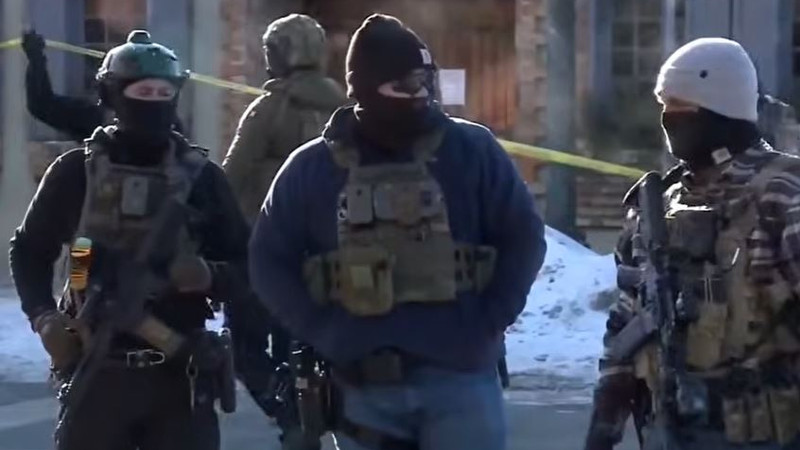
Across the country, a troubling trend is emerging. Activists and political organizations are increasingly attempting to weaponize the legal system against federal law enforcement officers simply for doing the jobs Congress has authorized them to do. The latest example comes from Chicago, where a coalition of activists, politicians, and advocacy groups is demanding the appointment of a special prosecutor to target federal agents involved in an immigration enforcement operation known as Operation Midway Blitz.
The petition alleges a wide range of crimes by federal agents, including assault, conspiracy, and even murder. Yet the effort appears less about justice and more about advancing a political agenda aimed at undermining immigration enforcement and intimidating the officers tasked with protecting our nation.
Any allegation of misconduct must always be taken seriously. Law enforcement officers are held to high standards, and there are well-established mechanisms within the federal justice system to investigate and review use-of-force incidents. But the growing push to bypass those processes in favor of politically driven prosecutions is deeply concerning.
Federal agents operate under the authority of the United States government and enforce laws passed by Congress. Whether it involves dismantling violent gangs, combating fentanyl trafficking, stopping human smuggling networks, or enforcing immigration law, these officers place themselves in dangerous situations every day in order to protect the public.
Large-scale enforcement operations are inherently complex and often volatile. Agents must make split-second decisions in dynamic environments where threats can emerge without warning. These operations frequently target individuals connected to criminal organizations, violent offenders, or individuals who have already violated federal law.
Unfortunately, immigration enforcement has become a political flashpoint for activists and sanctuary-policy advocates who oppose the mission itself. Rather than debating policy through legislation, some groups are now attempting to intimidate federal agents through lawsuits, public smear campaigns, and demands for criminal prosecution.
Even Cook County State’s Attorney Eileen O’Neill Burke has pushed back on the effort to appoint a special prosecutor, calling the petition meritless and warning that it could undermine legitimate prosecutions if actual misconduct were discovered.
Her response highlights an important legal reality: prosecuting federal officers for actions taken while performing their official duties requires meeting an extremely high legal threshold. Investigators must demonstrate that officers acted outside the scope of their lawful authority or used objectively unreasonable force under the circumstances.
This legal protection exists for a reason. Law enforcement officers must be able to carry out their duties without the constant fear that political pressure or activist campaigns will lead to criminal charges simply because someone disagrees with the mission.
In recent years, federal agents have faced unprecedented levels of harassment and intimidation. Officers have been doxed online, their home addresses published, and protesters have appeared outside their homes targeting their families. These tactics are designed to discourage law enforcement from doing the difficult work necessary to protect our communities.
Sanctuary policies have only made the situation worse. When local jurisdictions refuse to cooperate with federal immigration enforcement, they create safe havens for individuals who have violated federal law and in many cases committed additional crimes inside our communities. These policies force federal officers to conduct more complex enforcement operations that could otherwise be handled through coordinated cooperation with local authorities.
The reality is simple: the vast majority of federal law enforcement officers serve honorably and professionally every day. They swear an oath to uphold the Constitution and protect the American people, and they carry out that oath under extraordinarily difficult circumstances.
Over the past several years, federal law enforcement has made significant progress dismantling transnational criminal organizations, combating human trafficking, and intercepting record amounts of fentanyl and other deadly narcotics entering the United States. These efforts have saved countless lives and made communities safer.
The current administration has also taken important steps to restore support for law enforcement and reinforce the rule of law. Strengthening border security, targeting cartel operations, and backing the men and women in uniform sends a clear message that public safety remains a national priority.
The men and women of federal law enforcement put their lives on the line every single day to protect this country. They enforce the laws that Congress passes and they do so under incredibly difficult and dangerous circumstances. Attempting to criminalize officers for doing their jobs is not only irresponsible, it sends a dangerous message to the very people we rely on to keep our communities safe.
Our nation’s federal agents are confronting some of the most serious threats we have ever seen, from transnational criminal organizations to the fentanyl crisis devastating American families. Instead of attacking the officers protecting our communities, we should be supporting them and ensuring they have the resources and backing necessary to continue this mission.
Law enforcement officers are not above the law. But neither should they be placed below it.
If credible evidence of misconduct exists, it should be investigated thoroughly and fairly through established legal channels. What we must reject is the growing effort to use politically motivated prosecutions as a tool to intimidate the men and women sworn to enforce our nation’s laws.
At a time when violent crime, drug trafficking, and organized criminal networks continue to threaten communities across the country, the United States should be standing firmly behind the officers protecting its citizens.
Public safety and the rule of law depend on it.

Comments