
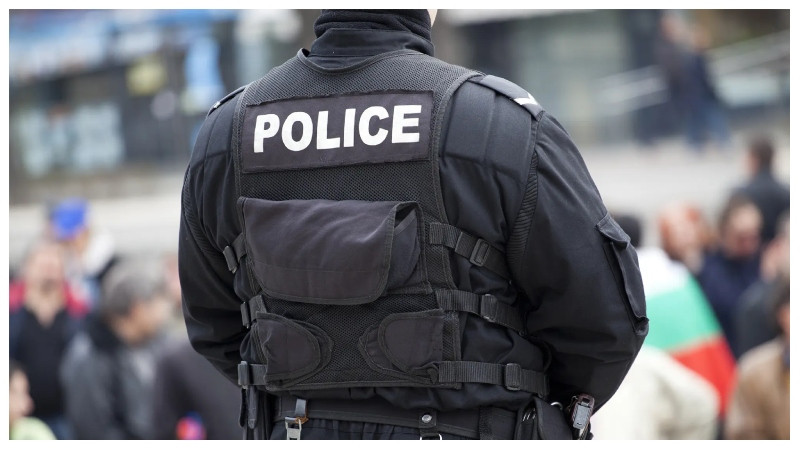
It’s an unfortunate reality that the threats facing our communities today are not confined to any one place. From government buildings to businesses, from patrol vehicles to public spaces, danger can emerge anytime, anywhere.
Law enforcement officers are the ones expected to respond, running toward uncertainty, stepping into situations where every second matters and every layer of protection can mean the difference between life and death.
But even those tasked with protecting others need environments and equipment built with that same mission in mind.
That reality has driven companies like Clear Armor to focus on providing protective solutions across a wide range of applications, supporting law enforcement and public safety at every level. The company has invested significant time and resources to meet the strict requirements necessary to work with federal, state, and local agencies, positioning itself as a trusted partner in securing facilities, vehicles, and personnel alike.
Whether reinforcing government buildings, securing commercial properties, or upgrading patrol vehicles, Clear Armor’s approach centers on layered defense designed to absorb and disperse impact, delay forced entry, and buy critical moments when every second counts.
Clear Armor’s bullet-resistant laminates are engineered to stop common handgun rounds and buckshot, while mounted ballistic glass systems provide high-impact protection without altering the appearance or functionality of existing structures.
That same commitment to practical, real-world protection extends to TruArmor, the company’s vehicle platform. Designed to be lightweight and fully compliant with Department of Transportation standards, TruArmor’s bullet-resistant glass enhances officer safety without compromising mobility.
Its patented system not only prevents dangerous ricochet, but also allows ballistic protection to be transferred between vehicles: an innovation that offers long-term value and flexibility for departments operating under tight budgets.
Clear Armor’s solutions are not only built for performance, but for longevity. The company offers limited lifetime warranties on its laminate products, ensuring that once protection is installed, it remains reliable for years to come. In a profession where equipment failure is simply not an option, that level of assurance carries real weight.
As part of its continued commitment to national security, Clear Armor is also in the final stages of obtaining SAFETY Act designation and certification through the Department of Homeland Security, a rigorous process reserved for technologies proven to reduce risk and enhance protection in the face of large-scale threats.
At the same time, the company recognizes that equipment alone is not enough. Through its TruTrauma program, Clear Armor provides critical incident training designed to prepare individuals for real-world emergencies. From STOP THE BLEED® certification to immersive, scenario-based training, the goal is to equip personnel with the skills and confidence to act decisively in life-threatening situations.
And while the technology itself plays a critical role, Clear Armor’s commitment to law enforcement extends beyond what’s installed on glass.
Through its partnership with TruArmor, the company is donating 100 percent of the proceeds from a dedicated vehicle initiative to support those who serve. That effort reflects a deeper commitment to the men and women in uniform, as well as the families who stand behind them.
Organizations like the Federal Law Enforcement Officers Association (FLEOA), which continues to advocate for federal officers nationwide, play a critical role in that mission—ensuring those on the front lines have the resources, representation, and support they deserve.
Partnerships like these help bridge the gap between public safety professionals and the tools and support systems that can better protect them.
In an era where threats are evolving, and the margin for error continues to shrink, preparation is everything. For those who protect our communities every day, having the right equipment, training, and support in place can make all the difference when it matters most.

Comments