
NEW BRITAIN, CT - For generations, police officers, firefighters, and veterans were often given an unofficial prescription for dealing with what they witnessed on the job: suck it up, push it down, and keep moving.
Russ Wininger, a retired Connecticut police officer and longtime member of the Fraternal Order of Police, knows that mentality well. After nearly three decades in law enforcement, he also knows the consequences that can come when years of traumatic experiences are never properly addressed.
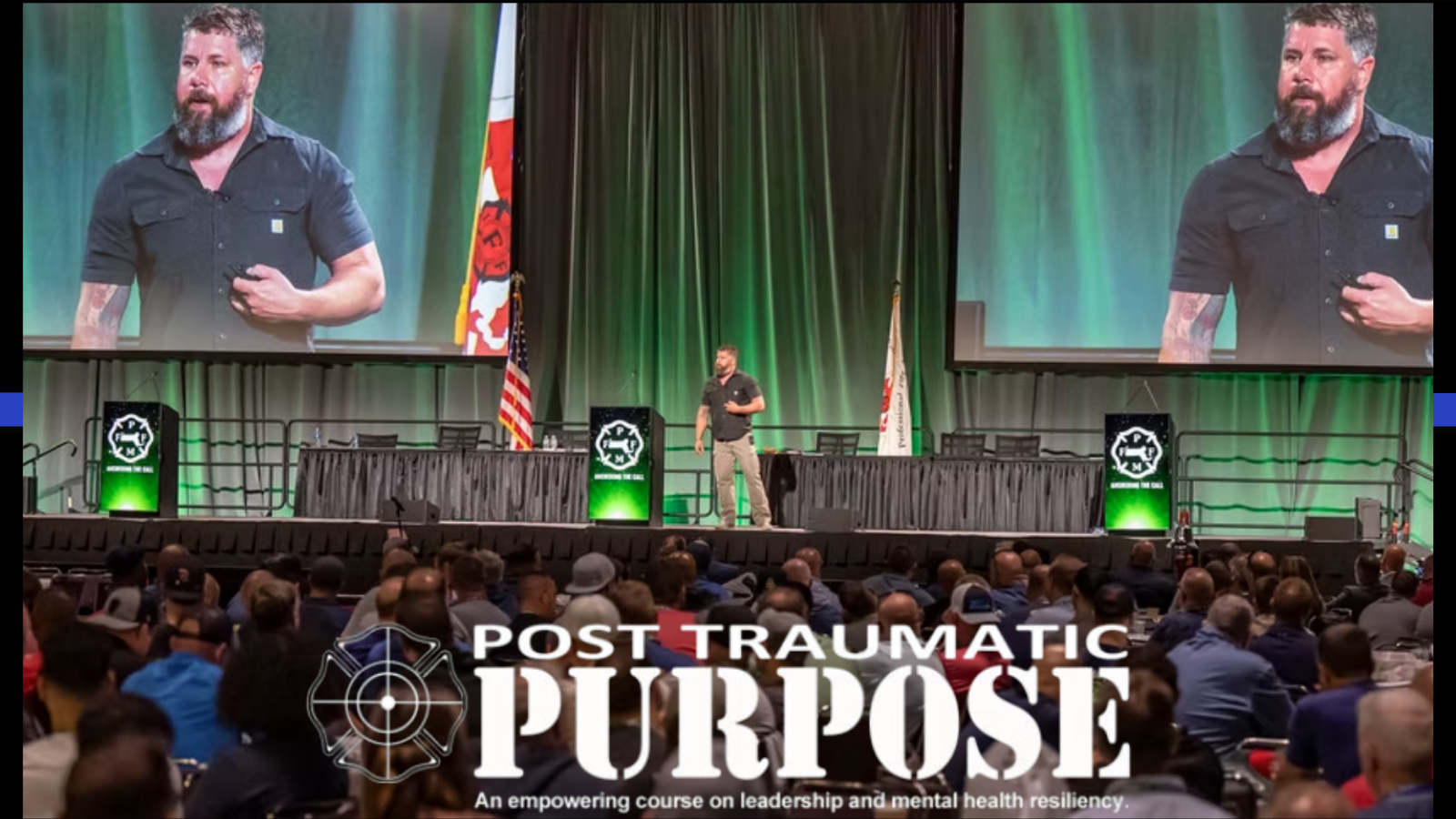
That is why he spent nearly two years working to bring nationally known motivational speaker Travis Howze and his Post Traumatic Purpose presentation to Connecticut.
The event is scheduled for Saturday, September 12, 2026, at Central Connecticut State University in New Britain and is being promoted primarily to first responders, military veterans, and the people closest to them. (Get your tickets HERE).
For Russell, the motivation behind the event is deeply personal.
“I think that if you’re able to help one person, that in itself makes it worth the amount of money and the time and effort put into it,” he said.
A Speaker Who Has Been There
Howze brings something to the conversation that Russell believes is especially important when speaking to first responders and veterans: credibility born from experience.
A former Marine, police officer and firefighter, Howze developed Post Traumatic Purpose after confronting trauma in his own life and career. His presentation examines not simply trauma itself, but what can happen afterward: changes in behavior, relationships, careers and coping mechanisms, and how recognizing those changes can become the first step toward getting help.
Russell first discovered Howze through short clips of his presentations online.
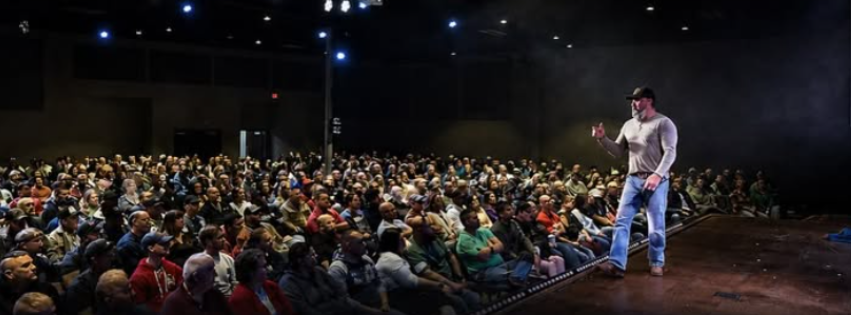
“He’s a very dynamic speaker to begin with, but he also brings a little bit of authority,” Russell said.
As he continued listening, however, something else happened: Russell began recognizing himself.
“As I’m watching him, I go, ‘Oh yeah, now I’ve done that. Oh no, I’ve done that,’” he recalled.
Howze wasn't merely describing symptoms. He was explaining why people who experience trauma may react the way they do.
“It was just super enlightening,” Russell said. “He spoke from a position of authority, from somebody that’s been there.”
That distinction matters in communities where asking for help has historically been viewed with suspicion.
“Mental health in emergency services and in the military, it’s always been one of those, ‘Hey, suck it up,’ and, you know, hold it in and don’t say anything,” Russell explained.
For some, there has also been the fear that admitting they are struggling could jeopardize their career. Although attitudes toward mental health have improved, Russell believes there is still considerable work to be done.
Trauma - A Real Issue
Russell understands the issue from experience. He spent 27 years as a police officer with two agencies, including 16 years as an accident reconstructionist investigating serious and fatal crashes across nine communities.
There were also cases involving the deaths of children while Russell had young children of his own.
Over time, those calls accumulate.
“It’s not the first one, it’s not the second one,” Russell said. “But when you start to pile those on and you never go do anything,” the effects can begin taking a toll.
First responders often develop their own defense mechanisms. Dark humor, emotional detachment and burying themselves in work can become ways of coping with scenes and experiences most people rarely encounter.
The danger comes when those coping mechanisms become normalized. Russell said he didn't fully recognize the cumulative toll his career had taken on him until much later.
“I think towards the end, there was an accumulation of all the things that had built up over time, and I didn’t recognize it,” he said. “I didn’t recognize the effects it was having on me.”
Fortunately, Russell eventually did recognize what was happening and sought professional help. Not everyone reaches that realization on their own.
Healing is for Everyone
Perhaps the person Russell most wants to reach is the officer, firefighter or veteran who sees an advertisement for a mental health event and immediately thinks: I’m fine. That’s not for me.
That reaction itself can be part of the problem.
Trauma does not always announce itself dramatically. Its effects can appear in drinking, self-medication, anger, isolation, relationship problems, compulsive work or behaviors that gradually become accepted as normal.
Russell pointed to his own experience.
“As somebody who is divorced, I now jokingly say that work was my mistress because I always found comfort and solace in work,” he said.
Sometimes, he explained, the fallout can ultimately cause as much damage as the original traumatic event.
That is one reason Post Traumatic Purpose focuses heavily on recognition: understanding what is happening, why it may be happening and when it may be time to speak with someone.
“Recognizing it’s happening, understanding why you did it and then, you know, pushing the button, saying, ‘Hey, wait a minute, I need to talk to somebody. I need to get some help. I can’t continue on this road,’” Russell said.
The event isn't intended only for the person wearing the badge or uniform.
Family members and spouses are an important part of the audience because they may recognize changes before the individual experiencing them does.
“If you’re not able to recognize it, then perhaps the spouse could,” Russell explained.
The organizers have also extended invitations to survivors and family members of officers killed in the line of duty, recognizing that trauma reaches far beyond the individual first responder.
The goal isn't spectacle. Russell stressed that the event is not intended to become a political gathering or “dog and pony show.”
“This is really the first step in trying to get people help,” he said.
That message can extend beyond police, firefighters and veterans. Trauma, grief, stress and unhealthy coping mechanisms are not exclusive to those professions. While Howze's background allows him to connect uniquely with those who have served, the underlying lessons about recognizing trauma, understanding behavior and seeking help can resonate with anyone who has experienced difficult events or watched someone they love struggle afterward.
Russell hopes police departments, unions, veteran organizations, peer-support teams and other groups will encourage their members to attend and even consider purchasing blocks of tickets for their people.
“The more that you have exposure and the more information you have at hand, the better,” he said. “It kind of gives you a little bit more of the tools in the toolbox to deal with it.”
People are already planning to travel considerable distances for the Connecticut appearance. Russell said ticket sales have included attendees from states including Texas, New Jersey and Maryland.
Ultimately, however, his definition of success isn't filling every seat, but rather reaching each person in attendance and showing how Howze’s story relates to them. He hopes the seminar is the start of improvement, healing, and positive life changes.
“You’re not going to be able to help everybody,” Russell said. “Not everybody is going to get the same thing out of it.”
But if it reaches one person who needed to hear it, he believes the effort will have been worthwhile.
And there may be considerably more than one.
To register for the event, CLICK HERE.
To learn more about Travis Howze visit his website https://www.travishowze.com/.
Follow him on Facebook, Instagram, and YouTube.
-------------------------------------------------
Writer and author Eddie Molina has over 25 years of combined LEO and military service. Learn more about his interview articles at www.eddiemolina.com

Comments