
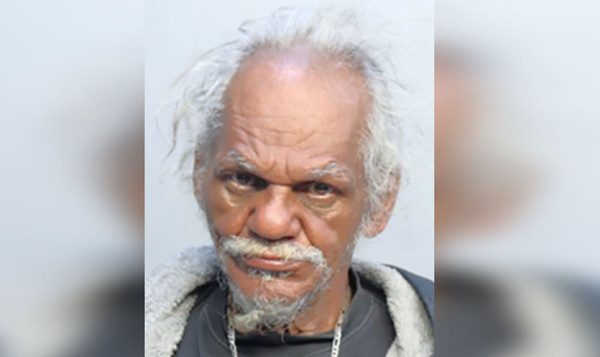
MIAMI, FL – A criminal illegal alien from Cuba who had a final order of removal from the United States from over forty years earlier was apprehend by federal immigration authorities in Florida this past March. According to officials, the illegal alien with a decades-long criminal history capitalized on sanctuary jurisdictions to avoid removal proceedings.
Immigration and Customs Enforcement (ICE) issued a press release earlier in April detailing the apprehension of Eledoro Valenzuela Rodriguez, a criminal illegal alien from Cuba who’d managed to avoid his ordered deportation for over forty years after receiving a final order of removal back in 1980.
Valenzuela Rodriguez was reportedly taken into custody on March 24th by ICE Miami officers and was subsequently transported to the Miami-Dade Turner Guilford Knight Correctional Center where he has pending criminal charges for cocaine possession with intent to sell, being a felon possessing a firearm and ammunition, and trespassing.
According to the agency, Valenzuela Rodriguez has a criminal history in the United States spanning decades with arrests and convictions of various drug offenses, weapons offenses, prohibited possessor charges, and minor violations pertaining to trespassing and alcohol.
The criminal illegal alien was apparently able to be arrested and released back into the community on several occasions over the past few decades largely in part to him having previously resided in “sanctuary states New York and Maryland,” according to the agency.
ICE Director Todd Lyons issued a statement in tandem with the press release regarding Valenzuela Rodriguez’s apprehension, taking aim at the very sanctuary policies the agency claims enabled Valenzuela Rodriguez’s continued pattern of being arrested and/or sentenced to prison and released back into the country’s interior.
“Sanctuary policies protect criminals like Valenzuela Rodriguez and enable them to prey on generations of innocent Americans. These policies don’t make communities safer. They make enforcement more difficult and force federal officers into more dangerous — and more public - situations. ICE will continue to enforce the law, regardless of local politics,” Director Lyons stated.
Immigration and Customs Enforcement (ICE) issued a press release earlier in April detailing the apprehension of Eledoro Valenzuela Rodriguez, a criminal illegal alien from Cuba who’d managed to avoid his ordered deportation for over forty years after receiving a final order of removal back in 1980.
Valenzuela Rodriguez was reportedly taken into custody on March 24th by ICE Miami officers and was subsequently transported to the Miami-Dade Turner Guilford Knight Correctional Center where he has pending criminal charges for cocaine possession with intent to sell, being a felon possessing a firearm and ammunition, and trespassing.
According to the agency, Valenzuela Rodriguez has a criminal history in the United States spanning decades with arrests and convictions of various drug offenses, weapons offenses, prohibited possessor charges, and minor violations pertaining to trespassing and alcohol.
The criminal illegal alien was apparently able to be arrested and released back into the community on several occasions over the past few decades largely in part to him having previously resided in “sanctuary states New York and Maryland,” according to the agency.
ICE Director Todd Lyons issued a statement in tandem with the press release regarding Valenzuela Rodriguez’s apprehension, taking aim at the very sanctuary policies the agency claims enabled Valenzuela Rodriguez’s continued pattern of being arrested and/or sentenced to prison and released back into the country’s interior.
“Sanctuary policies protect criminals like Valenzuela Rodriguez and enable them to prey on generations of innocent Americans. These policies don’t make communities safer. They make enforcement more difficult and force federal officers into more dangerous — and more public - situations. ICE will continue to enforce the law, regardless of local politics,” Director Lyons stated.
For corrections or revisions, click here.
The opinions reflected in this article are not necessarily the opinions of LET

Comments