
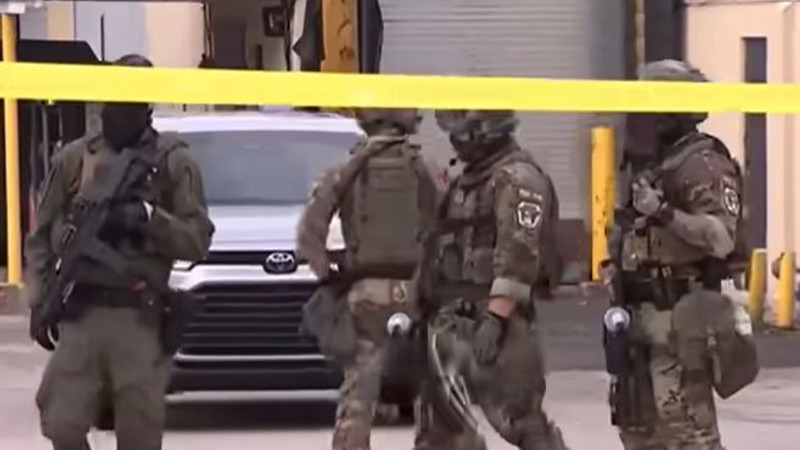
On Sunday, September 20, 2026, an officer-involved shooting occurred during an Immigration and Customs Enforcement operation in Austin, Texas. Almost immediately, social media accounts, public officials, commentators, and news outlets began reporting on the incident, with some assigning blame before many of the essential facts were known.
In my capacity as National President of the Federal Law Enforcement Officers Association, I received several requests from news organizations to speak about what had occurred. I accepted those opportunities because I have always believed it is important to address a tragic incident promptly and responsibly. If law enforcement organizations remain silent, others may define what happened before investigators have had an opportunity to establish the facts.
Speaking immediately after an officer-involved shooting is never easy. Law enforcement professionals are trained not to prejudge an ongoing investigation. Instead, investigators must examine body-worn-camera footage, witness interviews, available surveillance or cellphone video, physical evidence, ballistics, sworn statements, and the complete sequence of events.
That process takes time, but it is essential.
We should all want a thorough, transparent, and impartial investigation. That protects the individual who was injured, the officer involved, the integrity of the justice system, and the public’s right to know what occurred. The same principle applies not only to officer-involved shootings but also to criminal investigations generally. Justice requires accountability, but it also requires evidence, due process, and a willingness to withhold judgment until the facts are established.
Immigration enforcement is not new. Federal immigration laws have been enforced in communities across the country under administrations of both political parties. Congress enacted those laws and provided federal officers with the authority and responsibility to enforce them.
What has changed is the level of public attention surrounding these operations and the willingness of the current administration to highlight the work being performed by immigration officers. ICE agents and officers now feel they have the support needed to carry out the responsibilities they were hired, trained, and authorized by Congress to perform.
Disagreement with immigration policy is legitimate in a democracy. However, individual officers should not be condemned merely for performing duties lawfully assigned to them. They should be judged by the facts surrounding their individual conduct, not by political assumptions or hostility toward the uniform they wear.
Leadership at the Department of Homeland Security and ICE has an important role in establishing expectations, providing resources, and ensuring that personnel carry out their responsibilities professionally and lawfully. Secretary Markwayne Mullin, Acting ICE Director David Venturella, and Border Czar Tom Homan each bring different backgrounds and responsibilities to that effort. In my role as National President of FLEOA, I have had opportunities to engage with all three, including a recent meeting with Director Venturella and ongoing conversations with Homan and Mullin. Those discussions have focused on the mission of ICE, the challenges confronting its workforce, and how organizations such as FLEOA can support agents and officers while reinforcing the importance of professionalism and accountability.
Whatever one’s views of immigration policy or any administration’s approach to enforcement, the standard for leadership should remain consistent: clear direction, adequate resources, effective supervision, accountability for how the mission is carried out, all while being in conformance with the law. The men and women performing these duties operate in an environment of intense public scrutiny and, at times, significant personal risk. They deserve leadership that supports them in the lawful performance of their duties while holding them to the professional and constitutional standards their authority demands.
Unfortunately, people are sometimes judged not by their character or individual actions, but solely by the uniform or badge they wear. That is unfair to the thousands of honorable ICE agents and officers who report for duty each day, follow the law, and perform difficult work most Americans will never see.
Public safety operations can make a meaningful difference when they are properly planned and adequately resourced. Washington, D.C., provides an example from my own experience. I have spent the past eight years working in and around Washington, and before that, I worked in the city for five years. I have never seen Washington as safe, clean, and orderly as it is today.
That did not happen by accident. It required a deliberate plan, coordinated enforcement, visible law enforcement resources, attention to public spaces, and cooperation among federal, state, and local partners. When leaders saw that the approach was working, similar efforts began expanding to other communities. Effective public safety requires planning, partnerships, sustained resources, and leaders who are willing to support the people performing the work.
We must also recognize and protect the constitutional right to assemble peacefully, express disagreement, and demand answers from the government. The overwhelming majority of people who participate in protests do so peacefully and with sincere intentions. Law enforcement officers have a responsibility to respect and protect those rights, even when they personally disagree with the message being expressed.
At the same time, peaceful protest is different from obstructing an active investigation, threatening officers or members of the public, destroying property, looting businesses, setting fires, or committing acts of violence. When individuals cross that line, officers may have a lawful responsibility to intervene. Holding someone accountable for unlawful conduct is not the same as suppressing protected speech.
Interfering with an active crime scene or preventing officers from carrying out their lawful duties can also lead to detention or arrest. Investigators must be able to secure evidence, interview witnesses, preserve the scene, and determine what occurred without intimidation or interference.
Social media has dramatically changed public expectations. People across the country can see a short video within minutes of an incident. That immediacy can increase awareness, but a brief recording rarely provides every fact investigators need. A video may show an important part of an encounter without showing what happened immediately before or after it.
Real investigations are not resolved within the length of a television episode. Evidence must be collected, witnesses must be interviewed, conflicting accounts must be compared, and legal standards must be applied carefully. Reaching the correct conclusion is more important than reaching the fastest conclusion.
Federal law enforcement officers undergo extensive training and accept tremendous responsibilities on behalf of the American people. The overwhelming majority report for duty each day intending to serve honorably, protect the public, and return home safely to their families.
Like every profession, law enforcement has individuals who fail to meet the standards expected of them. That is why agencies have policies, supervisory systems, internal investigations, inspectors general, and legal processes for identifying misconduct and holding people accountable when the evidence supports it. Supporting law enforcement and demanding accountability are not competing principles. Both are necessary to maintain public trust.
We should not decide the Austin case through social media, political rhetoric, or incomplete reporting. We should allow investigators to determine what happened, release the facts as legally appropriate, and hold everyone involved to the same standard.
The public deserves transparency. The injured individual deserves due process. The officer deserves a fair and impartial investigation. Most importantly, the truth deserves the opportunity to emerge before judgment is rendered.

Comments