
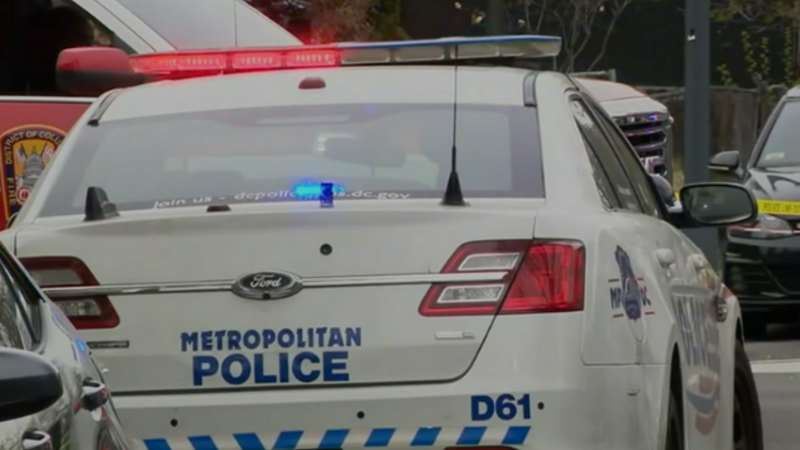
Over the past few days, we've all witnessed a surge of headlines and social media commentary regarding the increased federal law enforcement presence in Washington, D.C.
I want to begin by saying how proud I am to serve as the National President of the Federal Law Enforcement Officers Association (FLEOA), representing the dedicated men and women of federal law enforcement who are true professionals and extraordinary heroes.
Regardless of political views, one thing unites us all - the desire to feel safe in our communities. While many large cities and jurisdictions across the country are reporting a decline in violent crime, that doesn't mean we can ease up on our efforts. It's important to remember that crime rates skyrocketed in recent years, so even with a decline, we are still far from a level of safety that should be acceptable to either side of the aisle.
One of the most urgent challenges we face is juvenile crime.
Across the country, many jurisdictions have enacted laws intended to protect juveniles, but accountability remains critical. While I agree there should be leniency in certain cases involving minor offenses that may negatively affect someone for the rest of their life, we should not forego accountability for serious crimes such as armed robbery, murder, rape, or carjacking based on age alone.
In these cases, the offenders know exactly what they are doing and must be held accountable.
Too often, we see the same juveniles cycling in and out of the justice system with little consequence. When accountability is absent, these individuals often reoffend, and worse, they become tools for more experienced criminals who exploit lenient policies to avoid prosecution themselves.
United States Attorney for the District of Columbia Jeanine Ferris Pirro, with the support of President Trump, Attorney General Pam Bondi, and Deputy Attorney General Todd Blanche, has made it clear: these criminals will be brought to justice.
Let me be clear: this is not about politics for our federal law enforcement officers and agents. This is about fulfilling the oath we took to serve and protect. In law enforcement, we don't always choose our assignments; we follow lawful orders or face discipline. In Washington, D.C., just like with ongoing immigration enforcement efforts, our agents and officers are carrying out the laws enacted by Congress and the priorities set by the administration.
We may not agree with some orders we are given, but we have a job to do, and we take pride in doing that job objectively and to the highest standards.
While some have questioned the deployment of so many federal agents to D.C., the reality is that this effort will deter violence, support local law enforcement, and increase community confidence. That's why I find it difficult to understand why some D.C. officials and other politicians are opposing these efforts, especially when they come at no cost to the city.
In local politics, crime rates are often a key issue for voters, and lowering those rates benefits the community and its leadership.
This is an opportunity for local leaders to partner with the administration and show a united front in reclaiming the city's safety.
Some have raised concerns that sending 500 federal agents to D.C. pulls resources from other duties. To put that in perspective, we have approximately 130,000 federal agents and officers nationwide.
This deployment represents a fraction of one percent of our workforce and an extremely small impact in the broader picture. It also highlights a longstanding issue that we must continue to fight - pay disparities and outdated compensation rules for federal law enforcement professionals.
Unlike our local counterparts, many federal law enforcement professionals are not receiving full pay for the long hours they're working in D.C. and elsewhere, due to archaic caps on overtime and compensation.
FLEOA continues to advocate strongly in Congress to reform these unjust limitations.
No other profession in this country requires people to work overtime without pay, yet this is a daily reality for many of our members.
Our mission is clear: to protect the American people and uphold the Constitution and laws of the United States. This initiative has created valuable opportunities for multiple law enforcement agencies to collaborate, share techniques, reduce crime rates, save lives, and help communities feel safe.
I want to personally thank every officer and agent involved in this effort for stepping up to do a difficult job. Many are working long hours, giving up days off, missing time with loved ones, and, in some cases, not being paid for their work because of the outdated federal pay cap. This reinforces the need for Congress to act to address and fix the pay cap.
In an ideal world, our politicians would work together on behalf of the constituents they serve, compromising and collaborating on what is best for this country.
Until that day comes, you can count on FLEOA to remain focused on what matters most - supporting our members and advancing the mission of law enforcement across our great country
Stay safe, stay strong, and thank you for your service.
I want to begin by saying how proud I am to serve as the National President of the Federal Law Enforcement Officers Association (FLEOA), representing the dedicated men and women of federal law enforcement who are true professionals and extraordinary heroes.
Regardless of political views, one thing unites us all - the desire to feel safe in our communities. While many large cities and jurisdictions across the country are reporting a decline in violent crime, that doesn't mean we can ease up on our efforts. It's important to remember that crime rates skyrocketed in recent years, so even with a decline, we are still far from a level of safety that should be acceptable to either side of the aisle.
One of the most urgent challenges we face is juvenile crime.
Across the country, many jurisdictions have enacted laws intended to protect juveniles, but accountability remains critical. While I agree there should be leniency in certain cases involving minor offenses that may negatively affect someone for the rest of their life, we should not forego accountability for serious crimes such as armed robbery, murder, rape, or carjacking based on age alone.
In these cases, the offenders know exactly what they are doing and must be held accountable.
Too often, we see the same juveniles cycling in and out of the justice system with little consequence. When accountability is absent, these individuals often reoffend, and worse, they become tools for more experienced criminals who exploit lenient policies to avoid prosecution themselves.
United States Attorney for the District of Columbia Jeanine Ferris Pirro, with the support of President Trump, Attorney General Pam Bondi, and Deputy Attorney General Todd Blanche, has made it clear: these criminals will be brought to justice.
Let me be clear: this is not about politics for our federal law enforcement officers and agents. This is about fulfilling the oath we took to serve and protect. In law enforcement, we don't always choose our assignments; we follow lawful orders or face discipline. In Washington, D.C., just like with ongoing immigration enforcement efforts, our agents and officers are carrying out the laws enacted by Congress and the priorities set by the administration.
We may not agree with some orders we are given, but we have a job to do, and we take pride in doing that job objectively and to the highest standards.
While some have questioned the deployment of so many federal agents to D.C., the reality is that this effort will deter violence, support local law enforcement, and increase community confidence. That's why I find it difficult to understand why some D.C. officials and other politicians are opposing these efforts, especially when they come at no cost to the city.
In local politics, crime rates are often a key issue for voters, and lowering those rates benefits the community and its leadership.
This is an opportunity for local leaders to partner with the administration and show a united front in reclaiming the city's safety.
Some have raised concerns that sending 500 federal agents to D.C. pulls resources from other duties. To put that in perspective, we have approximately 130,000 federal agents and officers nationwide.
This deployment represents a fraction of one percent of our workforce and an extremely small impact in the broader picture. It also highlights a longstanding issue that we must continue to fight - pay disparities and outdated compensation rules for federal law enforcement professionals.
Unlike our local counterparts, many federal law enforcement professionals are not receiving full pay for the long hours they're working in D.C. and elsewhere, due to archaic caps on overtime and compensation.
FLEOA continues to advocate strongly in Congress to reform these unjust limitations.
No other profession in this country requires people to work overtime without pay, yet this is a daily reality for many of our members.
Our mission is clear: to protect the American people and uphold the Constitution and laws of the United States. This initiative has created valuable opportunities for multiple law enforcement agencies to collaborate, share techniques, reduce crime rates, save lives, and help communities feel safe.
I want to personally thank every officer and agent involved in this effort for stepping up to do a difficult job. Many are working long hours, giving up days off, missing time with loved ones, and, in some cases, not being paid for their work because of the outdated federal pay cap. This reinforces the need for Congress to act to address and fix the pay cap.
In an ideal world, our politicians would work together on behalf of the constituents they serve, compromising and collaborating on what is best for this country.
Until that day comes, you can count on FLEOA to remain focused on what matters most - supporting our members and advancing the mission of law enforcement across our great country
Stay safe, stay strong, and thank you for your service.
For corrections or revisions, click here.
The opinions reflected in this article are not necessarily the opinions of LET

Comments
2025-08-15T18:15-0400 | Comment by: natalie
and this is a classic reason on why PO do side-jobs because they actually get paid to do so.