
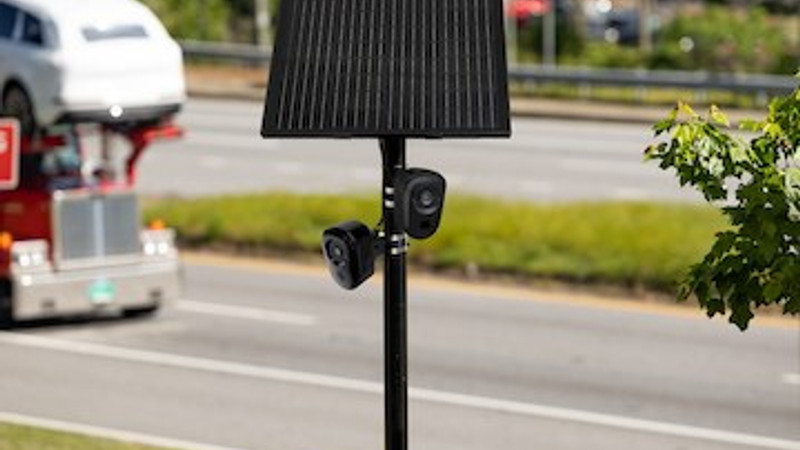
As numerous law enforcement agencies across the country have asserted that Flock cameras are not being used for civil traffic enforcement, an Ohio-based news outlet recently dove into the available audit logs and found that the data seems to tell a different story than what the public has been led to believe.
Earlier in September, the Dayton Daily News (DDN) released the results of an investigation into what the audit logs behind various automated license plate reader (ALPR) systems revealed versus what police officials in Ohio are alleging about how Flock systems are being used. Despite protocols from law enforcement agencies in cities like Trotwood, Hamilton Township, Dayton, Franklin, and numerous others in Ohio proclaiming ALPRs are not to be used for traffic enforcement, DDN found some contradictory information in obtained audit logs.
“Flock network audit logs obtained by the Dayton Daily News show that some of these law enforcement agencies - and many others - have accessed local ALPR databases this year for the stated search purposes of ‘traffic infractions’,” the report highlights, further noting that outside organizations conducted over 80,000 searches where “traffic infraction” was cited in Fairfield Township’s audit logs alone.
In the Kettering Police Department’s ALPR audit logs, external entities reportedly performed 13,000 searches just this past March for traffic infractions, which some of the external entities performing the aforementioned searches were neighboring law enforcement agencies in cities like Dayton, Tipp City, Trotwood, and several others.
When asked about the traffic infraction searches cropping up on ALPR audit logs, Trotwood Police Chief Erik Wilson offered a distinction between Flock camera capabilities versus traditional redlight cameras typically used to catch speeders or redlight-runners in the act. According to Chief Wilson, Flock cameras are an investigative tool whereas traditional redlight cameras are a technology used specifically for civil traffic enforcement.
“You are not getting a ticket from a Flock camera because you don’t have a driver’s license and you drove by it. The only thing the camera is showing is that you drove this vehicle down this street at this date and time,” Chief Wilson explained.
The vast majority of police officials have cited ALPR systems as a critical investigative tool for solving serious criminal offenses, from vehicle thefts to various violent offenses, while mentioning that use of the systems for civil traffic enforcement is possible but often observed as tedious.
Melissa Bertolo, a member of the activist group DeFlock Dayton, is not among those convinced that law enforcement is treating traffic enforcement by way of ALPRs as below their prioritized agendas.
“How often are (plate readers used) for minor misdemeanors or civil infractions like traffic and not for those high-level cases, such as a homicide,” Bertolo stated, adding, “Really what we are finding is that we’re installing a surveillance state and justifying its use for reasons that we are not really using it for.”
Bertolo’s comments touched on a lingering issue for critics of ALPR systems who, while able to see the investigative benefits in terms of solving crime, worry about unwarranted surveillance and general privacy violations. Law Enforcement Today has published numerous reports of confirmed and alleged abuses of Flock systems where officers within law enforcement agencies were found conducting searches that served no legitimate law enforcement purposes.
In response, some law enforcement agencies have suspended their usage of Flock systems, and Ohio isn’t immune to the ALPR-adverse response phenomenon, either. Earlier in September, the Lebanon City Council voted to temporarily suspend their Flock program while evaluating their agreement with the company. Dayton also followed suit earlier this year, citing alleged uses for immigration enforcement which were outside of the intended scope of use for their ALPR system.

Comments
2026-09-16T21:54-0400 | Comment by: James
Amazing how all of the criminals, including illegal aliens, hate the cameras because they get caught! I say keep the cameras! If you have nothing to hide you should not care!
2026-09-17T11:53-0400 | Comment by: Jan
I think the problem with Flocks is that they, through no fault of their own. are the proverbial straw that broke the camel's back. American's have lost their privacy. It's gone. Our phones (including when we aren't even using them), Chinese TVs, AI, social media, and who knows what else, observes, listens, tracks, and possibly even videos everything we say and do. Much of it is sold to people who harass us with advertisements and phone calls, all without our permission. Once all these data centers go online, they'll know what color socks we're wearing. If we had real representatives in our state and federal governments, who would curtail Big Tech's constant surveillance of us, and return the privacy-that we are entitled to-back to us, I think Flock would have a lot more support from the public. Solving crime is great and I can see where these cameras would be a huge help, but like everyone else, I'm SICK of being watched, listened to, and recorded without even my knowledge much less permission, by some very bad people. Until our reps in government stop taking money from these creeps to look the other way, and do their jobs, I will oppose Flock cameras. I think we should start with refusing to vote for any candidate that takes money from Big Tech, regardless of party.
2026-09-17T11:55-0400 | Comment by: Jan
Even our cars are now or soon will be spying on us.