
MONROE COUNTY, FL - Police have identified a suspect in the murders of two teenage sisters that happened more than 50 years ago.
The victims, 18-year-old Marguerite "Maggie" Jenkins and 16-year-old Mary Jenkins, were found dead in a wooded area of Key Largo on May 3, 1973, one day after they were last seen hitchhiking, according to the Florida Department of Law Enforcement (FDLE), PEOPLE reported.
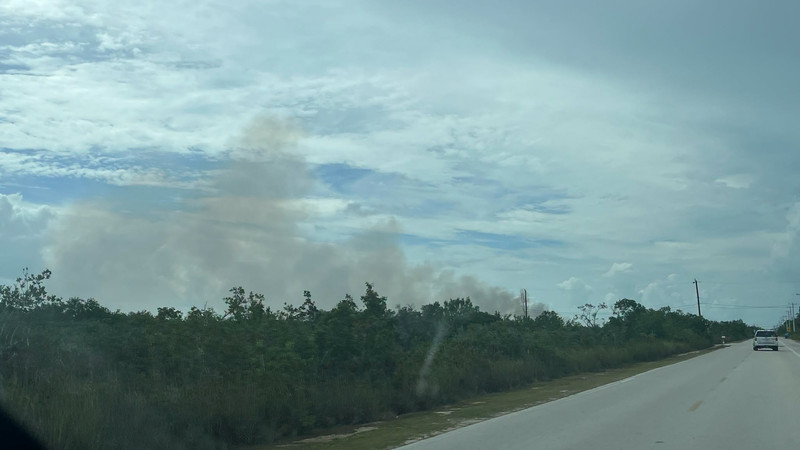
The sisters had traveled from New Jersey to Key West for a vacation in April 1973, FDLE stated. They were last seen hitchhiking on Stock Island on May 2. The following day, a resident discovered their bodies in a wooded area about 100 yards from U.S. 1 near Mile Marker 99.5 in Key Largo.
Both sisters had been severely beaten and suffered apparent gunshot wounds, investigators said. The initial investigation failed to identify a suspect, leaving Maggie and Mary's family without answers for decades.
On September 2, 2026, FDLE and the Monroe County Sheriff's Office announced that David Allen Snyder had been identified as the suspect in the sisters' killings. Snyder died in Idaho in October 2008 and never faced trial.
Their surviving older sister, Sarah Jenkins Barlow, was 19 at the time of the killings. She traveled to Florida afterward and remained there for a month with her mother and the man who would become her husband. "We did our own investigation, but obviously we were in their way, and they kept telling us to go home,” Barlow said.
More than five decades later, Barlow said she wanted Maggie and Mary to be remembered for who they were, rather than only for how they died.
"Maggie was strong and she was a little more of a daredevil,” Barlow said. “Mary was a sweet innocent girl. She had an excellent singing voice." Barlow said Maggie also loved horses and dreamed of having a ranch of her own.
A break in the case came in 2018, when FDLE forensic analysts developed additional markers for a partial male DNA profile recovered from a bloodstain on one victim's clothing. Investigators uploaded the updated profile to the national Combined DNA Index System, but it did not produce a match.
In 2023, FDLE's Forensic Investigative Genetic Genealogy Program accepted the case and worked with private forensic laboratory Othram to develop a more comprehensive DNA profile.
Investigators submitted that profile to genetic genealogy databases and conducted family-tree research, eventually identifying Snyder as a possible suspect. In 2026, investigators obtained a DNA sample from one of Snyder's relatives and sent it to the FDLE crime laboratory for comparison. The results confirmed Snyder as the suspect, the agency said.
Investigators also determined that Snyder had lived in several locations in Key West between 1972 and 1974. When investigators first contacted Barlow, she was reluctant to believe they had finally found an answer.
"At first I thought, because I do a little Googling, and I thought, oh they’re going to tell me about this podcast that they have,” she told Local10. “I just thought, don’t get your hopes up." The three investigators arrived at her home and explained the breakthrough.
"They were very respectful, kind people,” Barlow recalled. “And they broached the subject gently and gave me the paperwork ... It was shocking because I never expected it to be solved. I didn’t expect it to be solved six months into it."
Although Snyder died without ever being charged in the sisters' deaths, Barlow said she hoped the person responsible had feared that someone he loved might suffer a similar fate. "And I always thought, whoever did this, I hope they fear that somewhere someone was going to grab and do to their daughter or grandchild what happened to my sisters because it was monstrous."

Comments