
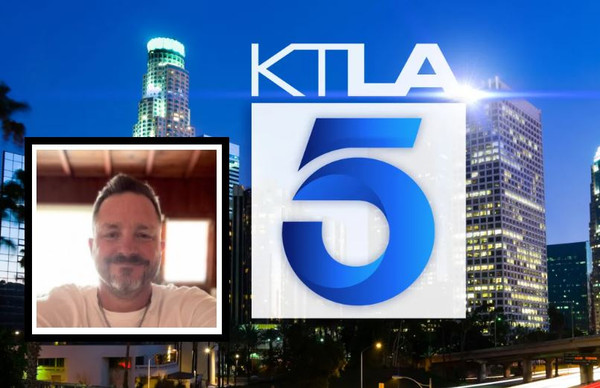
LOS ANGELES, CA – A Los Angeles news outlet released a concerning article regarding “burner phones” conveniently after the Charlie Kirk assassination suspect’s personal devices helped piece together the investigation, detailing to readers how these burner phones and other methods of concealing one’s identity can help in “covering one’s tracks.”
While there has seemingly been no shortage of horrendous takes on social media in the wake of Kirk’s assassination on September 10th, LA-based KTLA5 has seemingly engaged in a race to the bottom with their September 17th article detailing the acquisition and use of burner phones under the guise of “consumer news.”
The article in question was written by KTLA5 digital contributor Josh DuBose, a resident of the greater Los Angeles area who has routinely denigrated Immigration and Customs Enforcement (ICE), with his anti-ICE sentiments traceable as far back as 2018 during the initial Trump administration.
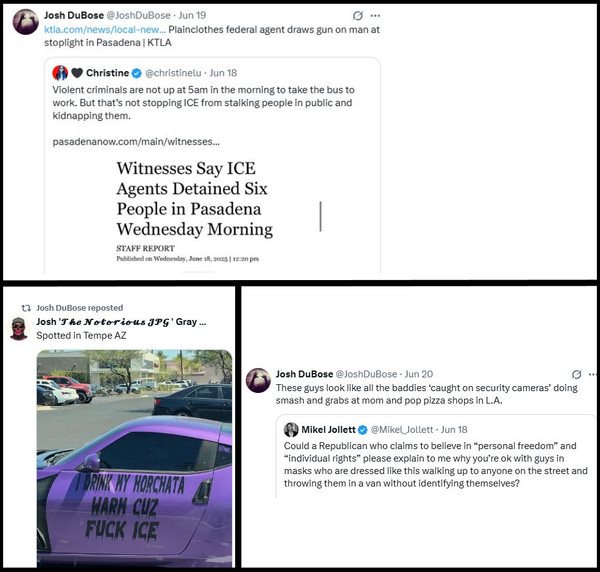
Considering DuBose’s obvious cultural and political leanings, one would expect the liberal arts degree holder to not think highly of the current administration and those who support President Donald Trump, but his latest piece for KTLA5 harbors a poorly-veiled message via an attempt at an innocent piece about burner phones – that message being a how-to guide on not getting caught by police after committing a crime.
In DuBose’s step-by-step guide, he claims that “it’s easy to see why criminals would be interested in anonymous communication,” but tries to misdirect potential critics by asserting that “a person attempting to escape an abusive relationship” could benefit from a burner phone. Yet, the only problem with DuBose’s effort at the aforementioned innocuous justification for these devices is that he simply isn’t suggesting someone buy a prepaid phone; he instructs people on how to make even the purchase itself untraceable – a tactic that could only be motivated by avoiding authorities following the commission of a crime.
“Where and how you purchase a burner phone matters because, for instance, if bought at a popular big-box electronics store with a personal credit card, there are two immediate problems,” DuBose explained, adding, “First, the device can be linked to the buyer through the credit card transaction. Second, any large electronics retailer will have a video record of the exchange.”
The KTLA contributor goes on to instruct readers that they should use cash to purchase a prepaid card elsewhere if shopping at “a large electronics retailer” for these phones, thereby making the original purchase untraceable to a specific person’s credit or debit card. Furthermore, with respect to video surveillance utilized by stores selling either prepaid cards or burner phones, DuBose encourages people to literally conceal their physical appearance.
“Many of the big-box retailers are highly focused on monetizing customer data and deterring theft, meaning there is a likelihood that, along with store surveillance cameras, they could also use facial recognition technology,” the KTLA5 contributor explains, adding, “wearing a hat, a medical mask and neutral, unmarked clothing that covers up any visible tattoos would be an important step to take.”
Bear in mind, DuBose’s article comes mere days after the high-profile arrest of Tyler Robinson, the man accused of assassinating Kirk earlier in September, whose apprehension was largely accomplished due to surveillance video and pictures of the suspect being circulated by investigating agencies.
The KTLA5 contributor continues his piece with instructions on how to never power on a burner phone near one’s home, work, or places regularly frequented, explicitly informing readers to purchase a “Faraday bag, a case that prevents electromagnetic signals from being tracked,” and to not use personal vehicles when purchasing a burner phone due to “license plate readers.”
KTLA5’s irresponsibility in publishing the piece can’t be explained away by touting that it’s just a harmless, informative piece on burner phones, because the explicit instructions contained within the article are a clear how-to guide on avoiding detection and apprehension while carrying out coordinated criminal acts.
While there has seemingly been no shortage of horrendous takes on social media in the wake of Kirk’s assassination on September 10th, LA-based KTLA5 has seemingly engaged in a race to the bottom with their September 17th article detailing the acquisition and use of burner phones under the guise of “consumer news.”
The article in question was written by KTLA5 digital contributor Josh DuBose, a resident of the greater Los Angeles area who has routinely denigrated Immigration and Customs Enforcement (ICE), with his anti-ICE sentiments traceable as far back as 2018 during the initial Trump administration.
Considering DuBose’s obvious cultural and political leanings, one would expect the liberal arts degree holder to not think highly of the current administration and those who support President Donald Trump, but his latest piece for KTLA5 harbors a poorly-veiled message via an attempt at an innocent piece about burner phones – that message being a how-to guide on not getting caught by police after committing a crime.
In DuBose’s step-by-step guide, he claims that “it’s easy to see why criminals would be interested in anonymous communication,” but tries to misdirect potential critics by asserting that “a person attempting to escape an abusive relationship” could benefit from a burner phone. Yet, the only problem with DuBose’s effort at the aforementioned innocuous justification for these devices is that he simply isn’t suggesting someone buy a prepaid phone; he instructs people on how to make even the purchase itself untraceable – a tactic that could only be motivated by avoiding authorities following the commission of a crime.
“Where and how you purchase a burner phone matters because, for instance, if bought at a popular big-box electronics store with a personal credit card, there are two immediate problems,” DuBose explained, adding, “First, the device can be linked to the buyer through the credit card transaction. Second, any large electronics retailer will have a video record of the exchange.”
The KTLA contributor goes on to instruct readers that they should use cash to purchase a prepaid card elsewhere if shopping at “a large electronics retailer” for these phones, thereby making the original purchase untraceable to a specific person’s credit or debit card. Furthermore, with respect to video surveillance utilized by stores selling either prepaid cards or burner phones, DuBose encourages people to literally conceal their physical appearance.
“Many of the big-box retailers are highly focused on monetizing customer data and deterring theft, meaning there is a likelihood that, along with store surveillance cameras, they could also use facial recognition technology,” the KTLA5 contributor explains, adding, “wearing a hat, a medical mask and neutral, unmarked clothing that covers up any visible tattoos would be an important step to take.”
Bear in mind, DuBose’s article comes mere days after the high-profile arrest of Tyler Robinson, the man accused of assassinating Kirk earlier in September, whose apprehension was largely accomplished due to surveillance video and pictures of the suspect being circulated by investigating agencies.
The KTLA5 contributor continues his piece with instructions on how to never power on a burner phone near one’s home, work, or places regularly frequented, explicitly informing readers to purchase a “Faraday bag, a case that prevents electromagnetic signals from being tracked,” and to not use personal vehicles when purchasing a burner phone due to “license plate readers.”
KTLA5’s irresponsibility in publishing the piece can’t be explained away by touting that it’s just a harmless, informative piece on burner phones, because the explicit instructions contained within the article are a clear how-to guide on avoiding detection and apprehension while carrying out coordinated criminal acts.
For corrections or revisions, click here.
The opinions reflected in this article are not necessarily the opinions of LET

Comments