
BALTIMORE COUNTY, MD – The inclusion of the Baltimore County Police chief in a Brady Report is as confusing as it is unsettling, as said inclusion in such a report suggests issues with an officer’s credibility when taking the stand due to sustained or pending internal investigations. However, this police chief’s inclusion in the aforementioned Brady Report isn’t exactly clear, making the matter overall confounding.
Depending on who one would ask, a Brady Report - which is also referred to as a Brady disclosure - with respect to law enforcement officers can be viewed as either an unfair character assassination due to unrelated past missteps professionally or a potential godsend in fomenting a criminal defense when preparing for trial.
These reports stem from the Brady Rule established in the 1963 Supreme Court Case, which the aforesaid ruling compels the government to share potential exculpatory evidence with the defense council, including the disclosure of evidence that could impeach the credibility of a witness called upon by the prosecution.
The impact of this landmark Supreme Court case cannot be understated when viewed through the scope of law enforcement officers called to testify before court, as various personal or professional blemishes can be brought to the forefront to call into question the integrity of an officer providing their testimony.
Said blemishes can vary in range from innocuous mishandlings of investigations, general inappropriate conduct/comments in or outside the workplace, to the more serious end of the spectrum like credible or substantiated allegations of criminal conduct.
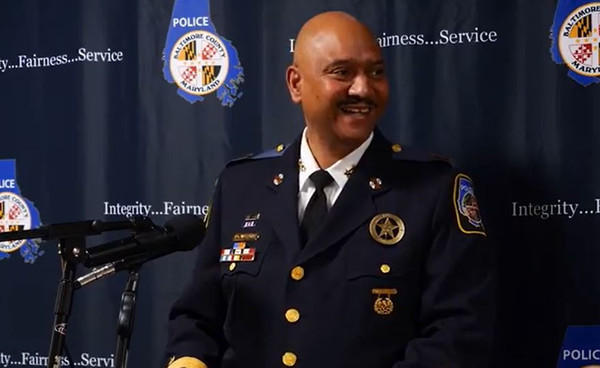
So in the case of Baltimore County Police Chief Robert McCullough, his inclusion on one of these Brady Reports obtained via an open records request this past July with a status of “IADISCLOSE” has drawn attention as to why the police chief, who was onboarded as chief back in 2023 after decades of service in the field, may host credibility issues.
As it turns out, the answer to said question isn’t clear. A report from The Baltimore Banner sought answers as to why Chief McCullough is featured on a Brady Report maintained by the State’s Attorney for Baltimore County, but Deputy State’s Attorney John Cox refused to explain the reasoning behind his inclusion.
Cox reportedly said that “any potential necessary disclosure” leads to an officer being placed on the list, adding that said inclusions are “more inclusive than just credibility concerns.”
According to Cox, a “partial sentence with five words contained within an electronic case management system” led to Chief McCullough’s inclusion on the maintained Brady Report, but says that the partial sentence in question cannot be shared publicly because “the source is a personnel record.”
When it comes to Chief McCullough’s internal affairs investigation records, which are publicly accessible via request, his law enforcement career dating back to 1985 only lists a single I.A. investigation for a traffic accident Chief McCullough was apparently involved in back in 1995.
Heather Warnken, who serves as the executive director of the Center for Criminal Justice Reform at the University of Baltimore School of Law, is among those who find the ambiguity surrounding Chief McCullough’s inclusion in such a report troubling.
“It’s a real problem if you can’t even get to the why,” Warnken stated, emphasizing the importance of knowing the reasoning behind Chief McCullough’s inclusion so that the public can “understand and interrogate whether it’s a good why.”
A spokesperson for the Baltimore County Police Department reportedly claimed they would address the issue via a statement by October 7th, but the date has come and went without any further information on the matter.
Depending on who one would ask, a Brady Report - which is also referred to as a Brady disclosure - with respect to law enforcement officers can be viewed as either an unfair character assassination due to unrelated past missteps professionally or a potential godsend in fomenting a criminal defense when preparing for trial.
These reports stem from the Brady Rule established in the 1963 Supreme Court Case, which the aforesaid ruling compels the government to share potential exculpatory evidence with the defense council, including the disclosure of evidence that could impeach the credibility of a witness called upon by the prosecution.
The impact of this landmark Supreme Court case cannot be understated when viewed through the scope of law enforcement officers called to testify before court, as various personal or professional blemishes can be brought to the forefront to call into question the integrity of an officer providing their testimony.
Said blemishes can vary in range from innocuous mishandlings of investigations, general inappropriate conduct/comments in or outside the workplace, to the more serious end of the spectrum like credible or substantiated allegations of criminal conduct.
So in the case of Baltimore County Police Chief Robert McCullough, his inclusion on one of these Brady Reports obtained via an open records request this past July with a status of “IADISCLOSE” has drawn attention as to why the police chief, who was onboarded as chief back in 2023 after decades of service in the field, may host credibility issues.
As it turns out, the answer to said question isn’t clear. A report from The Baltimore Banner sought answers as to why Chief McCullough is featured on a Brady Report maintained by the State’s Attorney for Baltimore County, but Deputy State’s Attorney John Cox refused to explain the reasoning behind his inclusion.
Cox reportedly said that “any potential necessary disclosure” leads to an officer being placed on the list, adding that said inclusions are “more inclusive than just credibility concerns.”
According to Cox, a “partial sentence with five words contained within an electronic case management system” led to Chief McCullough’s inclusion on the maintained Brady Report, but says that the partial sentence in question cannot be shared publicly because “the source is a personnel record.”
When it comes to Chief McCullough’s internal affairs investigation records, which are publicly accessible via request, his law enforcement career dating back to 1985 only lists a single I.A. investigation for a traffic accident Chief McCullough was apparently involved in back in 1995.
Heather Warnken, who serves as the executive director of the Center for Criminal Justice Reform at the University of Baltimore School of Law, is among those who find the ambiguity surrounding Chief McCullough’s inclusion in such a report troubling.
“It’s a real problem if you can’t even get to the why,” Warnken stated, emphasizing the importance of knowing the reasoning behind Chief McCullough’s inclusion so that the public can “understand and interrogate whether it’s a good why.”
A spokesperson for the Baltimore County Police Department reportedly claimed they would address the issue via a statement by October 7th, but the date has come and went without any further information on the matter.
For corrections or revisions, click here.
The opinions reflected in this article are not necessarily the opinions of LET

Comments