
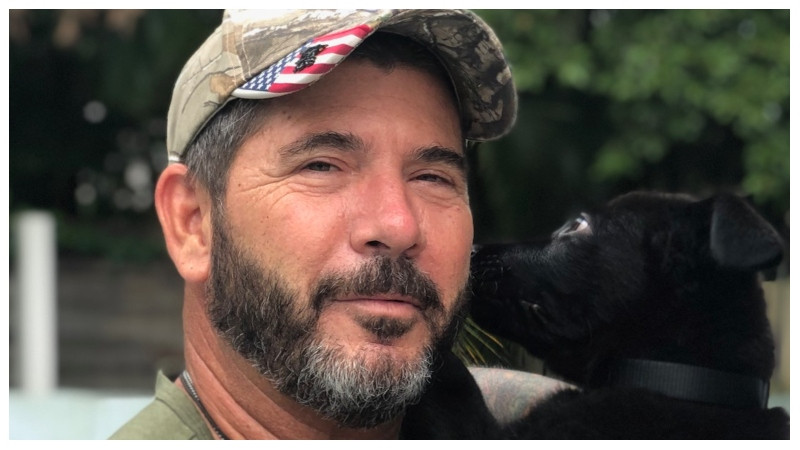
Guest writer Sarah Alderman is a dedicated advocate for justice and a longtime member of her church community in Jupiter, Florida. She writes to share her husband’s story and raise awareness about issues affecting families navigating the legal system.
My name is Sarah Alderman, the wife of a former law enforcement officer, and what you’re about to read is my personal account of the events that led to my husband’s arrest, wrongful conviction and 9-year prison sentence. An interaction that lasted less than one minute has changed our lives forever.
Jerald S. Alderman was arrested on October 17, 2019, and charged with three counts of aggravated assault with a deadly weapon (3rd degree felonies) and one count of using a firearm while under the influence of alcoholic beverages (2nd degree misdemeanor). Despite being the central figure in the allegations, no one ever asked Jerry for his side of the story, not the detective, the law enforcement agencies, or the prosecution. Jerry’s account of what happened that night has never fully been reported until now.
When you're living through something this extreme, it's hard to grasp what’s truly happening. But as the dust begins to settle and the shock gives way to clarity, patterns start to emerge. You revisit the timeline, pore over transcripts and videos, and reflect on the moments when your gut told you something wasn’t right. And the deeper you dig, the more undeniable it becomes, what happened to my husband wasn’t just a tragic misunderstanding, it was a manufactured crime against him.
I truly believe that once it became clear just how many mistakes had been made along the way, the system locked itself into a path it couldn’t reverse. Jerry had to be found guilty—not because the evidence supported it, but because the level of incompetence was so staggering, accountability had to be redirected. They’d already rung all the political bells to justify their actions, and once that narrative was set in motion, there was no turning back. You can’t unring the bells, and they weren’t about to admit they had made a huge mistake.
THE INCIDENT
On October 12, 2019, my husband was hanging out at our local pub on his first night off after working four ten-hour shifts “midnights”, in Lake Worth, Florida. Jerry was a 17- year law enforcement officer at the time working for the Palm Beach County Sheriff’s Office (“PBSO”). Over the course of his career Jerry received advanced training, spending several years as a member of the Critical Response Team (CRT) for the Royal Palm Beach Police Department and served as a sniper for the PBSO’s SWAT team for about a year.
One of the pub employees approached Jerry excitedly trying to tell him something. It was loud in the pub, so they walked out to the front of the pub, standing on the sidewalk off Clematis Street in downtown West Palm Beach, FL. Jerry knew most of the people that worked at the pub, and they knew he was a deputy. The employee told Jerry that there were people in the back parking lot breaking into cars, including his car.
1
At the same moment, a car was driving by, a white older model Caprice, and the employee pointed at the car, identifying the car to Jerry, and the men inside, as the ones that had been breaking into cars in the back parking lot.
After re-confirming the information, Jerry told the employee to report the crime to the local police officers who were standing on the opposite corner of the intersection. Jerry attempted to waive down the police officers with his badge in hand, yelling “stop that car” as he pointedat the suspect vehicle. The car turned at the intersection and Jerry watched to see which direction it was headed in.
With the Caprice out of sight, Jerry proceeded to the back parking lot to check on his car. While he was walking towards his car, the pub employee came walking up behind Jerry yelling again to get his attention and pointing at a car that was slowly driving through the parking lot. It was the same car that had driven past them in front of the pub. The employee again positively identified the car. This was an eyewitness pointing at a suspect car, telling Jerry, “There they are”.
Jerry walked up to the Caprice as it slowed to a stop due to a car that had stopped ahead of it in the parking lot. This was around 3:20am and the majority of cars in the parking lot were starting to leave as the local businesses were closing for the night. Jerry had his badge in hand as he walked up to the car. He identified himself as a Sheriff’s deputy and told the occupants of the Caprice they had been identified as car burglary suspects. He told them several cars in the parking lot had been ‘hit’ including his car, which was parked close by in the alley way.Jerry’s right hand was near his gun which was located in the waistband of his jeans behind his right hip.
Jerry, still very calm at this point, removed his hand from his hip and pointed his finger at each of them telling them they had each been positively identified by a complainant as being involved in vehicle break-ins. Jerry then noticed a car that had pulled-up behind the suspect vehicle,inching closer, and the driver of that vehicle rolled down his window. The suspect located in the backseat of the Caprice yelled back to the car that had pulled up behind them. He shouted something about Jerry accusing them of breaking into cars. The Caprice, with three men in it, was now communicating with the car behind it, which was almost directly to Jerry’s right due to the S-curve in the parking lot. The vehicle behind the Caprice had four people in it. Jerry was expecting the local West Palm Beach Police Officers (“WPB PD”)to arrive any second, but they were not there yet.
The three men in the Caprice were growing confrontational, stirring that familiar unease in Jerry, the kind that ignites his ingrained hypervigilance. Sensing potential trouble, Jerry gave them a lawful order to leave the parking lot. He had already placed his hand back on his hip, on his gun.
Jerry calmly told the suspects, “You’re lucky you’re not getting arrested and going to jail. Just take your car and go home…get the f**k out of here.”
The response from the suspects was combative.
Driver – “What if we have something to say about it?”
2
Front seat passenger – “Yeah, f**k you!”
Back-seat passenger – “F**k you, make us leave.”
The driver was making furtive movements inside the car. Jerry’s senses were on high alert. At this point, Jerry decided a tactical retreat was the best option given that the men had issued a direct challenge. The situation was escalating, he was outnumbered by three young males probably half his age,there’s a second car with unknown connections to the suspect car, it’s dark out, and help was nowhere in sight. His left hand was still holding his badge, and his right hand was on his gun.
Jerry responded, “I don’t give a f**k what you have to say about it. I’ll f**king come back for you, you f**king c*nts. Get the f**k out of here. If I see you downtown again tonight…guess what will happen?
Driver – “What’s going to happen?”
Jerry – “Get the F**k out of here now! What do you think will f**king happen a**hole? (tapping the gun on the outside doorframe 3 times) What do you think? Get the f**k out of here now”. Jerry then disengaged and walked toward the closest building.
During this heightened exchange, he pulled his gun out, holding it low with the barrel pointing down towards the ground (a SUL position), while simultaneously putting his badge in his left jean pocket. He used alpha commands, verbal judo, tapped his pistol on the driver’s side door to break the suspect’s focus and to reorient their attention to his instructions (OODA loop), which allowed Jerry to swiftly retreat to the closest building for cover.
Let’s be honest, police work is not always pretty but officers are unlikely to gain compliance if they ask politely, “sir, please leave the premises” when tensions are high and authority needs to be asserted. Jerry used his training and experience to remove himself from the situation, a clear de-escalation.
As shown in the parking lot surveillance video, the entire incident lasted no more than 50 seconds from the moment Jerry approached the vehicle to the moment he walked away. Within minutes, local police arrived and immediately confronted him.
A male and female officer approached and, without hesitation, accused Jerry of being intoxicated. They claimed it was the second consecutive weekend he had been downtown “traffic stopping cars.” Jerry was still reeling from the dangerous encounter just moments earlier. He was stunned, the officers he had expected to arrive in support were instead confronting him with bizarre and baseless accusations.
The lead officer repeated the claim again and again: that Jerry had been downtown, intoxicated, traffic stopping cars the previous weekend. But Jerry had been working that weekend, there was no possibility it had been him. So, who did they think he was? And why were they attacking him? The moment was deeply confusing and disorienting, overwhelming Jerry as he struggled to recover from the adrenaline crash following his encounter with the Caprice, where he was in fear for his life.
3
What WPB PD failed to realize, because they would not let Jerry speak, was that Jerry had reasonable suspicion of criminal activity and was legally authorized to approach the suspect’s vehicle. He had no intention of acting independently. The female officer detained Jerry while the on-scene investigation started.
Because he had self-activated in response to the reported crime, effectively placing himself on duty, the local police notified the Sheriff’s Office. In accordance with standard operating procedures, several senior deputies from Internal Affairs were dispatched to the scene. After they had completed their part of the investigation, Jerry was released and went home and was subsequently placed on paid administrative leave pending the outcome of the internal investigation.
Jerry went to the PBA union office the next business day after the weekend and met with a union attorney. During that meeting, he was informed that a cell phone video of the incident had begun circulating on social media. The furtive movements Jerry observed inside the vehicle turned out to be the driver reaching for his phone, which was tucked into the right front pocket of his pants. What the video didn’t reveal, but we would learn later after depositions, was that the driver also had a Glock 43 concealed in the front waistband of his pants, hidden beneath his shirt. In that moment, the motion to retrieve a phone could have just as easily been the motion to draw his firearm.
The driver recorded the last 25 seconds of the interaction which starts with Jerry saying in the middle of his sentence, “I don’t care what you have to say about it…”. The video captures Jerry cursing at them to “Get the f**k out of here” and tapping his pistol on the exterior of the car door.
Jerry explained the entire story to the PBA attorney, how he had an eyewitness to the car burglaries that had just occurred, positive identification of the car and suspects by the eyewitness at the time, and the suspects had returned to the scene of the crime, etc. Based on the circumstances, Jerry had a legitimate basis to suspect criminal behavior.
Jerry was lawfully empowered to make contact with the suspect’s car to investigate the allegations.
After stepping out briefly, the attorney returned and reassured Jerry that he was covered, he had placed himself on duty. Jerry was walked out of the union office by a couple union reps telling him, “Don’t worry, you’re good, we got you”.
Five days later everything changed. Jerry was called down to the main office, PBSO headquarters, under the false pretense that he needed to sign more paperwork, where he was arrested. The occupants in the car were alleging that Jerry pointed his gun at each of their heads and threatened to kill them. Jerry asked for his union attorney, but the internal affairs sergeant informed Jerry that he was not being covered by the union, even though the union attorney had just told him days before that he was covered.
Under the advisement of the same IA sergeant and a West Palm Beach City Counselman, who was also an attorney, we hired Scott Richardson, an adjunct attorney for the PBA. It seemed everything was moving so quickly, and we thought that the whole PBA matter would be resolved once there was a full understanding of what really
4
happened, expecting the PBA would sign on and reimburse us for the legal costs. Having an adjunct attorney would make this process easier. Unfortunately, there was no communication from the union or from his representative and they refused to provide a reason for the change in their position. Notably, the union was serving both Jerry’s agency and the WPB Police Department at that time. Shortly after Jerry’s arrest, he was placed on unpaid administrative leave.
This kicked off a legal battle that spanned 2 ½ years.The fact that Jerry was facing criminal charges was difficult to process because he should have been immune from prosecution since he had put himself on duty. As a deputy sheriff in Florida, you have a duty to act in certain situations (this being one of them) and your jurisdiction is anywhere inside the county. Jerrywas still employed by PBSO,buthe wasno longer being paid. This placed a tremendous burden on our finances. Our income was essentially cut in half, and we were facing massive legal bills.
THE INVESTIGATION
Through the course of discovery, after reviewing police bodycam footage and deposing the officers who were on scene that night, along with the lead detective, we uncovered major flaws in the investigation. One of the most glaring issues was when WPB PD arrived, they failed to separate the three alleged victims.
A self-proclaimed investigative reporter “The Citizen Warrior”, who was really just guy with aYouTubepage, was videoing in the downtown area that night. He pulled up to the scene after the incident and began filming. The amateur investigative reporter recorded the alleged victims hanging out together on scene, talking to girls.
At one point in the video, the Citizen Warrior was talking to front seat passenger who showed the YouTuber the video from the cellphone, proclaiming, “That’s viral. I’m rich tonight, I’m rich”. The Citizen Warrior also captured the men talking with WPB PD. They were being instructed to go to the police station downtown to give a statement. The men jumped into the same car, the Caprice, and drove down to the local police station where they sat together in the lobby for over an hour, looking at their cell phones, before they were interviewed. The Citizen Warrior posted the video footage from that night on his YouTube page, but it wasn’t up for very long before he took it down.
The detective assigned to the investigation collected their statements but failed to take custody of the cell phone that had recorded the now-infamous video. No forensic analysis was conducted to determine whether additional footage existed, whether any content had been deleted, or whether the video file that was emailed directly to the detective had been altered in any way. There was no chain of custody on the cell phone video.
Two parking lot surveillance cameras captured the events in the parking lot that evening. One of the videos clearly showed that Jerry never pointed a gun at anyone. The parking lot surveillance video also captured the car burglaries that were reported to Jerry. The video showed a man getting out of an older white vehicle (similar to the
5
suspect’s Caprice) walking around the parking lot pulling on door handles, including Jerry’s car.
WPB PD never investigated the car burglaries although there were several victims on scene, including Jerry, and the eyewitness. The eyewitness had watched the car burglaries occur from Roxy’s rooftop bar that overlooks the parking lot. The eyewitness was a Roxy’s employee, who then radioed downstairs to another employee on the first floor, who thenrelayed the information to Jerry as if he were the eyewitness, starting the entire chain reaction.
One vehicle in the parking lot, a large white Dodge truck, had the door handle pulled off and it was lying on the ground. This damage was reported to one of the female police officers and is visible on her body-worn camera. Her footage also captures her interaction with one of the potential car burglary victims, who asks whether the parking lot cameras are operational, referencing posted signs indicating video surveillance. The officer responds that the cameras do not work and are installed merely as a deterrent.
Although WPB PD retrieved surveillance footage from the parking lot, we later learnedthrough theleaddetective’s deposition, a full eight months after the incident, that he never actually reviewed the video. Another detective pulled the video from the surveillance camera and told the lead detective that althougha white older model vehicle is captured pulling into the parking lot, a guy jumps out and is pulling on car door handles, the car is not the alleged victim’s car.
The lead detective never watched this video that also captured the entire interaction with Jerry and the alleged victim. The lead detective never interviewed Jerry, nor did he make any attempt to obtain a statement from him. Crucially, he failed to identify or document the clear inconsistencies between the alleged victims’ initial on
scene statements and the accounts they later gave at the police station. He filed the probable cause affidavit and formally charged Jerry based solely on the alleged victim’s statements. Needless to say, the investigation was anything but thorough—it was incomplete, careless, and deeply flawed from the start.
It’s important to note that while the parking lot surveillance footage does not capture the same vehicle, Jerry’s response was based on the information available to him at the time. Police officers routinely act on second and third-hand information relayed through dispatch, yet in Jerry’s case, the information came directly from a trusted source who relayed the information to Jerry as if he were the eyewitness. An eyewitness account is arguably the most reliable source short of witnessing the crime oneself.
Moreover, without a thorough investigation into the reported burglaries, there was no way to determine who was or was not involved that night. Given that car burglaries had indeed occurred, WPB PD should have treated the alleged victims as potential suspects until a proper investigation could rule them out. The surveillance footage wasn’t retrieved until days after the incident, making it impossible to eliminate anyone from suspicion that night.
6
Ironically, Jerry himself was a victim that evening—yet he was denied the rights afforded to victims, and the lawful protections he should have received as a law enforcement officer.
RED FLAGS
On October 18, 2019, the West Palm Beach Police Department filed a Risk Protection Order (RPO) against Jerry, citing the October 12th incident as prima facie evidence. Because criminal charges were still pending, Jerry could not testify during the hearing. The judge originally denied the RPO request, but the attorney for WPB pressed the matter in a later hearing. Despite already being under court orders prohibiting firearm possession and contact with the alleged victims, Jerry was “red flagged” under the RPO statute.
This redundant and unjustified civil action was a calculated move in order to smear Jerry’s name in the media. It had nothing to do with public safety—it was about public shaming. They wanted to portray him as a threat to the very community he had spent decades protecting. As part of this trumped-up legal procedure, they moved to inventory every firearm he lawfully owned, effectively placing his constitutional rights under siege.
This was a deliberate abuse of power. The statute wasn’t applied, it was weaponized. That alone should serve as a stark warning: the “red flag law” can be twisted and turned against anyone, especially when political motives override the pursuit of truth.
PRE-TRIAL LEGAL SHENANIGANS
Due to the significant case backlog caused by COVID-19 shutdowns and strict precautionary protocols, legal proceedings moved slowly over the next couple years.
First the prosecutor threatened to upcharge Jerry to armed burglary, which carries a life sentence,if he chose to depos the alleged victims or go to trial. This was held over his head for 8 months, even though the prosecutor was aware through deposition from WPB PD that there was no evidence to support an armed burglary charge, and of course, it never happened. Since Jerry is also an officer of the court, the threat to upcharge him was not only malicious prosecution but also threat by public corruption.
Things seemed to be getting worse, not better, and we felt our attorney should have been doing more. The threat of the armed burglary charge, in particular, should have been addressed much earlier. The state ultimately dropped it, but only after Jerry compelled Richardson to raise the public corruption allegation in court.
Initially, we believed our relationship with Richardson would be an asset. He had defended law enforcement officers for PBSO and worked closely with the PBA. But over time, that confidence began to erode. Jerry grew increasingly frustrated as Richardson
7
dismissed everything as “political,” while Jerry focused on the law, believing it was firmly on his side.
In hindsight, Richardson wasn’t wrong. But we weren’t ready to hear it. We didn’t yet understand that a courtroom is more like a theatre than a truth-seeking forum. The judge is the director, the attorneys are actors, and there’s a script which most of the cast already knows the ending to.
Eventually, we made the difficult and expensive decision to change attorneys and hired Stuart Kaplan
The prosecutor offered Jerry a plea deal: plead guilty to all three felonies and the misdemeanor, receive a sentence of one year and a day, serve time in prison, and spend several years on probation.
For Jerry, this was never an option. He refused to admit to crimes he didn’t commit. Accepting the plea would mean losing his job, his law enforcement certification, and likely his pension—all for a conviction he knew was unjust. It wasn’t a deal, they weren’t even offering reduced charges. We believed that once Jerry had the chance to tell his side of the story, the truth would prevail and he would be exonerated.
In November 2021, the case was progressing towards trial. The judge assigned to the criminal case was the Honorable Caroline Cahill Shepherd, who had been appointed to the circuit court in 2019. Both the defense and prosecution filed motions. Defense counsel sought to dismiss the alcohol-related misdemeanor, citing a complete lack of evidence that Jerry was intoxicated. No field sobriety tests were administered by either the local police or the internal affairs deputies present at the scene, nor was Jerry asked to take a breathalyzer test.
Jerry’s bar tab from that night showed 4 drinks total and the last drink was rung in at 9:02pm. The incident occurred at around 3:20am, merely 6 hours later. In fact, during the depositions of the primary male officer, the officer acknowledged that he would have allowed Jerry to drive home as he did not appear intoxicated.
The state filed motions aimed at restricting the defense, including a request to bar any mention of vehicle burglaries or WPB PD’s failure to investigate them. Defense counsel also wanted to bring in testimony from a deposition to impeach the detective. Prosecutors argued that referencing these issues would confuse the jury and distract from the central charges. The judge upheld the intoxication charge, quashed the deposition testimony as improper impeachment, and granted the state’s motions.
Jerry’s case was on the calendar for trial to start in December 2021. The state’s motions effectively would prohibit Jerry from testifying about the car burglaries and WPB PD’s failure to conduct an investigation into said car burglaries, which would have been exculpatory evidence supporting Jerry’s defense. As the judge pushed the case forward, Jerry’s defense counsel appeared visibly defeated. The attorney told Jerry that the entire defense would rest on him. Jerry would have to testify.
8
During one of the pre-trial hearings, the judge told Jerry she could sentence him to up to 15 years in prison—and that she didn’t want to receive a letter from him if she gave him 12 years claiming he did not understand this could happen. Jerry was stunned. It was the first time he’d heard numbers that high. His attorneys had assured him, based on Florida’s sentencing guidelines and his lack of criminal history, that he was likely facing just over three years. In Florida, inmates can earn early release for good behavior but must serve at least 85% of their sentence, meaning worst-case-scenario, Jerry could expect to serve roughly two and a half years. The sudden possibility of more than a decade behind bars was terrifying.
With the shocking revelation about the potential sentence hanging over him, defense counsel scrambling to regroup, and the car burglary allegations no longer in play, Jerry was left reeling, confused, and desperate. We decided to seek a second opinion from another criminal defense attorney while the trial had been pushed into the new year. This attorney suggested one thing that no prior counsel had brought up, an expert witness.
Without context about Jerry’s state of mind or the events leading up to the encounter, explaining his actions to a jury, none of whom had law enforcement experience, was nearly impossible. To bridge that gap in understanding, expert testimony would be essential. An expert witness could speak to Jerry’s training and experience, providing critical context to interpret his behavior as captured in the cell phone video. This gave us a new beam of hope, and we decided to switch attorneys and hire Cory Strolla, another difficult and expensive decision, but this was Jerry’s life at stake.
Through a trusted connection, we secured our expert witness: Rich Emberlin, a 30- year law enforcement veteran with distinguished service in the Dallas Police Department’s elite units, including SWAT and the Criminal Intelligence Unit–Dignitary Protection Squad. Rich also served as an adjunct instructor for the Safariland Group and worked as a law enforcement consultant and trainer. Given Jerry’s advanced training and experience, Rich was the ideal expert to clarify that Jerry’s actions aligned with standard law enforcement protocols.
TRIAL #1
May 20221, Jerry's case proceeded to trial with jury selection scheduled for May 3rd. The day before jury selection just past 3:00 PM, the judge granted the state’s motion to strike Rich Emberlin as an expert witness. This was the 2nd time the judge had issued a ruling at the very last minute severely damaging Jerry’s defense. There was no way around it now, Jerry would be forced to testify.
May 4th, the trial started, two days of testimony with closing arguments on the third day. Tensions mounted during the trial between Jerry and his defense attorney. Strolla
1 Two years after George Floyd’s death and approx. 11 months after Derek Chauvin’s sentencing.
9
had made no effort to prepare Jerry for his testimony. Worse, he failed to impeach the lead officer’s claims despite having deposition statements that directly contradicted the officer’s courtroom assertions about Jerry’s alleged intoxication and his ability to drive home. Jerry directed Strolla to ask these questions and Strolla did not.
Strolla failed to subpoena or call any of the eyewitnesses. He did not call the detective to testify regarding his investigation, its deficiencies, or the multiple inconsistencies in the alleged victim’s statements. He also failed to present the bar tab, which reflected only four drinks, to challenge the allegations of intoxication.
State Discovery #2 – Bar Tab
We had the parking lot surveillance videos enhanced, so the jury could clearly see Jerry’s hand placement and that he never pointed the gun at anyone. The video was critical because it contradicted the direct testimony of the alleged victims, that Jerry pulled his gun, put his arm inside the vehicle and pointed the gun at each person’s head.
We had hired a company to enhance the parking lot video and prepare both the footage and still images for presentation in court while Strolla introduced the evidence. But Strolla told us to cancel the arrangement, he insisted he could handle it himself and that it would save us money.
When the time came to present the videos and stills, we were blindsided. Strolla had never submitted them as part of the defense evidence, and worse, he didn’t even
10
bring the materials with him to court. The evidence we had invested in, evidence that could have made a difference, was never seen
Instead, Strolla relied on the grainy, low-quality footage presented by the state, which was difficult to discern. Furthermore, he did not confront the alleged victims regarding the blatant falsehoods in their statements. Additional issues arose with the video evidence admitted in court, including the driver’s cell phone footage, which was cut off prematurely. The missing last couple seconds could have supported the defense’s argument that the driver was not acting out of fear.
One of the key elements of assault is that the person has to be genuinely afraid of imminent harm. But in this case, the driver, who claimed to be terrified, didn’t act like someone in fear. He was told to leave, yet he stayed. And then there’s the moment he asks Jerry, “What’s going to happen?” If someone had just pointed a gun at your head and threatened to kill you, would that really be your question? It doesn’t add up. If you’re scared, you don’t stay, you don’t reach into your pocket making suspicious movements and you definitelywould not attempt to conceal an object. The behavior just doesn’t make sense.
The jury started deliberating late on Friday, May 6th. The jury asked one question, “Was Mr. Alderman allowed to drive home after the incident? – need clarification”. The judge sent a note back that the jury would need to rely on their memory of the evidence presented. Just after an hour ofdeliberations, the courthouse was closing, so the jury was sent home for the weekend.
Deliberations resumed the following Monday. After approx. 4 hours of deliberation, the jury sent its first note that it could not reach a unanimous decision on all 4 charges. The judge read the “Allen charge” and sent them back to deliberate further. After another hour went by, the jury sent a second note. The judge read out loud, “Unfortunately, after further deliberations, due to one juror we are unable to come to any unanimous verdict. We are sorry that we were unable to present a truly unanimous verdict.”Then the judge said, “So I'm going to bring them in and discharge them. I can pick another jury tomorrow.” The jury had deliberated for a total of 6 hours when the judge declared a mistrial.
Jury polling revealed that the panel was unable to reach a unanimous verdict on the lesser included misdemeanors—offenses that had not been formally charged against Jerry but were presented as potential alternatives to the three felony counts. This is a crucial point. Since the misdemeanors were lesser included offenses and not officially charged, the only way the jury could have been considering them was if they had already dismissed the more serious felony charges. They were also hung on the original alcohol related misdemeanor. The result was five jurors in favor of conviction on all misdemeanors and one juror in favor of a full acquittal. This felt like a win since Jerry testified without being prepared or being able to explain why he approached the car in the first place. Again, since they were only hung on the misdemeanors, they must have dismissed the felonies.
11
After the revelation of the polling results, surely the state attorney would reconsider pursuing charges beyond the misdemeanors. However, the state attorney never said anything, it was the judge who initiated the scheduling of another trial. But before she could do so, Strolla stood up and announced in open court that he was withdrawing as counsel. With the notice of an imminent request to withdraw, the judge set a status-check for May 13th at 8:30am with trial to start at 9:00am., a mere four days after the mistrial.
Strolla’s decision to withdraw from the case was unexpected. While disagreements arose during the trial, such tensions are common when significant stakes are involved. If Strolla had not submitted his withdrawal request, we would have most likely been forced to retain him for the 2nd trial given the imminent retrial, despite his apparent negligent performance. His resignation in open court, without prior notification to Jerry, was, in our opinion, done in bad faith and resulted in a complete breakdown of trust between them.
BETWEEN THE TRIALS
When we returned home after the first trial, Strolla was already sending threatening emails that we would owe him $15,000 if we didn’t approve his withdrawal request. We had no choice but to approve his request to withdrawal, especially after what we had just witnesses in the courtroom.
We quickly hired an attorney through word of mouth, with no time for due diligence, just two days before jury selection. The attorney promptly filed her notice to appear and attended the May 12th hearing where the judge was set to address Strolla’s motion to withdraw. We did not fully understand what was at stake in the hearing or the potential outcomes, and thoughtit was merely a formality.
Our attorney was withdrawing after completing a trial, fulfilling his contract, and we hired another attorney. We believed the judge would have to grant a motion for a continuance so our new attorney could get up-to-speed by reviewing the case file and the transcript of the first trial. Strolla’s motion to withdraw was based on irreconcilable differences with Jerry, including a breakdown in trust and communication.
The judge denied Strolla’s motion to withdraw, meaning he would have to stay-on unpaid, and rejected the request for a continuance, but allowed our new attorney to join “the party.” The second trial was scheduled for the following Monday, just one week after the first had ended. Strolla appealed the lower court’s decision to the Fourth District Court of Appeal, but the appeal was swiftly denied.
TRIAL #2
Jerry’s newly hired attorney, Manisha Maraj, knew virtually nothing about the case. Strolla, who was being forced to stay on against his will, wasn’t speaking to us or to her. When we walked into the courthouse on Monday, May 16th, everything felt off. We
12
watched as a jury panel was sworn in, all white women, ranging in age from their 20s to 60s, none with any law enforcement background or relevant experience. It was an unlikely representation of a jury of Jerry’s peers.
When the topic of a plea deal resurfaced, the offer was startlingly unchanged, Jerry would still be adjudicated guilty on all three felony counts and the misdemeanor. It was uncanny. Just six days earlier, a jury had clearly agreed that Jerry was not guilty of the felonies. The judge even confirmed the jury’s findings (Trial #2 – May 16, 2022, transcript):
THE COURT: Okay, because the jury when polled was five to one for conviction on all misdemeanors for which you could be sentenced to four years in the Palm Beach County Jail, consecutive. Do you understand that?
MR. ALDERMAN: I recall there being five jurors against one -- or one and four --
THE COURT: No, it was the other way around; there was one person who was not voting to convict.
MR. ALDERMAN: I believe -- and I believe it was a lesser-included misdemeanor -- THE COURT: Correct.
Yet the State remained inexplicably confident. Why refuse to offer reduced charges? What did the State know that we didn’t know and why didn’t defense counsel challenge the verdict then?
The following day, Maraj showed up 45 minutes late and the jury was already seated. She rushed into the courtroomand threw her car keys at me and asked me to move her Porsche, she had left it running in front of the courthouse, and she wanted a diet Coke. What a horrifying start, and in front of the jury no-less. As the state finished their opening statement, Maraj was just in time to present the defense opening statement. She was clearly unprepared and unfamiliar with the case; it was a disaster.
During the next recess, after the judge reprimanded Maraj for arriving late, the conversation shifted to the outfit worn by one of the alleged victims. The driver was dressed in a firefighter’s uniform: standard-issue boots, pants, and a jacket emblazoned with “Palm Beach County Fire Rescue” across the back. He had dressed normally during the first trial. The prosecutor claimed he was a volunteer firefighter for Palm Beach County and needed to report to his volunteer post after testifying. Underneath the jacket, however, he wore a North Palm Beach Fire Rescue t-shirt, even though the prosecutor said it was a Palm Beach County Fire Rescue t-shirt.
Jerry and I had heard that the driver was a volunteer firefighter for the Village of North Palm Beach, where we lived, but had never heard that he was a volunteer for Palm Beach County. Regardless, the outfit was extremely prejudicial and gave the appearance the driver was a firefighter, when he was not, and worked for the same county as Jerry.
Unfortunately, we weren’t surprised, the judge allowed it. By that point, it felt like the pattern had already been set, defense objections dismissed, fairness sidelined, and
13
decisions made with little regard for balance. Each ruling chipped away at our confidence in the process, and this one was no different.
Maraj struggled and badgered her way through most of the cross-examinations, and right before the last police officer was about to take the stand, Jerry had had enough. He could not sit there for another minute watching the case unravel in front of his eyes. The state clearly prepared by addressing any and all potential gaps from the first trial, and each witness’s testimony was clarified and presented more consistently. The front seat passenger even yelled out during his testimony, without being asked, that he knew Jerry didn’t drive home that night, that his wife picked him up, answering the one question that the first jury asked.
Jerry requested permission to address the court. Jerry’s complaint was thatMaraj was completely unfamiliar with the case and Strolla was doing nothing. The judge said that Strolla was a very good lawyer and she had seen him participating by taking notes all day. Jerry wanted Strolla to assume the role of lead counsel and to conduct the cross
examination of the final officer. Strolla was at least familiar with the case having completed the first trial the prior week. Strolla refused to participate, stating he was vehemently opposed, he was here over objection, he wasn’t being paid, and would only do so if the Court ordered him to, and so the court did.
Again,Strolla failed to impeach theofficer. The state rested and it was time to bring up defense witnesses, but neither attorney had made any arrangements for any defense witnesses to appear, and Jerry had not been afforded an opportunity to review his testimony from the 1st trial. The discs provided to Maraj by Strolla did not include Jerry’s testimony.The trial would resume the following morning so both defense attorneys could prepare Jerry to testify.
Strolla was insisting that all communications be in writing and then started harassing Jerry via text messages demanding payment for legal service due and owed. A text fight ensued between Strolla and Maraj and Jerry’s phone, but Jerry never responded to any messages. It was pointless, there was no way Strolla and Maraj were going to prepare Jerry to testify. Jerry did not have access to a transcript or video of his earlier testimony, and Strolla, the attorney that would be questioning him on the stand, refused to speak to him. It was an impossible situation.
Jerry felt compelled to take action in order to bring the proceedings to a halt. He submitted a letter to the judge requesting a mistrial, citing multiple legitimate grounds related to ineffective assistance of counsel. The letter was emailed to the judge that evening with a copy of the text messages showing the ongoing dispute and the harassment for non-payment.
The following day, the judge convened a hearing to address the concerns Jerry had raised in his letter. She told him he was not allowed to manufacture grounds for a mistrial and dismissed the complaints as meritless—even though nearly every issue Jerry outlined stemmed directly or indirectly from her own rulings. The judge was fully aware that Strolla was trying to extort Jerry for money in his desperate last hours, and that Maraj was woefully unprepared, and in my opinion, borderline incompetent.
14
Jerry testified that day, though the judge imposed additional limitations on the scope of his testimony, specifically prohibiting reference to his previous experiences or training.
When Jerry took the stand for the second time, the prosecutor immediately attacked Jerry for the lapel pin he was wearing. It was a very tiny sheriff’s star. The prosecutor pulled out Jerry’s PBSO leave paperwork and pointed to a statement that Jerry could not represent himself as a deputy sheriff while on suspension. The lapel pin was not a uniform issued pin. Anyone could buy this pin and wear it to show support for the sheriff’s office. This was the prosecutors’ outrageous overreach to make Jerry look bad, like a rogue officer, in front of the jury and highlight that he was suspended from work.
Throughout the proceedings, nearly every statement Jerry attempted to make was met with an objection, which the judge subsequently sustained. He wasn't allowed to speak freely or tell the whole truth; they hardly let him say anything at all.The prosecutor grilled Jerry again on PBSO’s Standard Operating Procedures. He asked if Jerry had his gun in a holster the evening in question.
The prosecutor was badgering Jerry, and Jerry fully admitted that he didn’t have a holster, which is a violation of PBSO’s SOPs. Despite this, the judge allowed the state to call a PBSO Major as a rebuttal witness, an expert witness, even though the notice was filed at the last minute, preventing Jerry’s defense team from deposing him. At the same time, Jerry was denied the opportunity to present his own expert witness in his defense.
Major Haas took the stand in his full PBSO dress uniform. When they asked Haas about the lapel pin, he said he thought it might be a violation, but he didn’t know for sure. However, when it came to questions about Standard Operating Procedures, Major Haas’ testimony closely mirrored Jerry’s. On those points, their accounts were consistent.
Therefore, there was no reason to call Haas, there was nothing for him refute. Plus, PBSO Standard Operating Procedures are internal guidelines, not the law. This was not an internal affairs investigation; it was criminal matter. PBSO’s internal affairs department did not investigate this incident, rather, they deferred to WPB PD.
Major Haas stated that his involvement in the case was limited to reading WPB PD’s probable cause affidavit. Haas was unaware that that the alleged victims had a firearm in the car, they offered physical and verbal resistance, that burglaries had occurred, and they were felony burglary suspects. Despite having no involvement in the investigation and basing his opinion solely on the probable cause affidavit, the Major was permitted to provide his opinion on the cell phone video. He labeled Jerry’s actions a “threat.” At that moment, we knew it was over. What more did the jury need to hear?
Although there was substantial evidence supporting Jerry’s claim that his use of force was justified as a law enforcement officer, the jury was not provided with the appropriate legal instruction. Specifically, the court failed to inform the jury that, under the circumstances presented by the defense, a law enforcement officer may lawfully use force if acting within the scope of a legal duty and in good faith. This omission deprived
15
Jerry of his constitutional right to a fair trial, as the jury was not given the framework to evaluate whether his actions were legally permissible.
On May 19, 2022, the jury reached a verdict, but Maraj was absent from court due to another conflicting trial. Jerry was found guilty on all charges and immediately remanded into custody instead of being allowed to remain out on bond pending sentencing. We were completely unprepared—no one had warned us that this was even a possibility. We had no time to try to make sense of what was happening.
Jerry handed me his belongings, his suit jacket, wallet, phone, and wedding ring, before being escorted away by fellow PBSO sheriffdeputies.My husband, of 15 years,was being taken away by men wearing the same uniform he had worn since before we were married.
Jerry was booked into the county jail as he awaited sentencing. He was still employed by the Sheriff’s office, so he could not be placed in general population. He was therefore placed in confinement in the medical psychiatric ward in the county jail, the same county where he had worked for nearly 20 years. Jerry was allowed out of his cell for only one hour a day, and he couldn’t leave the small rec room that was a few feet from his cell. Jerry couldn’t have visitors, and he could not go outside. He was stuck in confinement for nearly six months, clearly cruel and unusual punishment.
THE MISSING JURY VERDICT FORM
At the end of the first trial, with all the drama of Strolla quitting and the trial being set immediately thereafter, it didn’t fully dawn on us until after Jerry’s conviction that the first jury had in fact reached a verdict. As mentioned before, they had found Jerry not guilty on the felony charges, which was evidenced by the jury polling results that were written on the jury verdict form.
Based on the jury instructions, the jury was required to rule out the highest crime before considering the lesser included charges. Since the jury was hung on lesser included misdemeanors, with one juror wanting to fully acquit Jerry, it was clear they must have unanimously agreed that Jerry was not guilty of the three felonies as charged. However, the judge did not put the jury verdict form into the court record.
On appeal, the appellant has the right to a complete record. In order to recreate the missing jury verdict form, we filed a motion to request the judge allow counsel to interview the jury foreperson. Not only did the judge deny the request to interview the jury foreperson (Juror #4), but she also added that, “Defense Counsel and/or any person directed by Defense Counsel or Defendant shall not interview or contact Juror 4, or for that matter, any juror without first obtaining leave of Court.”
We thenfiled a motion to compel the judge to produce the verdict form. During the hearing, she admitted that she was the last person to have possession of the jury verdict form and did not put it into the court record and then proceeded to deny the motion to
16
compel. So,despite acknowledging her own negligence, the judge nevertheless refused to allow Jerry to cure the error.
It should also be noted, when I reviewed the video/audio files and transcript of the first trial, during the reading of the jury polling results, there is approx. 47 seconds missing. The audio/video file stops at 2:22:06 and the next file begins at 2:22:52.
Actual Screen Shots of the Audio Video files
The trial transcript reveals the discussion of the jury verdict form and then jumps to the judge bringing the jury back into the courtroom.(Trial #1 – May 9, 2022, transcript):
MR. TROPEA: Thank you, Judge.
THE COURT: All right, read?
MR. TROPEA: The state has no objection, Judge.
THE COURT: Mr. Strolla?
MR. STROLLA: One moment, Judge. No objection.
Missing 47 seconds
THE COURT: Okay, and then they'll just knock and then we'll bring them in and I will discharge them. And then please remember to stay until all of the evidence is recovered from the jury room, get it back to the clerk before anyone leaves.
17
Because the audio/video files did not capture what was said by the judge during this time, it is not in the official court transcript and therefore not in the records. I contacted the Clerk of Court, the custodian of the official records, inquiring about the missing time. The response was that the court was in recess and official court business did not occur during this time. I can assure you that the court did not take a 47 second recess since I was present along with several other witnesses. At this point, one has to wonder at the level of incompetence that occurred in this case and ask…Is the system really that broken that it allows for such negligence? Where are the checks and balances?
Had the jury’s verdict form the first trial been properly acknowledged, Jerry should never have faced a second trial on the felony charges, it would have constituted double jeopardy. At most, the State could have pursued the remaining misdemeanors, which would have removed Jerry from Judge Shepherd’s courtroom entirely. Failing to raise this critical point was, without question, one of Cory Strolla’s most consequential failures.
SENTENCING
Based on the criminal scorecard, Jerry faced a minimum of 33.15 months and a maximum of 15 years in prison. He was a first-time offender with no prior criminal record, and notably, no individuals were harmed or even physically contacted during the fifty-second incident. Based on these circumstances, it was anticipated that the minimum sentence—nearly three years—would represent the worst possible outcome.
However, that was not the case. The judge sentenced Jerry to 3 years for each felony to be served consecutively and 60 days for the misdemeanor. Jerry had already served the 60 days for the misdemeanor, but now he would have to spend the next almost 9 years in prison, a sentence that a repeat criminal offender would not receive under the same circumstances.The judge also denied Jerry bond pending appeal.
APPEAL
Appellate counsel filed a request to the 4thDCA for bond pending appeal. Jerry was assured there was no reason the 4th DCA would deny bond. Jerry was not a flight risk, he has strong ties with his community with a supportive church, a wife and a house that we own together. The appellate court denied the bond motion two days after Christmas2022, our first Christmas apart. The denial was on a single page, no reason provided and signed by the clerk. I have to wonder if the 4th DCA ever reviewed the request.
The direct appeal took a painfully long time. The attorneys on both sides took every possible extension, always waiting to the very last minute to submit the required brief. There was no urgency and frankly, they didn’t seem to care.
The appeal presented seven legal arguments to overturn the conviction. Seven items is a lot for an appeal, however, many of the issues were so closely linked, it seemed like the right thing to do at the time. In hindsight, this was probably an error because none
18
of issues were well written and given the limitation on the number of words, the legal arguments were not fully developed in the brief. The issues included ineffective assistance of counsel, not allowing Jerry the counsel of his choice, the exclusion of the burglaries (Jerry’s right to present a defense), the last-minute denial of the expert witness while allowing police practices and SOPs to be used against Jerry, failure of the judge to disqualify herself due to bias, and the double jeopardy issues.
It was just over two years from Jerry conviction when we learned the 4th DCA affirmed the convictions and sentences per curiam, meaning we lost the appeal. Interestingly, two of the judges on the three-judge panel were the same judges that ruled on Strolla’s expedited withdrawal request after the lower court denied it subsequent to the first trial. After a brief request for rehearing, that was also denied, the Mandate from the 4th was issued August 19, 2024. It is my firm belief that the 4th DCA never reviewed Jerry’s appeal.
POST CONVICTION REMEDIES
As of today, Jerry will have served over 3 years in prison, more than a third of his sentence. He has long surpassed the minimum sentence based on the criminal score sheet of 33.15 months (with credit for gain time, it would have been approx. 2 ½ years). Since Jerry’s conviction, the same judge has sentenced several people to less time for crimes that resulted in one or more deaths.2 We filed a motion to reduce the sentence, but the judge unceremoniously denied it.
The motion also noted previously unaddressed issues, including the fact that a WPB PD officer who testified at trial had faced an Internal Affairs investigation with a recommended termination for misuse of authority. The State did not disclose this or that the misconduct allegation was sustained, and the officer was terminated in November of 2021. The penalty was later reduced to an 80-hour unpaid suspension in January 2022, a little less than four months before the 1st trial.
We are currently pursuing a post-conviction motion, and for the first time, a different judge will preside over the case, as Judge Shepherd was recently elevated to the Fourth District Court of Appeal. However, if the lower court denies the motion, our only recourse is to appeal to that same appellate court—the very one that previously failed to review the motions and briefs related to Jerry’s case, and where Judge Shepherd now sits.
A few other notable items: The Chief of Police in charge of West Palm Beach PD at the time of Jerry’s arrest has since been fired. Former Police Chief Frank Adderley was fired in October 2024, partly due to alleged financial improprieties among command staff. The new Chief of Police, a former PBSO Colonel, ordered a third-party assessment resulting in this report showing understaffing issues leading to uninvestigated crimes, such as property crimes, along with low morale and a toxic work culture. Many of the issues in the report support the same problems that were identified during the investigation into the handling of Jerry’s case.
A little over a year after Jerry’s conviction, Strolla’s brother entered a guilty plea to two counts of felony battery. The original charges included two counts of sexual battery and one count of video voyeurism, but these were resolved through a plea agreement. Under the terms of that agreement, he served one year in jail and was placed on probation for seven years.
THE TRUTH
John 8:32 says, "You will know the truth, and the truth will set you free".
What happened to my husband could happen to anyone. Every attorney, high ranking law enforcement official, investigator, and podcaster I’ve spoken to has responded to Jerry’s story with the same phrase: “It’s political.” And by political, they mean the influence of progressive narratives—like BLM and “defund the police”—that have reshaped the justice system in ways that often leave law enforcement officers vulnerable. Yet even they are stunned by the back-to-back trials Jerry endured and the excessive, unjustified prison sentence that followed.
After six years of navigating this system, I’ve learned a painful truth: the law will not protect you. There is no equal treatment under the law for law enforcement. Trials are rarely fair. Jurors often assume guilt the moment charges are filed. Prosecutors can lie with impunity, facing little to no accountability. And long before you ever step into a courtroom, the media has already convicted you. If you don’t speak out before legal proceedings begin, you may never get the chance to tell your side of the story—yet your own attorneys will likely advise you to stay silent.
At this point, the most direct path to bringing Jerry home is through executive clemency. If you believe Jerry Alderman was denied a fair trial, due process, or received an unjust sentence, I urge you to write or email the Executive Clemency Board in support of a pardon.

Comments
2025-11-06T10:21-0500 | Comment by: Robert
This sounds like just another glaring example of how screwed up our legal system has become! I would hope someone would make President Trump aware of this situation and in so doing issue a pardon.
2025-11-06T19:52-0500 | Comment by: James
Your husband was set-up! You need to get someone involved that can expose these thugs! Someone he crossed in the past did this! Maybe the FBI?!