
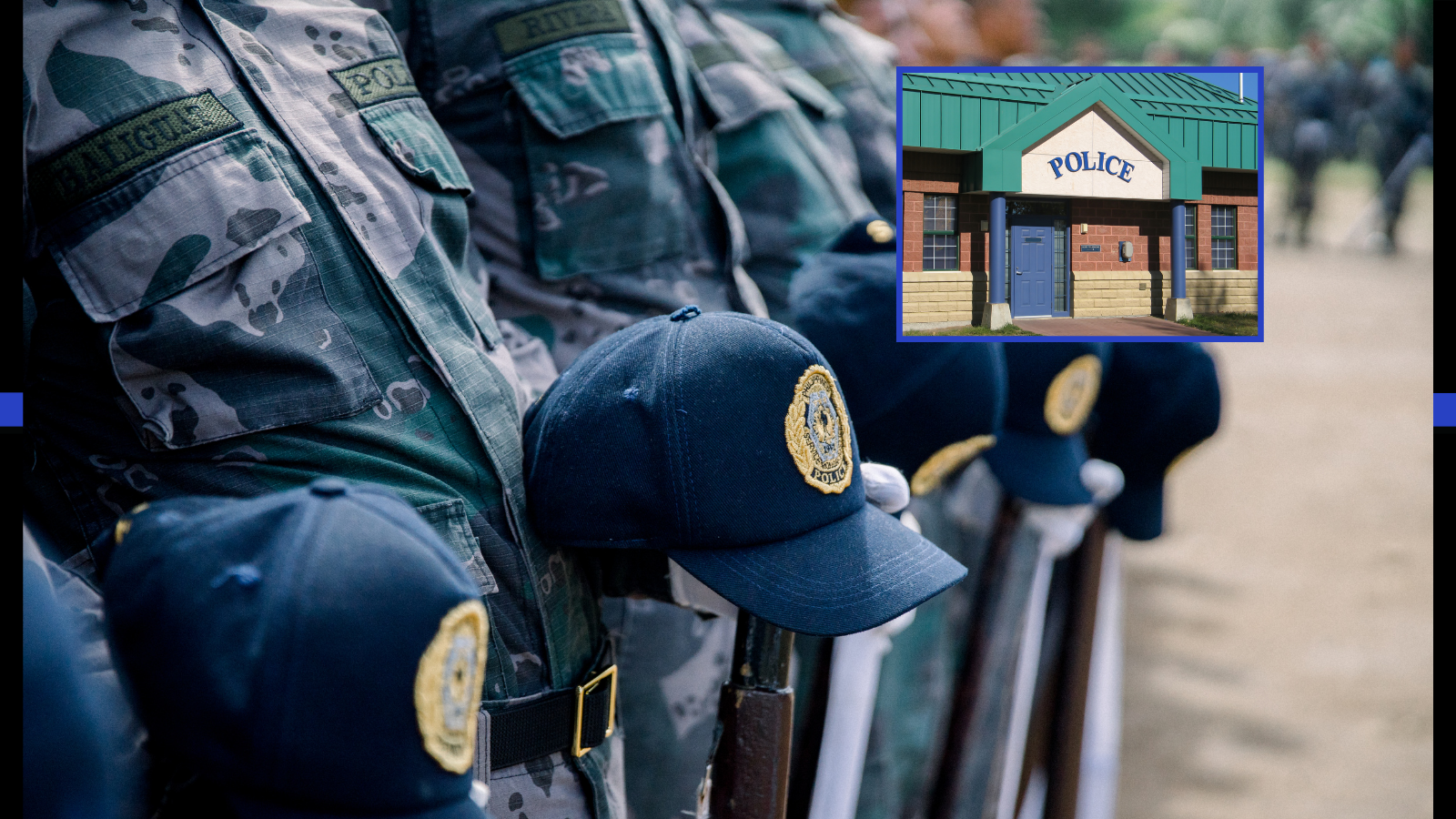
Everywhere, USA: Police departments across the country are being forced to confront a reality that would have seemed almost unthinkable just a decade ago: There simply aren't enough young men and women who want to be cops.
As a result, some departments are abandoning traditional civil service hiring systems, while others are creating other pathways that allow them to recruit candidates outside restrictive government lists.
The latest example comes from Waltham, Massachusetts.
It was just reported that the Waltham Police Department, which operates under Massachusetts Civil Service, received permission to hire up to half of its new officers from outside the traditional civil service list. That means recruiting experienced municipal or university police officers who aren't in the system, as well as civilians who would eventually attend a police academy.
Waltham isn't alone.
According to the report, 59 of Massachusetts' 98 Civil Service departments have opted into the state's alternative hiring pathway since it became available while other departments abandoned Civil Service altogether.
Brookline, Massachusetts, recently withdrew from Civil Service. The department specifically said leaving the system allowed it to make substantial changes to recruiting new officers and lateral transfers, with vacancies previously hindered by restrictive Civil Service regulations.
This isn't simply a Massachusetts problem.
The Police Executive Research Forum (PERF) found that 69% of responding agencies experienced declining applications for full-time officer positions between 2020 and 2022, while 65% reported increased retirements and 66% reported increased resignations.
No Coincidence
We should stop pretending that the timing is coincidental.
The recruitment crisis exploded during the post-George Floyd era, when "defund the police" went from an activist slogan to a political position embraced by liberal politicians, officials, even celebrities across the country.
We at Law Enforcement Today covered every bit of it and, despite our repeated attempts at countering the dangerous and irresponsible anti-police rhetoric with pro police articles and coverage, mainstream media took hold of the rhetoric and pushed an agenda. Only recently have they begun to retract and soften their stance.
But the damage has been done.
For years, young Americans considering law enforcement watched officers routinely portrayed as the problem. They watched politicians entertain eliminating or drastically reducing police departments. They watched officers vilified because of the uniform they wore rather than judged by their individual conduct. They watched officers get criminally charged with clearly politically motivated charges like Officer Oldrati.
During the early morning of September 14, 2021, Officer Salvatore Oldrati responded to a burglary call and confronted an armed man who pointed a loaded replica handgun at him and another officer. Oldrati fired to stop the threat and immediately provided lifesaving aid, but the suspect later died. An investigation cleared Oldrati of wrongdoing and deemed the shooting lawful and justified, yet nearly two years later he was indicted on a reckless manslaughter charge.
The case reeked of politics and still does. He is still waiting for a trial date. Thankfully, a nonprofit organization, the Pipe Hitter Foundation, is offering support.
Today, many politicians have changed their rhetoric. Supporting police has become politically fashionable again in places where "defund" once dominated the conversation.
But reversing course isn't enough.
The politicians who helped create this environment should get behind the same microphones they once used to condemn American policing and say something remarkably simple:
We were wrong. We support law enforcement.
Not carefully crafted language about "reimagining public safety." Say it plainly.
Because the damage wasn't merely political.
It helped damage an entire profession's reputation among the generation now being asked to replace retiring officers.
Departments are adapting by reconsidering Civil Service, expanding lateral hiring, offering bonuses, shortening hiring processes and finding new ways to reach candidates.
But America's police recruitment crisis won't ultimately be solved by changing an application process.
We need to make young Americans want to become police officers again. And repairing the damage inflicted during the post-2020 anti-police era would be a good place to start.
-------------------------------------------------------------
Writer and author Eddie Molina has over 25 years of combined LEO and military service. Learn more about his interview articles at www.eddiemolina.com.

Comments