
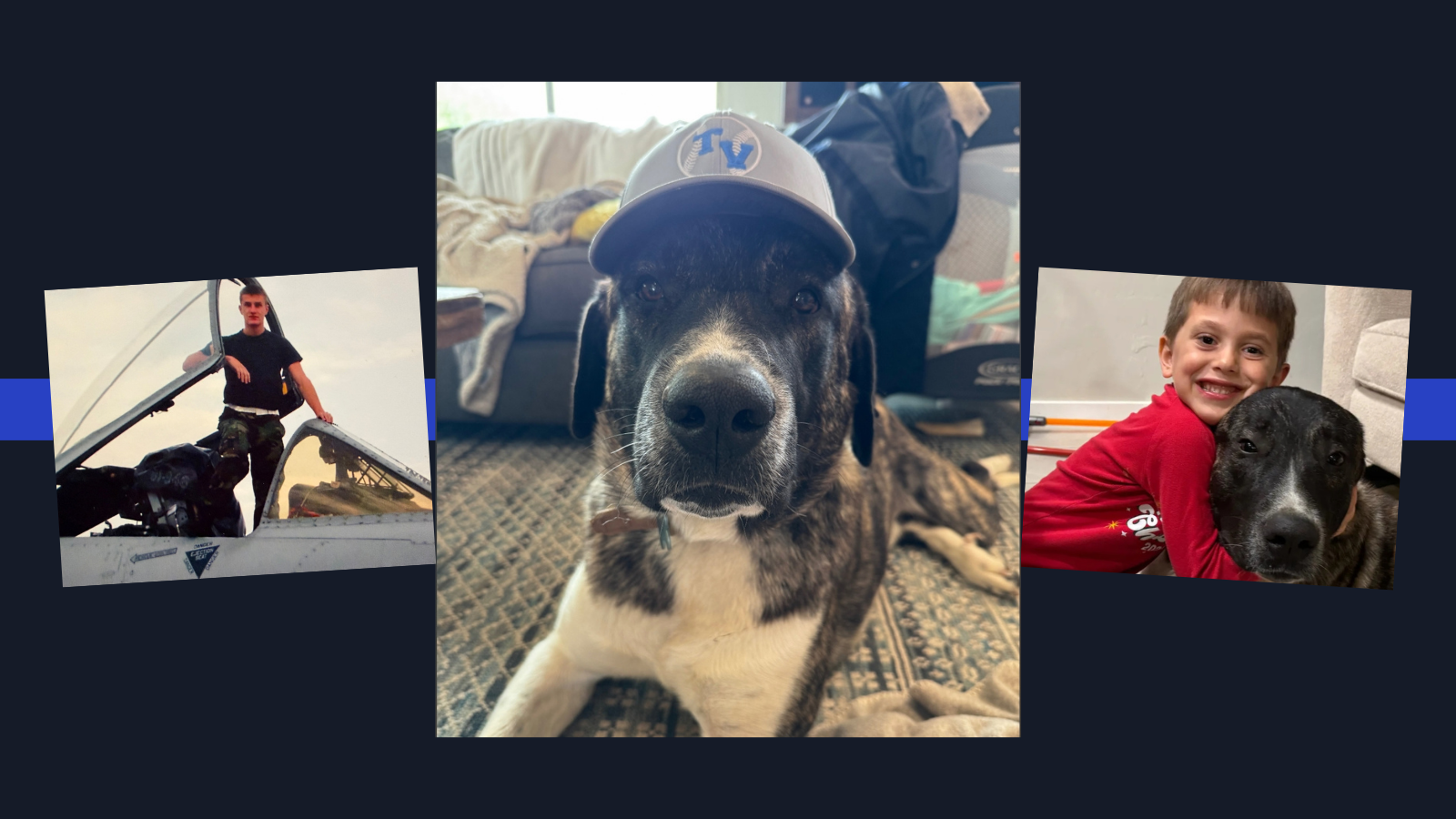
TUCSON, AZ - Sergeant Snuggles has spent more than a year apart from his family under a court-ordered euthanasia ruling. His owners want him home. The woman he bit wants him spared. A professional trainer has offered to take custody, accept responsibility, and keep him out of Arizona.
So why has a resolution remained elusive?
On October 7, 2025, Sergeant Snuggles, an Anatolian shepherd owned by Jennifer Evancho and her veteran husband, bit Jennifer’s mother, Clara Gastelum, outside their Tucson home. Her injuries required hospital treatment.
Nobody disputes that a bite occurred.
But Gastelum’s own accounts sharply challenge the portrayal of an unprovoked, sustained mauling.
“I was not attacked and mauled. It was friendly fire,” Gastelum told LET in a statement. “I provoked him while he was on guard duty and high alert and he reacted.”
Gastelum said Snuggles was watching coyotes or another animal when she approached and petted him from behind. She was knocked down and injured, but said he stopped when she called his name. In a June 9 letter to county supervisors, she wrote that he “instantly cowered and retreated.”
Gastelum’s account is not an independent behavioral assessment, but the injured woman’s perspective matters when assessing ongoing risk.
Conflicting Accounts of the Injuries
In a June 6 memo, Pima Animal Care Center (PACC) Director Steve Kozachik reported multiple bites, serious lacerations, and plastic surgery. He also said Gastelum had previously feared being near Snuggles again.
Gastelum disputes that account. “There was NO cosmetic surgery” and “There were no skin grafts,” she told LET. She reported stitches and staples, denied a facial bite, and said an accidental scratch caused her facial injury. Jennifer and Clara also dispute when animal control interviewed Clara. They say it happened three days later, while she was sedated and medicated, not at the hospital, as PACC’s memo states.
Gastelum also denied repeatedly petting Snuggles before the bite. She said she approached from behind while he watched perceived intruders.
A Yearlong Fight
Evancho’s attorneys say officers presented an October 7, 2025, quarantine agreement listing October 17 for release. Jennifer says an officer repeatedly promised Snuggles would return after ten days and did not offer home quarantine. Her amended federal complaint alleges officers confirmed his rabies vaccination and that she helped place him in the animal-control vehicle.
Jennifer says an officer told her about three days later that the agency would seek euthanasia, before Clara was interviewed. She says officials never explained the change. Snuggles was not released October 17. According to PACC, Tucson City Court declared him vicious and ordered euthanasia on November 24, 2025. Superior Court declined to overturn the ruling on March 26, 2026. The family’s allegations of legal error are not judicial findings.
Evancho is pursuing federal civil-rights claims against the City of Tucson, Pima County, and officials involved. Her September 1, 2026, amended complaint alleges unconstitutional seizure and confinement. The available documents do not establish the case’s final outcome.
The family’s August court filing also cites PACC medical records documenting repeated “SHELTER STRESS” entries and medications associated with anxiety during confinement. The filing asserts that county records documented no subsequent aggressive incident during more than 320 days in custody. Those claims require checking against the underlying records. What is prolonged confinement doing to the dog?
Why the Breed and Circumstances Matter
Jennifer Evancho argues that the incident cannot be understood without considering Snuggles’ breed and the circumstances immediately preceding the bite. Anatolian shepherds were developed to guard livestock, she noted, and their size and protective instincts can make an encounter especially dangerous. “To understand the injuries, you must first understand the ‘weapon’ used,” she wrote. She argues that serious injuries alone do not establish unmanageable future risk.
Jennifer says Snuggles, then about 10 months old, was stressed: he had stopped eating, another dog was in heat, and he was temporarily tethered. He was barking toward the property boundary when Gastelum touched him from behind. Jennifer says he reacted defensively but stopped when recognized. “The second she yelled ‘no Snuggles it’s me’ he immediately retreats with no further incident,” she wrote, citing doorbell-camera audio.
She also maintains that this was Snuggles’ first bite incident, that his vaccinations were current, and that no prior animal-control complaints had been made about him. “Also- there was NEVER a behavioral assessment done on Snuggles,” she wrote. LET has not verified whether officials conducted a behavioral assessment or what it found. Breed and stress do not establish intent or resolve safety concerns.
An Alternative
A May 29, 2026, email exchange outlines a possible alternative to euthanasia.
Rick Dunton, chief trainer of North Carolina’s K9 Responder Academy and president of the K9 Responder Foundation, offered custody. He proposed assessing and rehabilitating Snuggles before any adoption, with his bite history disclosed.
“I will sign any waiver or agreement you all need to hold you harmless for him in the future, and to guarantee he never returns to the State of Arizona,” Dunton wrote. He also offered to arrange and pay for transportation.
Dunton argued that no behaviorist can guarantee a dog will never bite again, but that alone should not dictate euthanasia.
Deputy County Administrator Chad Kasmar forwarded the offer internally that afternoon, writing that it “might be a potential solution to our pending review on this K9.”
PACC Director Kozachik responded that he would consider an agreement if the county and PACC were fully protected from liability. He also proposed conditions, including euthanasia if the dog were ever impounded at PACC again and no staff participation in placing him into a transport crate.
The response shows the proposal was considered, though safety, liability, and transport concerns remained.
On June 3, Senior Assistant Prosecuting City Attorney Roni Byrne wrote that the matter was before the court and said, “I believe we should defer to the Court.” Byrne also urged that public discussion focus on the actual facts rather than rumors.
The exchange does not establish wrongdoing, but it confirms officials considered a concrete alternative.
A Common Sense Approach
Public safety requires assessing risk, legal requirements, and enforceable safeguards. But safety and Snuggles’ survival need not be mutually exclusive.
If Snuggles cannot return home, why not consider Dunton’s offer or another secure placement? What legal or safety barriers prevent it? Was an independent behavioral assessment conducted? Could a court authorize supervised transfer?
Would agencies correct any earlier errors? There is no evidence of a deliberate cover-up. Still, conflicting accounts, prolonged confinement, and the unresolved transfer proposal warrant scrutiny.
Gastelum, the person whose injuries triggered the proceedings, is among those asking for mercy. In her statement, she wrote: “Ultimately I feel i am not a victim of Snuggles, but Snuggles and I are victims of PACC, the City of Tucson, and Pima county.”
A veteran’s family wants its dog back. The injured relative seeks mercy. A trainer offers a controlled alternative. Court rulings matter, but so does the possibility of a lawful, humane solution.
Before Sergeant Snuggles is euthanized, officials should publicly explain whether a safe transfer is possible and, if not, exactly why.
To financially support Sgt. Snuggles and their legal battle, click HERE.
Writer Eddie Molina has over 25 years of combined LEO/military experience and is now the host of The Veteran Experience Show, available on YouTube and Spotify.

Comments