
One murder. Three trials.
You read that right.
I vividly remember a murder case in which I testified three separate times.
The first trial resulted in a conviction. The conviction was reversed on appeal because of prosecutorial misconduct during closing argument.
The case was tried again.
Another conviction.
That conviction was reversed because of judicial misconduct during the trial.
So the victim's family went through it all again.
A third trial.
A third conviction.
This time, the conviction was upheld.
Three trials for one murder.
What stays with me most isn't that we ultimately got the conviction.
It's the family.
They were forced to relive their son's death three times because professionals who should have known better failed in their responsibilities. And, as I remember it, the people responsible for that misconduct suffered no meaningful consequences.
Think about what that does to a victim's family.
Then think about what repeated exposure to cases like that can do to the prosecutors, police officers, investigators, victim advocates, dispatchers, corrections personnel, judges, and others who spend careers inside the criminal justice system.
One case doesn't necessarily cause burnout, compassion fatigue, or secondary trauma.
But one case becomes ten.
Ten become a hundred.
And eventually the weight accumulates.
When the Job Starts Changing You
Most cops joined the profession with a mission, a vision, or the belief that they were becoming part of something greater than themselves. You discover your niche on the job – patrol, investigations, narcotics, School Resource Officer, CSI. You love your work. You are good at it. But then the job starts changing you. It may take years before “it” finally hits you upside the head.
We often use "burnout" as a catchall term.
But what people experience can be more complicated.
Sometimes it is physical and emotional exhaustion.
Sometimes it is compassion fatigue—the gradual erosion of our capacity to keep absorbing other people's pain.
Sometimes it is secondary trauma from repeated exposure to violence, suffering, death, abuse, and human cruelty.
And sometimes it is all of them at once.
Sometimes it is disillusionment. This isn’t what I signed up for.
The profession you imagined collides with the profession as it actually exists.
Poor leadership.
Administrative frustration.
Cases you built correctly that fall apart.
Criticism from people who have never made the decisions you're being criticized for making.
Violence.
Death.
Victims you couldn't save.
Offenders you couldn't hold accountable.
Colleagues who disappoint you.
Leaders who fail you.
And sometimes the realization that no matter how much you care, you cannot fix everyone or everything.
Eventually something has to give.
The change isn't always dramatic.
It may show up first in our thoughts.
Then our words.
Eventually our behavior.
Cynicism becomes normal. Empathy becomes harder. Patience gets shorter. Relationships suffer. The public becomes "them." Administrators become "them." Prosecutors become "them." Your own family and friends become "them."
Everybody becomes somebody else's problem. And eventually, you just want to get away from all of them.
Eventually, some people simply retire on duty.
They're physically present, but mentally and emotionally they've already left.
The paycheck still arrives. The health insurance continues. They do what is required and little more while counting the days until they can formally retire.
That's not always laziness.
Sometimes it's the resolution a person has found for years of unresolved disillusionment.
Some people fight.
Some leave.
Some freeze emotionally.
Some self-medicate.
Some change agencies or professions.
Some stay and become increasingly bitter.
And some choose a different, almost counterintuitive response. They intentionally reconsider who they are, why they entered the profession, what they can control, what they cannot control.
Our capacity to carry the burdens of others has limits. But they don't get to decide who you become.
That last option interests me most.
There Is Another Response
Fight, flight, and freeze are powerful human reactions.
But they don't have to become our leadership philosophy.
There is another option:
An intentional response.
That requires recognizing the context of what is happening before emotion makes the decision for us.
It's an idea I've been developing more broadly through something I call Context-Based Preparedness™.
I won't unpack that entire philosophy here.
For purposes of this conversation, the principle is simple:
The more intentionally we prepare ourselves before difficult circumstances arrive, the less likely we are to surrender our decisions to those circumstances when they do.
That applies tactically.
But it also applies mentally, emotionally, spiritually, and professionally.
And this is where the Warrior Servant Leader mindset matters.
Three Decisions
1. Be a Warrior.
Stand up. Show up. Respectfully defend what you genuinely believe and value.
A Warrior mindset does not mean aggression.
It means refusing to surrender responsibility for your life to circumstances you cannot control.
You may have been treated unfairly.
You may have been betrayed.
You may have lost a case you should have won.
You may work for a leader who has disappointed you.
Those circumstances are real.
But they don't get to decide who you become.
2. Be a Servant.
Strive to put the legitimate needs of others before your own ego.
Our capacity to carry the burdens of others has limits. Healthy service sometimes requires resetting, delegating, establishing boundaries, or letting go.
And sometimes you have to let the Judases in your life walk away.
You cannot carry every burden simply because someone placed it in front of you.
A servant is not a doormat. Know the difference.
3. Be a Leader.
Strive to be a person of positive influence and impact in the lives of the people you encounter.
Leadership is not primarily a rank.
It is influence.
For me, leadership ultimately comes down to a simple standard:
Do the right thing, at the right time, the right way, and for the right reasons.
Those four points form a moral True North.
The Warrior gives us the courage to act.
The Servant reminds us who the action is for.
The Leader brings the two together through positive influence and impact.
Maybe We've Been Measuring the Wrong Things
What if the greatest measure of your career isn't the number of cases you won?
Or arrests you made?
Or drugs you took off the street?
What if part of your legacy is measured by the number of people who walked away from an encounter with you believing:
Someone finally saw me.
Someone respected me.
Someone fought for me.
Resilience Is More Than Getting Back Up
We often describe resilience as getting knocked down and getting back up.
I think that's incomplete.
Resilience isn't simply charging back into the arena.
Sometimes resilience means recognizing what the arena is doing to you.
It means refusing to allow years of exposure to the worst moments of other people's lives to slowly erase the best parts of yours.
It means understanding the context of your circumstances before those circumstances become a personal crisis.
It means intentionally preparing yourself—mentally, physically, emotionally, and spiritually—so that when adversity arrives, you are capable of responding rather than merely reacting.
The badge may give you authority. The law defines its boundaries. Preparation helps you face the danger, duty, disappointment, and disillusionment that come with the profession.
But the mission has always been about people.
Stand up. Show up. Serve others. Lead well.
Because sometimes giving another person hope is the greatest service you can perform.
And sometimes, after years of carrying everyone else's burdens, hope is the greatest gift you can give yourself.
About the author:
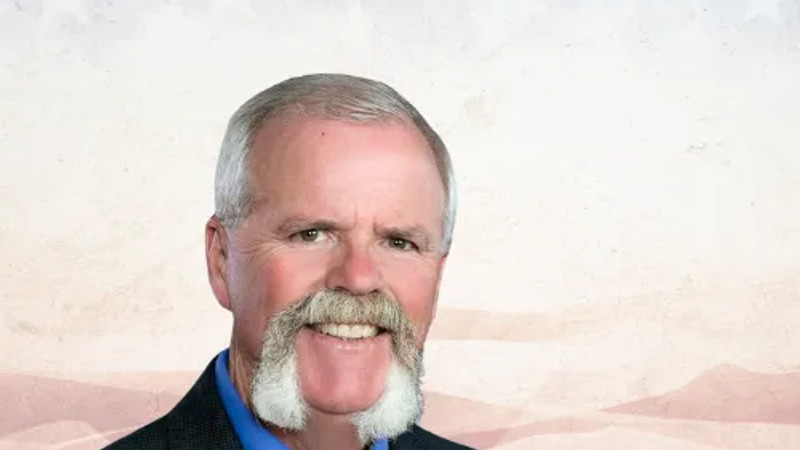
Pat Welsh, JD, is a retired Major with 30 years of law enforcement experience, a former prosecutor, leadership educator, and creator of the Context-Based Preparedness™ framework.

Comments