
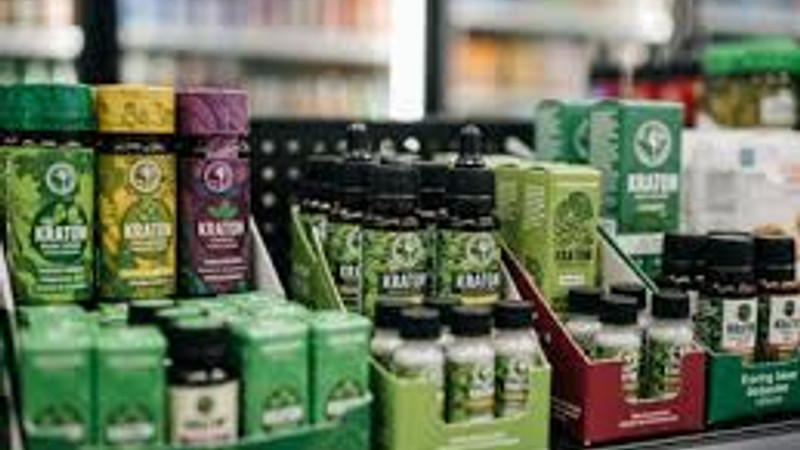
It’s an hour until midnight on a state highway. An officer approaches a stopped vehicle and spots a brightly colored blister pack in the cupholder. It’s commercially branded for retail sale, the kind of thing that would catch your eye at the checkout counter.
Is it a mild supplement or is it a Schedule I opioid more powerful than morphine?
Nobody standing on that highway shoulder can answer. The driver trusts what’s on the label, but do they really know? And for the officer, do we now ask them to carry a field-testing kit for each new designer opioid that hits the market?
That is the reality law enforcement now faces with synthetic 7-OH, and the other synthetic compounds widely available at gas stations and smoke shops across the country.
Walk into any one of these stores with a sore back after a long day’s work, and you may get recommended a synthetic 7-OH product to help you relax. Must be legal, right? It’s sitting there on the shelf. But little do you know, you could be one pill away from physical addiction, respiratory depression, or possibly death.
The label doesn’t help and may also lure people into a false sense of security. The cashier could call it kratom, the product could identify as kratom, but in practice, there’s no guarantee it contains kratom at all. University of Florida researchers tested 44 kratom-labeled products and found chemical compositions that didn’t match their labels, along with compounds that were never disclosed.
So, the officer bags the unknown product and sends it to the lab. And that’s where another set of problems begins.
In October, HHS, the DOJ, and the DEA moved to draw the line that separates synthetic 7-OH (and other similar opioids) from natural kratom.
MGM-15 and MGM-16, extremely potent and dangerous compounds that are 100% synthetic and do not exist in nature in any form, had already been temporarily placed in Schedule I in August, and the DEA reaffirmed that approach in October.
And for the alkaloids that do have a natural form, like 7-OH and MGPI, HHS recommended placing them into Schedule I whenever they are found in measurements and ratios that are manipulated and concentrated to create opioid effects.
Science has drawn the line, but right now, state by state, even county by county, we have a patchwork of knee-jerk laws that decide if our driver is in possession of a Schedule I narcotic -- even if they didn’t know that’s what they purchased. And what exactly should the department tell the already-backlogged lab to test for?
Now let’s zoom into what this confusion can cause in a real-life scenario. In Oxford, Mississippi, police found a potent MGM-15 product (“Smax Pseudo-DHM”) while investigating the separate deaths of two Ole Miss students. Authorities cautioned that they were unsure if the products played a role, and that toxicology reports were still pending. However, the news outlets took the word kratom and put it in every headline for 2 weeks.
MGM-15 was already a Schedule I substance at the time, and the news coverage warning people of generic kratom left open the possibility that more kids could take it. Imagine another student with that very same product reading the front - it doesn’t say kratom, so this should be safe. Police officers and investigators have tough jobs already; we don’t need to make it more difficult.
The news outlets moved on, but grieving families still deserve accurate information. We don’t yet know what caused their deaths, and toxicology results are still pending. But describing a synthesized MGM-15 product as “kratom-related” is like calling an arson “corn-related” because of the ethanol in gasoline. It’s a category error.
Then there’s the patchwork map. Tennessee has banned both natural kratom and synthetic derivatives. Oklahoma caps 7-OH based on the percentage. Rhode Island implemented age restrictions for natural kratom and banned synthetics. New York bars sales to anyone under 21. Those are just a few states. A product sold legally on one side of a state line can be contraband on the other. Oklahoma’s top narcotics official has said gaps in state law make it hard to go after suppliers.
But going after the suppliers and manufacturers is exactly what we should be doing.
The End Gas Station Heroin Act, introduced as S. 5383 and H.R. 10272, would give our law enforcement the backup it needs.
It sets the same science-based thresholds that HHS later recommended for the DEA’s temporary scheduling and would make them permanent law -- giving every agency one standard to work from. It also strips the natural-product label from any compound that has been synthesized to create an addictive, opioid effect.
It also ends the game of chasing the next synthesized opioid. Amateur chemists won’t be able to create the next drug and hide behind “we didn’t know.” S. 5383 and H.R. 10272 put the manufacturers and distributors on the hook, not the consumer they prey upon.
That officer on the highway still won’t be able to test the package on the spot. But if we can stop these commercially sold products before they hit the shelves, we can help our officers avoid the guessing games and get back to keeping our families safe. With a clear national standard, the rest of the system will finally know what it’s looking for, and the people profiting from the confusion will have far fewer places to hide.

Comments