
PHOENIX, AZ – Following two serious crashes in late January in the Phoenix area, one of which proved fatal, a police procedure expert with decades of experience weighed in on the delicate “balancing” act of addressing dangerous or impaired drivers via police pursuit while also acknowledging public safety risks associated with police pursuit decisions.
On January 31st, Phoenix Police engaged in a high-speed pursuit of a suspect vehicle which authorities claim the driver, Esmeralda Galindo-Monje, intentionally rammed into a police vehicle while officers were responding to a separate incident near 35th Avenue and Southern.
As officers pursued the driver, the suspect reportedly crashed into three other vehicles before flipping their own at the intersection of 67th Avenue and Lower Buckeye Road, leading to the other drivers being injured, including one woman who remains hospitalized.
While Galindo-Monje is currently being held on charges of aggravated assault, unlawful flight from law enforcement and aggravated DUI, law enforcement expert Dr. Roy Taylor notes how this case highlights the complexities associated with whether or not police initiate a pursuit.
Although bystanders sustained injuries in the wake of police pursuing Galindo-Monje, Dr. Taylor believes given the available facts of the case that the driver would’ve posed a threat to others on the road whether or not police initiated their pursuit.
“Chasing somebody down like that, that’s willing to intentionally crash into a police vehicle, probably trying to hurt a police officer, that means that they’re a threat to society,” Dr. Taylor stated, adding, “If they’re willing to go up against a marked unit of a police department, then how safe are you?”
Conversely, Dr. Taylor examined another recent crash out of Phoenix where local police decided not to engage in a pursuit, with the end result being fatal for the suspect driver and another motorist struck by their vehicle.
According to reports, Phoenix Police initiated a traffic stop on the evening of January 29th near 59th Avenue and Lower Buckeye Road for a suspected DUI. Authorities say the driver, Ruben Almanza, fled the traffic stop minutes after being pulled over. Instead of initiating a pursuit, the officer behind the initial stop radioed in a description of the vehicle as well as their direction of travel to other officers and the department’s helicopter.
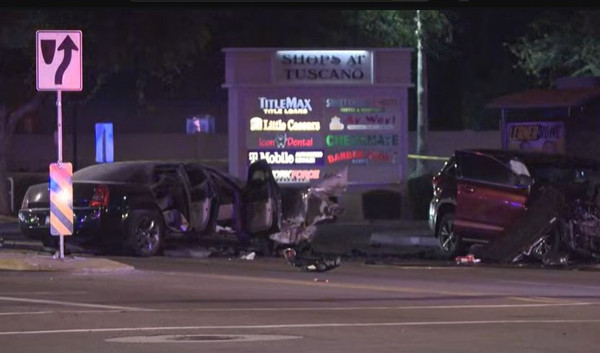
Shortly after Almanza fled the traffic stop, Phoenix Police received a report of a collision roughly two miles up the road at 75th Avenue and Lower Buckeye Road. Investigators say Almanza had crashed into an oncoming vehicle at the intersection, killing a woman identified as 35-year-old Melvina Jones. Almanza was transported to an area hospital where he also succumbed to his sustained injuries.
Dr. Taylor noted that the circumstances surrounding the fatal crash where police opted not to pursue created a seemingly inevitable outcome no matter how police chose to respond in real time.
“Again, it’s a balancing test. They’ve already got his license plate number. They may have already gotten his driver’s license number. They know he’s impaired. They see he’s willing to run,” Dr. Taylor stated, adding, “If the driver pulls away, the officer chases him and the same thing happens, then what’s going to happen to the police department? What good did it do to chase him?”
On January 31st, Phoenix Police engaged in a high-speed pursuit of a suspect vehicle which authorities claim the driver, Esmeralda Galindo-Monje, intentionally rammed into a police vehicle while officers were responding to a separate incident near 35th Avenue and Southern.
As officers pursued the driver, the suspect reportedly crashed into three other vehicles before flipping their own at the intersection of 67th Avenue and Lower Buckeye Road, leading to the other drivers being injured, including one woman who remains hospitalized.
While Galindo-Monje is currently being held on charges of aggravated assault, unlawful flight from law enforcement and aggravated DUI, law enforcement expert Dr. Roy Taylor notes how this case highlights the complexities associated with whether or not police initiate a pursuit.
Although bystanders sustained injuries in the wake of police pursuing Galindo-Monje, Dr. Taylor believes given the available facts of the case that the driver would’ve posed a threat to others on the road whether or not police initiated their pursuit.
“Chasing somebody down like that, that’s willing to intentionally crash into a police vehicle, probably trying to hurt a police officer, that means that they’re a threat to society,” Dr. Taylor stated, adding, “If they’re willing to go up against a marked unit of a police department, then how safe are you?”
Conversely, Dr. Taylor examined another recent crash out of Phoenix where local police decided not to engage in a pursuit, with the end result being fatal for the suspect driver and another motorist struck by their vehicle.
According to reports, Phoenix Police initiated a traffic stop on the evening of January 29th near 59th Avenue and Lower Buckeye Road for a suspected DUI. Authorities say the driver, Ruben Almanza, fled the traffic stop minutes after being pulled over. Instead of initiating a pursuit, the officer behind the initial stop radioed in a description of the vehicle as well as their direction of travel to other officers and the department’s helicopter.
Shortly after Almanza fled the traffic stop, Phoenix Police received a report of a collision roughly two miles up the road at 75th Avenue and Lower Buckeye Road. Investigators say Almanza had crashed into an oncoming vehicle at the intersection, killing a woman identified as 35-year-old Melvina Jones. Almanza was transported to an area hospital where he also succumbed to his sustained injuries.
Dr. Taylor noted that the circumstances surrounding the fatal crash where police opted not to pursue created a seemingly inevitable outcome no matter how police chose to respond in real time.
“Again, it’s a balancing test. They’ve already got his license plate number. They may have already gotten his driver’s license number. They know he’s impaired. They see he’s willing to run,” Dr. Taylor stated, adding, “If the driver pulls away, the officer chases him and the same thing happens, then what’s going to happen to the police department? What good did it do to chase him?”
For corrections or revisions, click here.
The opinions reflected in this article are not necessarily the opinions of LET

Comments