
Written by Mathew Silverman, National President of the Federal Law Enforcement Officers Association and member of the Law Enforcement Today Board of Advisors.
Words matter. Especially when they come from a state’s chief law enforcement officer.
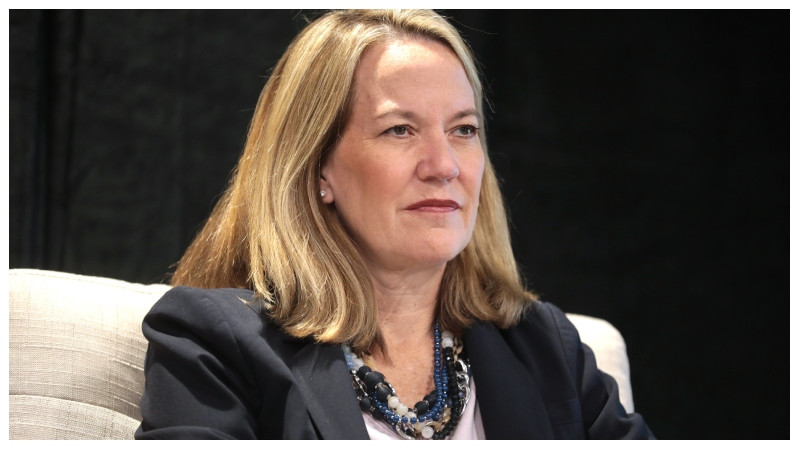
Arizona Attorney General Kris Mayes recently made deeply irresponsible and dangerous comments suggesting that residents could potentially use deadly force against masked federal immigration officers if they claim to feel threatened under Arizona’s “Stand Your Ground” law. While she has attempted to walk those remarks back by claiming she was merely stating a “fact,” the practical effect of her statements is to normalize and even legitimize violence against law enforcement officers who are lawfully performing their duties.
That is reckless. And it puts lives at risk.
Attorney General Mayes warned that Arizona’s Stand Your Ground law could become a “recipe for disaster” if protesters clash with immigration officers, citing the presence of masked federal agents. She went on to say that “real cops don’t wear masks” and questioned how a citizen is supposed to know whether someone is a police officer.
This narrative is not only false. It is dangerous.
Federal law enforcement officers, including ICE, wear face coverings for one reason and one reason only, to protect themselves and their families from being identified, targeted, and doxed by violent criminals and extremist activists. We live in an era where an officer’s name, home address, spouse, and children can be posted online in minutes. We have already seen the real world consequences of that. Threats, harassment, stalking, and attempted attacks on officers and their families are no longer theoretical. They are routine.
Suggesting, even indirectly, that citizens might be justified in using lethal force against masked federal officers is the kind of rhetoric that gets people killed.
It also fundamentally misrepresents how law enforcement operations work. Federal agents are not charged with conducting enforcement actions at random, unidentified individuals who have not broken any laws. They are mandated to operate under lawful authority, with warrants and operational plans, and in coordination with other agencies. The idea that they are somehow indistinguishable from criminals, especially when they are wearing identifiable clothing or identifying themselves as officers, is simply not true, and an Attorney General knows that.
Congressman Eli Crane, a personal friend, weighed in with similar thoughts:
“Attorney General Mayes’ statement is an attempt to escalate unrest and violence against federal law enforcement officers. Rather than working with the administration to remove criminal aliens, she subtly suggests that violence against officers could be interpreted as self-defense. These are undeniably dangerous remarks from our state’s chief law enforcement officer, and it risks drastic consequences for the agents who serve on the front lines. Similar to Senator Mark Kelly’s attempt to sow dissent within our armed forces, it is another case of sabotage masked by plausible deniability. Considering that Mayes remained silent during the premeditated border invasion, she should focus on cooperation rather than worsening the crisis she helped create.”
He's absolutely right.
There is also a serious question of accountability that cannot be ignored. If someone were to follow these comments and seriously injure or kill a law enforcement officer, it is fair to ask whether the official who created or amplified that dangerous narrative bears any responsibility. We routinely debate whether judges should be held accountable when they repeatedly release violent offenders against prosecutorial recommendations and those offenders go on to harm others. Yet when politicians use rhetoric that foreseeably increases the risk of violence, they too often insist they should never be held accountable for the consequences. Public officials cannot have it both ways. If they want to influence public behavior, they must also accept responsibility for the foreseeable results of their words.
Even more troubling is the broader message being sent. When a state’s top prosecutor publicly questions the legitimacy of federal law enforcement and frames them as a potential threat to the public, it emboldens the most extreme voices and increases the likelihood of violent confrontation. That is not public safety leadership. That is political theater with potentially deadly consequences.
Attorney General Mayes has also stated that she intends to prosecute any ICE agent who violates state law. No one in law enforcement disputes that officers must operate within the law. Accountability matters. But that is a very different thing from publicly floating scenarios that could be interpreted as justifying armed resistance to federal officers.
We should be absolutely clear about what ICE and other federal law enforcement agencies’ mission is and that is to remove violent criminals, including murderers, rapists, child predators, gang members, terrorists, and major drug traffickers from our communities. They are doing work that state and local communities depend on, whether some politicians want to admit it or not.
Instead of stoking fear and distrust, Arizona’s Attorney General should be thanking the men and women who are putting themselves in harm’s way to protect the public.
There is also a direct connection here to the ongoing debate over masks and officer identification. Officers are not wearing face coverings to intimidate the public. They are wearing them because they have been targeted, doxed, and threatened. The solution to that problem is not to expose them further. The solution is to take threats against law enforcement seriously and to prosecute those who make or act on them.
Attorney General Pam Bondi and Deputy Attorney General Todd Blanche have made it clear at the federal level that threats, assaults, and doxing of law enforcement officers will not be tolerated and will be aggressively investigated and prosecuted. That is what responsible leadership looks like.
The bottom line is this. When senior elected officials use careless rhetoric about the use of force, they do not merely express an opinion. They shape behavior. And in the current climate, that is a responsibility that should be handled with far more seriousness and far more restraint.
Arizona’s Attorney General should retract these comments and make it unequivocally clear that violence against law enforcement, federal, state, or local, is never acceptable.
Because the only real “recipe for disaster” is convincing people that shooting at law enforcement officers might somehow be justified.
Mathew Silverman
National President
Federal Law Enforcement Officer's Association (FLEOA)

Comments
2026-01-28T14:50-0500 | Comment by: Laurence
Such a comment is treason - encouraging the endangerment of Federal Officers! She must be removed from office asap.
2026-01-29T20:13-0500 | Comment by: Laurence
Shooting Federal officers who are doing their job? And she encourages this? That alone is grounds for charges of treason. She should be arrested and removed from office if even one officer is harmed by her statements.