
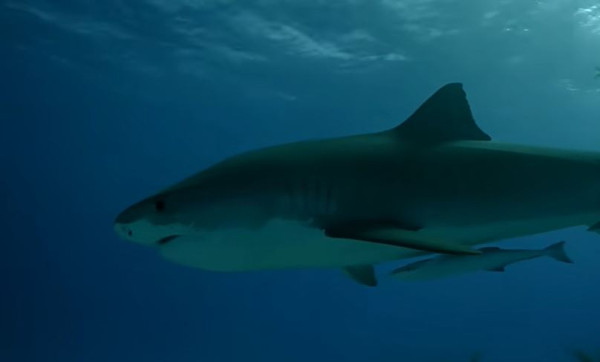
BAHAMAS - A recent study published on contaminants of emerging concern (CECs) in the Bahamas discovered trace amounts of various pharmaceutical and illicit substances present in several shark species, ranging from caffeine to cocaine. The likely culprit behind the energetic sharks, according to scientists, could be the “tourism-driven” destinations amid the islands.
Environmental Pollution published a study that could very well give the production team behind the 2023 film “Cocaine Bear” some new source material for a spiritual sequel, as researchers found five species of sharks around the Bahamas to have trace amounts of various substances in their blood, with some testing positive for cocaine.
According to the study, researchers were testing for a variety of substances, from caffeine to over-the-counter medicines like acetaminophen, various prescription medications like tramadol, and even cocaine in tiger, blacktip, Caribbean reef, Atlantic nurse, and lemon Sharks.
In a surprising revelation, trace amounts of various drugs were reportedly found in the blood of three of the species, with the study stating in part, “Four of the investigated CECs (diclofenac, cocaine, acetaminophen, and caffeine) were detected at varying concentrations in Caribbean Reef sharks, Atlantic Nurse sharks, and Lemon sharks, demonstrating their local environmental occurrence and bioavailability.”
A total of 85 sharks across the five listed species were analyzed during the course of the study, with 28 sharks testing positive for cocaine, caffeine, acetaminophen, or the nonsteroidal anti-inflammatory drug (NSAID) diclofenac.
Considering the Bahamas are often referred to as one of the top “dream vacation destinations” across various travel blogs, the researchers behind the study believe tourism plays a critical role in the native shark population being exposed to such CECs.
“A growing influx of tourists, coupled with an increase in the number of vacation homes and rental properties, significantly heightens the volume and chemical complexity of local wastewater,” the study reads in part.
As for the cocaine exposure, researchers suspect some of the sharks may’ve simply encountered discarded or lost bundles of the narcotic underwater, with study author Natascha Wosnick explaining, “[Sharks] bite things to investigate and end up exposed.”
Environmental Pollution published a study that could very well give the production team behind the 2023 film “Cocaine Bear” some new source material for a spiritual sequel, as researchers found five species of sharks around the Bahamas to have trace amounts of various substances in their blood, with some testing positive for cocaine.
According to the study, researchers were testing for a variety of substances, from caffeine to over-the-counter medicines like acetaminophen, various prescription medications like tramadol, and even cocaine in tiger, blacktip, Caribbean reef, Atlantic nurse, and lemon Sharks.
In a surprising revelation, trace amounts of various drugs were reportedly found in the blood of three of the species, with the study stating in part, “Four of the investigated CECs (diclofenac, cocaine, acetaminophen, and caffeine) were detected at varying concentrations in Caribbean Reef sharks, Atlantic Nurse sharks, and Lemon sharks, demonstrating their local environmental occurrence and bioavailability.”
A total of 85 sharks across the five listed species were analyzed during the course of the study, with 28 sharks testing positive for cocaine, caffeine, acetaminophen, or the nonsteroidal anti-inflammatory drug (NSAID) diclofenac.
Considering the Bahamas are often referred to as one of the top “dream vacation destinations” across various travel blogs, the researchers behind the study believe tourism plays a critical role in the native shark population being exposed to such CECs.
“A growing influx of tourists, coupled with an increase in the number of vacation homes and rental properties, significantly heightens the volume and chemical complexity of local wastewater,” the study reads in part.
As for the cocaine exposure, researchers suspect some of the sharks may’ve simply encountered discarded or lost bundles of the narcotic underwater, with study author Natascha Wosnick explaining, “[Sharks] bite things to investigate and end up exposed.”
For corrections or revisions, click here.
The opinions reflected in this article are not necessarily the opinions of LET

Comments