
BANDON, OR - Recently, Law Enforcement Today reported on a cold case that was over 50 years old where the suspect was finally identified due to advanced DNA testing. Now comes the case of a man whose remains were found in 1972 but remained unidentified until recently, PEOPLE magazine reports.
When the remains were found off Highway 101 in Bandon, Oregon in 1972, authorities had little to work on, other than the fact that the body beared “marks indicative of homicidal violence,” according to a press release issued by the Coos County Sheriff’s Office (CCSO) on July 28.
At the time of the discovery, there wasn’t enough evidence to conclusively identify the victim, the release said, until two years ago, when the CCSO began working with the Oregon Cold Case Collective (OC3) to use genealogy to finally solve the case.
The CCSO said that OC3 is “a group fully staffed by unpaid volunteers who have a passion for bringing old cases forward using new technology and investigative techniques.”
In a coordinated effort between OC3, the CCSO and the FBI, Investigative Genetic Genealogy was utilized to trace “DNA to find family,” the CCSO said, beginning in March 2025.
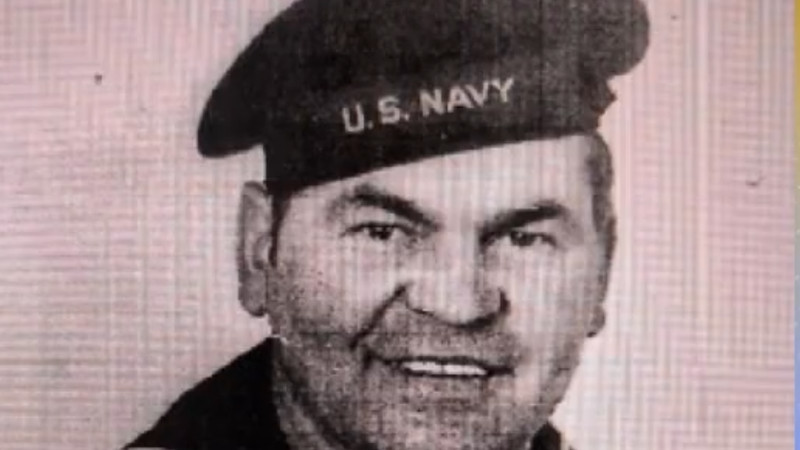
The victim was identified as Armes Henry Lahti of Astoria, Oregon, “an avid fisherman and a Navy veteran who joined and served during World War II,” the CCSO said.
Lahti’s family told the CCSO that Lahti, nicknamed “Mousy,” “was anything but.” They described him as a “large, gentle man who loved the sea and was proud of his service to his country.”
The law enforcement organizations were assisted in identifying Lahti by the Oregon State Medical Examiner’s Office Human Identification Program, according to an Oregon State Police statement, which included a preliminary sketch of Lahti.
“In 2014, DNA was extracted and sequenced for upload to the Combined DNA Indexing System (CODIS) by the University of North Texas Human Identification Center; however there were no matches,” the agency said. “Using National Institute of Justice grant funding, the remains were submitted for Single Nucleotide Polymorphism (SNP) profiling and forensic genetic genealogy to several companies.”
In 2025, the CCSO submitted DNA samples to Othram, Inc., which “successfully extracted and sequenced” the DNA profile, and found the victim was of “100 percent Finnish ancestry.” They were also able to determine that he was born in 1909.
“This long-awaited identification reflects years of dedicated work, collaborative science, and advances in modern genetic genealogy,” State Forensic Anthropologist Hailey Collord-Stalder said in a statement. “This outcome would not be possible without the ongoing cooperation among multiple law enforcement agencies, private scientific partners, and volunteers committed to resolving cold cases.”
The CCSO discovered that Armes was involved in a dispute at a bar just before he disappeared. He allegedly walked away with a rifle one evening, according to the press release.
“While the case is as old as 60 years ago, we would like to bring justice to Armes and his family. If you or anyone you know might have information, no matter how seemingly small, please call 541-396-7800, and ask to leave a message for Special Deputy Fabrizio,” the CCSO wrote.
Hopefully the confirmation that Armes Lahti was identified as the victim of a homicide, can bring some closure to the family.

Comments