
Submitted through partnership with Vita Bella
Editor Note: After years of losing friends in law enforcement and the military to diseases, heart attacks, strokes and to the demons of PTSD, we've decided to fight back.
Law Enforcement Today has partnered with Vita Bella to bring you a regular series of information about topics that will help completely change this. We are NOT being paid to do this. It's about time we all get in the fight. You, your family and our community deserve to have strong, healthy warriors.
Officers Practical, evidence-based guidance on common strains, natural healing foundations, peptide & hormone support, and the critical importance of patience.
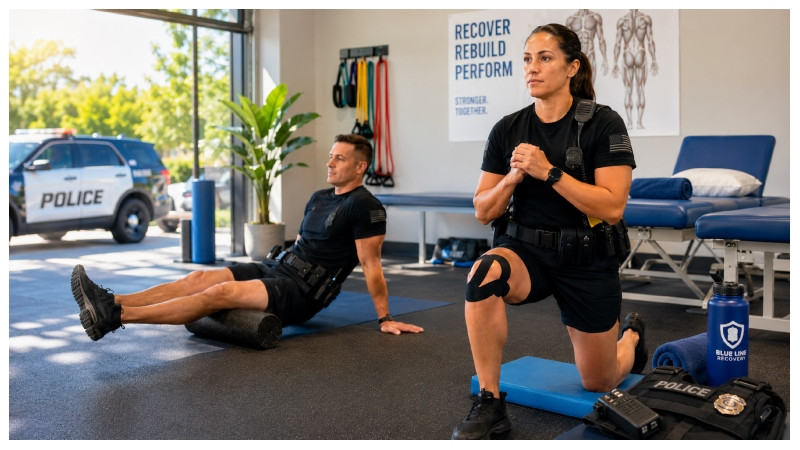
Law enforcement officers face intense physical demands—from foot pursuits and defensive tactics training to the cumulative stress of gear, shifts, and mandatory PT. Musculoskeletal strains and sprains are among the most common injuries sidelining officers. The goal is complete recovery that minimizes re-injury risk and supports long-term career resilience. This article summarizes human research on natural healing foundations, emerging regenerative options (peptides and hormone support), and why patience is essential to protect your operational effectiveness and your team.
Common Injuries from Training and Operational Pursuits
Research shows law enforcement officers and recruits suffer high rates of musculoskeletal injuries, dominated by soft-tissue sprains and strains. The knee, ankle, lower back, and upper extremities are frequent sites.
In academy settings, joint/ligament trauma comprises approximately 50% of injuries, with knees most affected. Leading causes include physical training (PT, defensive tactics) and operational demands like pursuits and suspect control.
These often arise from sudden twists, high-impact movements, repetitive stress under fatigue, or insufficient recovery between shifts and training. If rushed, these injuries can become chronic and impair performance.
Foundational Recovery: Evidence-Based Natural Approaches
Conservative care is the foundation for most strains. Modern evidence favors the PEACE & LOVE protocol: early Protection and Elevation, avoiding anti-inflammatories that may blunt repair signaling (consult a provider), followed by optimal Loading, Optimism, Vascularization, and progressive Exercise.
Nutrition supports repair. Target 1.6–2.2 grams of protein per kilogram of body weight per day. Sleep is critical for growth hormone-mediated repair. Job stress and cortisol can suppress testosterone and prolong recovery, making sleep hygiene and stress management especially important despite irregular schedules.
Work with a tactical-aware physical therapist to correct law enforcement-specific imbalances, such as vest and gear posture issues or limited hip mobility, and use criteria-based progression. This reduces re-injury risk far better than simply “pushing through.”
Master these basics first. They are low-risk and high-impact.
Educational Content | Always consult your physician or qualified provider before starting any new treatment | vitabella.com
FOR LAW ENFORCEMENT OFFICERS • EVIDENCE-BASED RECOVERY
Advanced Regenerative Support: Hormones and Peptides
When basic recovery methods plateau or underlying factors such as hormones limit progress, medically supervised regenerative options may help.
Testosterone supports muscle protein synthesis, satellite cell repair, and musculoskeletal integrity. Law enforcement officers may experience suboptimal levels due to sleep disruption and chronic stress. In confirmed cases of hypogonadism, testosterone replacement therapy may improve lean mass and strength and support rehabilitation outcomes.
Discuss symptoms such as slow recovery, fatigue, or low drive with a qualified provider.
For officers where hormone assessment is appropriate, telehealth providers like Vita Bella offer confidential lab panels and personalized optimization plans tailored to the demands of law enforcement, helping restore balance to support healing without complicating demanding schedules.
Peptide Support
BPC-157 has demonstrated tissue-healing, angiogenic, and anti-inflammatory effects in animal models involving muscle, tendon, and ligament injuries and is under Phase 2 human investigation for hamstring strains.
TB-500 (thymosin beta-4 fragment) may aid cell migration and wound repair, with early human data supporting safety and tolerability.
Both are used off-label under physician supervision through licensed pharmacies.
The key caveat: large-scale human clinical trials for typical law enforcement injuries remain limited. Early research is promising, but these therapies are considered adjuncts—not replacements—for foundational recovery strategies. Proper evaluation and monitoring are required.
The Power of Patience: Why Rushing Recovery Costs More
The hardest lesson for driven officers is learning not to rush back to full duty or intense training.
Premature loading is a major predictor of re-injury, chronic problems, and longer recovery periods in tactical populations. Criteria-based return, including pain-free function, restored strength symmetry, and medical clearance, is more reliable than simply “feeling ready.”
Overdoing it early can turn simple strains into longer, more complicated injuries.
Your career longevity and your team’s safety depend on respecting the healing process. The job will wait. Smart pacing protects your effectiveness for years.
Protecting Your Most Critical Asset
Smart recovery combines natural foundations, patience, and—when clinically appropriate—advanced support such as hormone optimization or peptides under expert guidance.
Prevention also matters: mobility and strength work specific to law enforcement demands, balanced training, and proactive monitoring.
Your health underpins everything you do on the street.
Combine evidence-based basics, disciplined pacing, and personalized care when appropriate to heal fully and stay mission-ready.
Recover smarter. Stay safe.
References:
Murphy MC, et al. Musculoskeletal injury epidemiology in law enforcement recruits: a systematic review. BMJ Open Sport Exerc Med. 2022;8(1):e001289. doi:10.1136/bmjsem-2021-001289
Lyons K, et al. A profile of injuries sustained by law enforcement officers. J Occup Environ Med. 2017 (PMC5334696).
Maupin DJ, et al. Profiling the injuries of law enforcement recruits during academy training. BMC Sports Sci Med Rehabil. 2022;14:42. doi:10.1186/s13102-022-00533-y
Dubois B, Esculier JF. Soft-tissue injuries simply need PEACE and LOVE. Br J Sports Med. 2020;54(2):72-73. doi:10.1136/bjsports-2019-101253
Otzel DM, et al. Activity-based physical rehabilitation with adjuvant testosterone replacement therapy. Int J Mol Sci. 2018;19(6):1701. doi:10.3390/ijms19061701
Bhasin S, et al. Testosterone therapy in men with hypogonadism. J Clin Endocrinol Metab. 2018;103(5):1715-1744.
Seiwerth S, et al. Stable gastric pentadecapeptide BPC 157 and wound healing. Front Pharmacol. 2021;12:627533. doi:10.3389/fphar.2021.627533
ClinicalTrials.gov NCT07437547. BPC 157 for Acute Hamstring Muscle Strain Repair. Accessed June 22, 2026.
Malinda KM, et al. Thymosin beta4 accelerates wound healing. J Invest Dermatol. 1999;113(3):364-368.
Wang X, et al. Phase I study of recombinant human thymosin β4 in healthy volunteers. J Cell Mol Med. 2021;25(18):8816-8824. doi:10.1111/jcmm.16693

Comments