
Washington D.C.: The 2026 midterm elections delivered a significant political setback for President Trump and the Republican Party. With Democrats positioned to take control of both chambers of Congress in January, the administration's legislative agenda faces an increasingly uncertain future.
But there's one important detail that shouldn't be overlooked: The current Congress isn't finished yet!
Republicans still control the House and Senate until the newly elected Congress takes office on January 3rd. That leaves nearly two months to act on meaningful legislation.
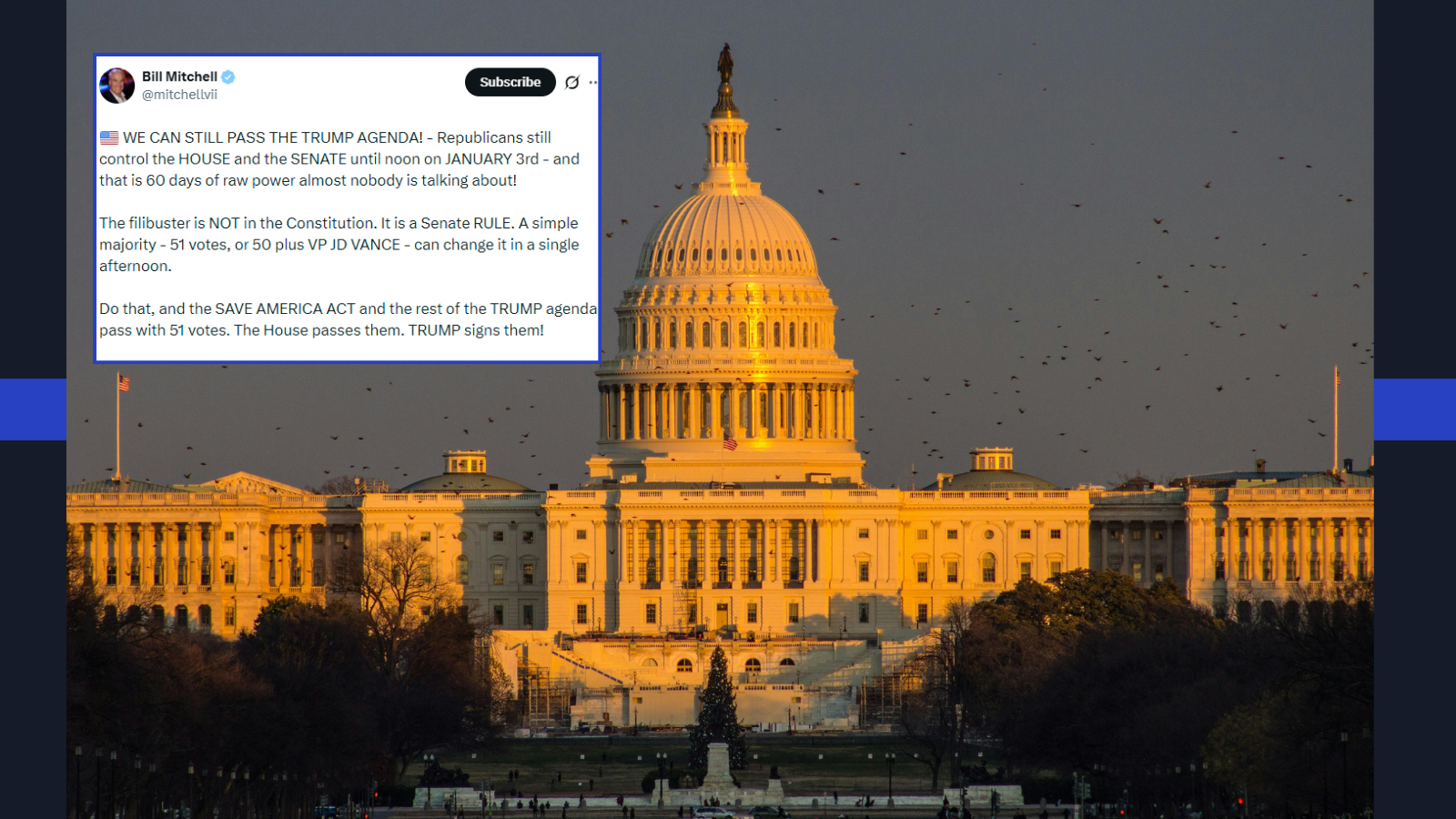
Conservative commentator Bill Mitchell recently highlighted this opportunity in a post on X, stating, “WE CAN STILL PASS THE TRUMP AGENDA!”
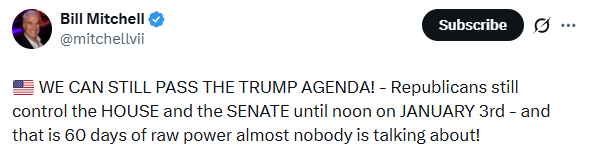
Mitchell pointed specifically to the Senate filibuster, arguing that Republicans could change the chamber's rules and advance legislation with a simple majority.
“Do that, and the SAVE AMERICA ACT and the rest of the TRUMP agenda pass with 51 votes. The House passes them. TRUMP signs them! HERES THE GOOD PART! - The Democrats can't undo any of it!” Mitchell added. “Repeal needs TRUMP'S signature, and he would VETO it. Overriding a veto takes TWO-THIRDS of both chambers. Democrats won't have that.”
His argument raises an important point - there is still time and a lot of progress can still be made!
The SAVE America Act: A Priority
Among the most consequential pieces of unfinished legislation is the SAVE America Act, which would establish stricter federal voter identification and proof-of-citizenship requirements.
Supporters argue that these safeguards are essential to strengthening public confidence in elections and ensuring that only eligible citizens participate.
A common-sense policy.
However, critics state that the requirements could create unnecessary barriers for lawful voters and impose substantial administrative burdens on election officials.
A weak counterargument.
The legislation passed the House earlier this year but encountered significant resistance in the Senate. That procedural obstacle remains central to the debate.
Although the filibuster is not established in the Constitution, changing Senate procedures would require sufficient support among senators themselves. Republican leadership has expressed reluctance to eliminate the legislative filibuster, recognizing that doing so could also benefit future Democratic majorities.
Nevertheless, the remaining weeks present an opportunity for lawmakers to revisit the legislation, negotiate possible compromises, or consider other permissible legislative approaches to further President Trump's agenda.
What Can Americans Do?
When the new Congress convenes, Democrats will control both chambers, dramatically reducing the likelihood of advancing Trump's legislative priorities.
Until then, however, the existing Republican majorities retain their constitutional authority.
For citizens concerned about election integrity, the legislative process offers opportunities for participation.
Americans can contact their representatives and senators, request public explanations of their positions, review the legislation themselves, attend public meetings, and participate proactively.
The midterms have already determined the next balance of power in Washington. They have not, however, ended the responsibilities of the lawmakers currently serving.
The election may be over, but the legislative calendar isn't.
And between now and January 3, Congress still has decisions to make.
Let’s do our part to help America. Find your representative HERE to contact him or her and make your voice loud and clear!
------------------------
Writer Eddie Molina has over 25 years of combined LEO/military experience and is now the host of The Veteran Experience Show, available on YouTube and Spotify.

Comments