
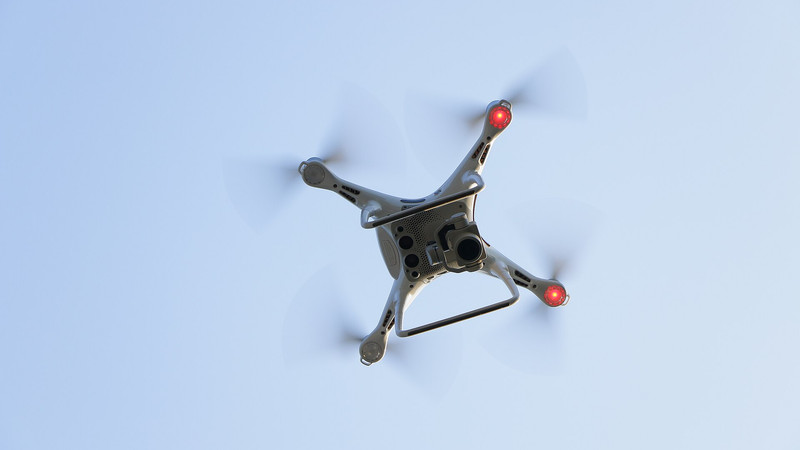
CLEVELAND, OH - On October 6, Ohio's first statewide police drone law takes effect and the Cleveland Police Department's (CPD) own drone policy already outlaws four things that the state law leaves legal.
Those four things are: facial recognition, gait analysis, surveillance of demonstrations and any weapon on a police drone, according to Drone XL.
House Bill 251, signed by Governor Mike DeWine on July 7, requires a warrant when police would need one to enter a building in person and use a drone to look inside instead. CPD's rules, in force since July 11, 2025, go further on nearly every point the state law touches.
The city's Skydio X10 fleet logged 200 flight entries between September 10, 2025, and September 10, 2026. Most were sports events and call-ups for suspect searches and SWAT support.
CPD's policy prohibits automated analytics that can identify individuals or groups, naming facial recognition and gait analysis, and bans any weapon system on a police drone. Ohio's SB 251 bans only lethal weapons on law enforcement drones and says nothing about identification technology.
Cleveland's general police order, GPO 4.06.17, directs pilots to minimize collecting information on people and places unrelated to a mission. Anything captured must be deleted within 30 days under the city's retention schedule. HB 251 makes surveillance and flight data a public record but sets no comparable clock on destroying footage of bystanders.
CPD requires a warrant whenever someone has a reasonable expectation of privacy, including yards and enclosures, and bars officers from intentionally recording those places without one. Cleveland also regulates what the policy calls "Blackout Mode," a setting that switches off the aircraft's lights and electronic markers while the cameras keep recording. The city permits it only after police obtain a search warrant, but the state law does not mention it.
The broadest state exception drew the most fire from Columbus. HB 251 lets police fly without a warrant in navigable airspace, in a physically nonintrusive manner, to observe what is otherwise visible to the naked eye. Gary Daniels, legislative director of the ACLU of Ohio, told lawmakers the provision is a "blank check for law enforcement." CPD's policy contains no naked-eye exception.
Cleveland requires a public map showing the date, time and flight path of every deployment within 48 hours. Ohio's law requires agencies to document and verify flight data for surveillance flights, and makes those records public unless an exemption applies. It sets no posting deadline and requires no map.
CPD's policy also requires quarterly reports to the police chief and the Community Police Commission covering all drone use by incident type, and says those reports will be posted on the city website.
HB 251 also bars Ohio public entities from buying drones made or assembled by a foreign adversary. The law gives them four years to comply. "Foreign adversary" means a country on a registry the Ohio secretary of state must compile every six months from four federal lists, including the Commerce Department's Executive Order 13873 list, which names China.
The Community Police Commission has final say over Cleveland police policy under the consent decree, and that is the only reason the document reads the way it does. Most departments that buy an X10 answer to a chief and a council, not to a commission with veto power over policy.
Those four things are: facial recognition, gait analysis, surveillance of demonstrations and any weapon on a police drone, according to Drone XL.
House Bill 251, signed by Governor Mike DeWine on July 7, requires a warrant when police would need one to enter a building in person and use a drone to look inside instead. CPD's rules, in force since July 11, 2025, go further on nearly every point the state law touches.
The city's Skydio X10 fleet logged 200 flight entries between September 10, 2025, and September 10, 2026. Most were sports events and call-ups for suspect searches and SWAT support.
CPD's policy prohibits automated analytics that can identify individuals or groups, naming facial recognition and gait analysis, and bans any weapon system on a police drone. Ohio's SB 251 bans only lethal weapons on law enforcement drones and says nothing about identification technology.
Cleveland's general police order, GPO 4.06.17, directs pilots to minimize collecting information on people and places unrelated to a mission. Anything captured must be deleted within 30 days under the city's retention schedule. HB 251 makes surveillance and flight data a public record but sets no comparable clock on destroying footage of bystanders.
CPD requires a warrant whenever someone has a reasonable expectation of privacy, including yards and enclosures, and bars officers from intentionally recording those places without one. Cleveland also regulates what the policy calls "Blackout Mode," a setting that switches off the aircraft's lights and electronic markers while the cameras keep recording. The city permits it only after police obtain a search warrant, but the state law does not mention it.
The broadest state exception drew the most fire from Columbus. HB 251 lets police fly without a warrant in navigable airspace, in a physically nonintrusive manner, to observe what is otherwise visible to the naked eye. Gary Daniels, legislative director of the ACLU of Ohio, told lawmakers the provision is a "blank check for law enforcement." CPD's policy contains no naked-eye exception.
Cleveland requires a public map showing the date, time and flight path of every deployment within 48 hours. Ohio's law requires agencies to document and verify flight data for surveillance flights, and makes those records public unless an exemption applies. It sets no posting deadline and requires no map.
CPD's policy also requires quarterly reports to the police chief and the Community Police Commission covering all drone use by incident type, and says those reports will be posted on the city website.
HB 251 also bars Ohio public entities from buying drones made or assembled by a foreign adversary. The law gives them four years to comply. "Foreign adversary" means a country on a registry the Ohio secretary of state must compile every six months from four federal lists, including the Commerce Department's Executive Order 13873 list, which names China.
The Community Police Commission has final say over Cleveland police policy under the consent decree, and that is the only reason the document reads the way it does. Most departments that buy an X10 answer to a chief and a council, not to a commission with veto power over policy.
For corrections or revisions, click here.
The opinions reflected in this article are not necessarily the opinions of LET


Comments