
Guest writer Kelly Rae Robertson spent 14.5 years as a bail investigator inside Allegheny County Jail. She writes on crime, victim rights, public safety, and failures within the criminal justice system. Her work has appeared in The Daily Caller, The Washington Times, American Thinker, Law Enforcement Today, and The American Spectator. Follow her on X at kellyraereports.
In 1995, as a teenager in Pittsburgh, I watched the O.J. Simpson verdict with the rest of the country. The evidence against Simpson for the murders of Nicole Brown Simpson and Ron Goldman was overwhelming, yet he was acquitted. The image of Ron Goldman’s sister collapsing in grief remains etched in my mind. Three decades later, after 14.5 years working inside the criminal justice system, I have seen that identical devastation repeated far too often.
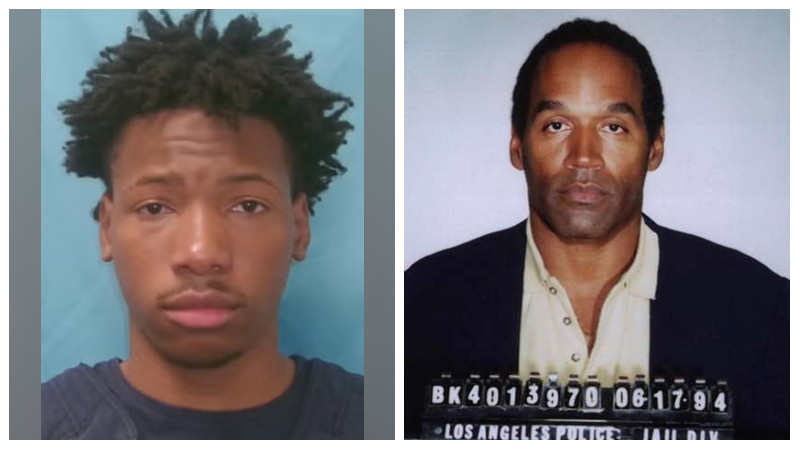
That same pattern is playing out in the Karmelo Anthony murder trial in Collin County, Texas. Seventeen-year-old Austin Metcalf was fatally stabbed in the chest at a Frisco track meet in April 2025. Anthony, now 19, faces first-degree murder charges but claims self-defense after being asked to leave the wrong team’s tent. Prosecutors say video and witness testimony show Anthony taunting others and warning, “Touch me and see what happens,” before pulling a knife.
After days of testimony, the self-defense claim has taken significant damage. Multiple witnesses, including friends of Metcalf who were inside the tent, have consistently testified that Anthony was the aggressor. They described repeated requests for him to leave, minor pushing at most from Metcalf, and no justification for lethal force. Yet supporters outside the Collin County Courthouse continue portraying Metcalf as the provocateur, with protests featuring racially charged rhetoric, including slurs and threats against white people, rather than focusing on the facts presented in court.
This is classic victim-blaming, echoing tactics from the Simpson era and patterns I observed firsthand during my years as a bail investigator inside Allegheny County Jail in Pittsburgh.
I saw this pattern repeatedly throughout my career. Whether the victim was a domestic violence survivor, a robbery victim, a witness to a violent crime, or the family of a murder victim, questions often shifted away from the offender’s actions and toward the victim’s decisions. What should have happened became secondary to what the victim supposedly could have done differently.
That mindset is not justice. It is victim-blaming dressed up as analysis.
One afternoon, I arrived at work to find an email from a prosecutor requesting detention for a defendant accused of shooting his ex-girlfriend in the head. The woman was still alive, but barely. She was not expected to survive. The defendant had been arrested on aggravated assault and weapons charges. Despite the allegations and a lengthy history of violent arrests, those charges still left open the possibility of release.
I contacted my supervisor and argued that we should seek to hold him without bond. The response was no. I was told to wait until I formally received the case, after which we could “discuss” it.
When the case finally reached my desk on the lesser charges, I did nothing. I knew exactly what I was doing. If the victim survived my shift, I would eventually have to explain why the case had sat on my desk for hours. I would have to defend the decision and deal with the fallout.
I wasn’t worried about that. A woman was lying in a hospital bed with a gunshot wound to the head. According to the allegations, she had run several blocks for her life before he caught her. My concern wasn’t protecting myself from accusations of insubordination. It was doing what I believed was right for the victim.
So, I waited.
Hours later, she died. The charges were upgraded to homicide, and only then could I recommend that he be held without bond.
Gad Saad has a term for what I was witnessing: suicidal empathy.
Empathy is a virtue. But empathy becomes dangerous when it is divorced from accountability. When compassion for offenders eclipses concern for victims, justice suffers.
That is what I increasingly witnessed throughout my career. The accused became the focus of endless understanding and accommodation, while victims were scrutinized, doubted, blamed, and forgotten. The system seemed far more interested in explaining criminal behavior than preventing it. That imbalance does not serve justice. It eviscerates it.
When evidence against an offender becomes difficult to explain away, attention frequently shifts elsewhere. In some high-profile cases, racial allegations — such as claims that the victim used a racial slur — emerge late in the process, often after other defenses have failed. This “Hail Mary pass” tactic can turn public debate away from facts and toward racial narratives.
The Simpson trial demonstrated how race can override evidence. Simpson had distanced himself from the Black community for years; he didn’t strongly identify with it or actively support it, yet that community rallied around him in large numbers, viewing the trial through the lens of historical distrust rather than the facts of the double murder. Race became a shield.
Decades later, that dynamic remains a powerful force. In the Anthony case, similar patterns are unfolding. Fundraising for Anthony’s defense has exceeded $600,000 via GiveSendGo while the Metcalf family grieves. Public demonstrations continue despite testimony undermining the self-defense narrative, with a heavy emphasis on race, including complaints about the jury composition and inflammatory rhetoric outside the courthouse.
Too often, victims are reframed as provocateurs. Offenders become symbols. Accountability becomes negotiable when race enters the equation as a weapon or excuse.
The parallels between Simpson and Anthony are not perfect, but the underlying pattern is familiar: a reluctance to prioritize evidence when the facts challenge a preferred racial or cultural narrative.
Whether we call it victim-blaming, narrative-driven justice, or what Gad Saad has termed “suicidal empathy,” the result is the same. Sympathy shifts toward those accused of causing harm while victims and their families are pushed to the margins.
The criminal justice system cannot function that way. Justice requires compassion, but it also requires accountability. It requires us to evaluate evidence honestly, regardless of race, politics, or public pressure.
Austin Metcalf is dead. His family will carry that loss for the rest of their lives. They deserve a justice system and a public conversation that focuses first on the victim, not on finding racial excuses for the person accused of killing him.
Truth should matter more than tribalism. Evidence should matter more than identity politics. And victims should never be placed on trial for the crimes committed against them.
Links:
------

Comments