
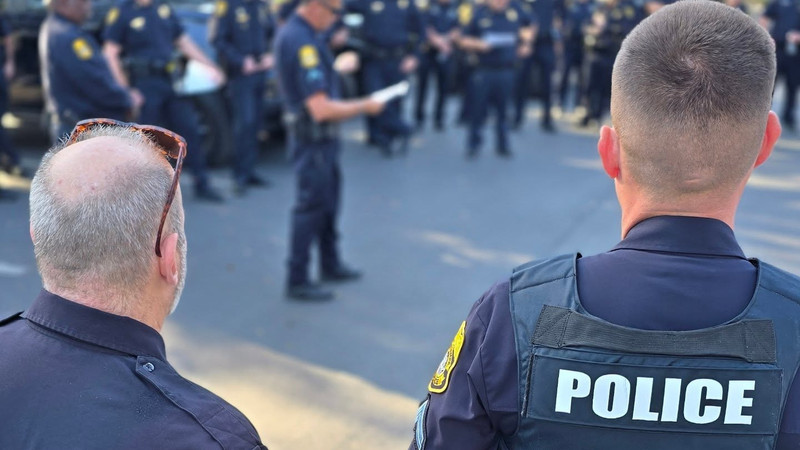
TAMPA, FL - Revisions to the Tampa Police Department's immigration enforcement policies will not have much impact on officers’ daily workflow, according to Tampa Police Benevolent Association President Brandon Barclay.
The statement comes after Florida Attorney General James Uthmeier accused the Tampa Police Department (TPD) of having "sanctuary policies" conflicting with the state's laws on immigration enforcement, WUSF reported.
TPD has an agreement with U.S. Immigration and Customs Enforcement (ICE). Their 287(g) agreement is a federal contract allowing state and local law enforcement to carry out immigration efforts for ICE. Sheriffs in all of Florida's 67 counties, as well as city and even university police departments, have signed agreements.
The Tampa Police policies under fire included preventing officers from sharing information with federal agents, such as the immigration status of victims or witnesses of a crime. Another policy prohibits officers from engaging in "broad-based" immigration enforcement actions.
Uthmeier called on Tampa Mayor Jane Castor to revise the policies by the end of March or risk penalties, including possible removal from office by the governor.
On Monday, March 16, the police department posted a revised policy, removing restrictions and making it more in line with state law. For example, it omitted the restriction on inquiring about victims and witnesses' immigration status.
Referencing state law, officers are not required to provide federal immigration agents with that information if it is not necessary to the investigation and the victim or witness is cooperating in a timely manner with law enforcement. Law enforcement also cannot issue an immigration detainer solely because someone witnessed or reported a crime or was a victim.
Barclay said the issue was the language of the policies and the need to ensure they matched the law. "I think the problem with that was it ran afoul of what the federal government agreed to when you sign these documents," Barclay said. He said that in response, Castor looked at the policy, saw where the issue was, and worked to align it.
"They literally printed the Florida statute in the new policy under two different sections," Barclay said. He said he feels that "law enforcement is not really unified as a whole on how to solve this problem."
Arturo Rios, an immigration lawyer and adjunct professor with Stetson College of Law, said he thought the issue was a "bit of a political overreach."
"I don't think that the mayor was refusing to follow the law. I really don't. I think it was more about how police were going to prioritize public safety and to make sure there was trust between police and the community," Rios said. "Because there's a problem when victims are afraid to call the police and when victims are afraid to speak to the police, the criminals win."
When asked how these immigration enforcement policy changes could affect the department, Barclay said: "There's no uniform patrol officer that's dealing with this." He said that no matter who calls 911, they're getting the same service.
"I think people think that we have like an immigration squad that's running around answering calls for service and going out and snatching people up, I can assure you without a doubt that's not happening," he said. "The people that we have that have another full-time job are also tasked with the immigration stuff."
Rios mentioned how there's a lot of fear in the immigrant community about interacting with law enforcement. He described hearing from people who are victims of domestic violence but may be in the country unlawfully and are afraid of contacting authorities out of fear of deportation.
Barclay said he understood there is a fear, but said there should be no victim afraid to call 911 regardless of their immigration status.
"I can assure you there's no Tampa Police officer showing up to a residence and calling immigration. One, we don't even ask. So, unless somehow we know that they're here illegally, it's not even a question that's asked," Barclay said. "But if there is a domestic violence victim, our goal is to get the defendant locked up and prosecuted, and the State Attorney's Office wants that as well. So if you take away the only victim that can prosecute that person, then it's a disservice to everybody — to the whole system."
Barclay said Castor coming out and changing the policy was so that everyone could be a unified front. "Everybody's going to be treated equally across the board, regardless of what your immigration status is, regardless if you're a victim, if you're a suspect in the city of Tampa, we're going to treat everybody equally," Barclay said.
The statement comes after Florida Attorney General James Uthmeier accused the Tampa Police Department (TPD) of having "sanctuary policies" conflicting with the state's laws on immigration enforcement, WUSF reported.
TPD has an agreement with U.S. Immigration and Customs Enforcement (ICE). Their 287(g) agreement is a federal contract allowing state and local law enforcement to carry out immigration efforts for ICE. Sheriffs in all of Florida's 67 counties, as well as city and even university police departments, have signed agreements.
The Tampa Police policies under fire included preventing officers from sharing information with federal agents, such as the immigration status of victims or witnesses of a crime. Another policy prohibits officers from engaging in "broad-based" immigration enforcement actions.
Uthmeier called on Tampa Mayor Jane Castor to revise the policies by the end of March or risk penalties, including possible removal from office by the governor.
On Monday, March 16, the police department posted a revised policy, removing restrictions and making it more in line with state law. For example, it omitted the restriction on inquiring about victims and witnesses' immigration status.
Referencing state law, officers are not required to provide federal immigration agents with that information if it is not necessary to the investigation and the victim or witness is cooperating in a timely manner with law enforcement. Law enforcement also cannot issue an immigration detainer solely because someone witnessed or reported a crime or was a victim.
Barclay said the issue was the language of the policies and the need to ensure they matched the law. "I think the problem with that was it ran afoul of what the federal government agreed to when you sign these documents," Barclay said. He said that in response, Castor looked at the policy, saw where the issue was, and worked to align it.
"They literally printed the Florida statute in the new policy under two different sections," Barclay said. He said he feels that "law enforcement is not really unified as a whole on how to solve this problem."
Arturo Rios, an immigration lawyer and adjunct professor with Stetson College of Law, said he thought the issue was a "bit of a political overreach."
"I don't think that the mayor was refusing to follow the law. I really don't. I think it was more about how police were going to prioritize public safety and to make sure there was trust between police and the community," Rios said. "Because there's a problem when victims are afraid to call the police and when victims are afraid to speak to the police, the criminals win."
When asked how these immigration enforcement policy changes could affect the department, Barclay said: "There's no uniform patrol officer that's dealing with this." He said that no matter who calls 911, they're getting the same service.
"I think people think that we have like an immigration squad that's running around answering calls for service and going out and snatching people up, I can assure you without a doubt that's not happening," he said. "The people that we have that have another full-time job are also tasked with the immigration stuff."
Rios mentioned how there's a lot of fear in the immigrant community about interacting with law enforcement. He described hearing from people who are victims of domestic violence but may be in the country unlawfully and are afraid of contacting authorities out of fear of deportation.
Barclay said he understood there is a fear, but said there should be no victim afraid to call 911 regardless of their immigration status.
"I can assure you there's no Tampa Police officer showing up to a residence and calling immigration. One, we don't even ask. So, unless somehow we know that they're here illegally, it's not even a question that's asked," Barclay said. "But if there is a domestic violence victim, our goal is to get the defendant locked up and prosecuted, and the State Attorney's Office wants that as well. So if you take away the only victim that can prosecute that person, then it's a disservice to everybody — to the whole system."
Barclay said Castor coming out and changing the policy was so that everyone could be a unified front. "Everybody's going to be treated equally across the board, regardless of what your immigration status is, regardless if you're a victim, if you're a suspect in the city of Tampa, we're going to treat everybody equally," Barclay said.
For corrections or revisions, click here.
The opinions reflected in this article are not necessarily the opinions of LET

Comments