
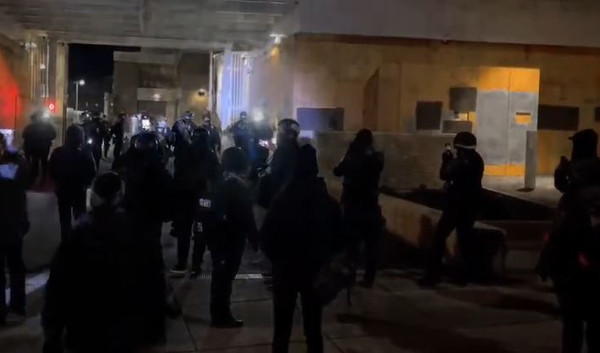
PORTLAND, OR - Portland police officials confirmed that a third officer has been shot in the line of duty this year after an incident involving a stolen vehicle in the city's Hazelwood neighborhood on Monday, November 23, KGW reported. While the officer is expected to recover, the shooting is a reminder of what happens when policing has been relentlessly attacked and vilified for more than a decade.
According to authorities, the incident occurred at approximately 9:15 a.m. near Northeast 119th Avenue and Halsey Street. Officers from the East Precinct, along with TriMet Transit officers and Public Safety Support Specialists, were tracking a stolen vehicle when they found it parked behind a New Day Market and boxed it in.
Officials say a man then walked out of the market and opened fire on the officers, sparking an exchange of gunfire that left both the suspect and one officer wounded.
Mike Benner, a spokesperson for the Portland Police Bureau (PPB), said, "Both individuals were transported to a local hospital with injuries that are believed to be non-life threatening, which we are extremely grateful for."
PPB Chief Bob Day was more pointed, saying, "When we see attacks on our officers like this, we are seeing attacks on the rule of law."
While some negative sentiment toward policing has always existed, it went mainstream over the past 10 to 12 years, a shift largely driven and enabled by movements like BLM and Antifa.
In a July 2016 interview on CNN, then-Milwaukee County Sheriff David Clarke saw the writing on the wall after a string of fatal shootings targeting law enforcement officers across the country.
"My message has been clear from day one, two years ago. This anti-cop sentiment from this hateful ideology called Black Lives Matter has fueled this rage against the American police officer. I predicted this two years ago," Clarke told a seemingly befuddled Don Lemon.
Clarke went on to blame anti-police rhetoric for the violence, saying, "I predicted this. This anti-police rhetoric sweeping the country has turned out some hateful things inside of people that are now playing themselves out on the American police officer."
What Clarke didn't know at the time is that things would only get worse. After BLM's resurgence following the death of George Floyd, it was practically open season on police and anyone who simply supported the concept of law enforcement. While police stations and city blocks aren't being burned down or taken over this year, the ripple effects of those violent movements still exist.
From public perception to the very language used to describe policing, the profession is vilified at every turn. Activist outfits work to reframe every aspect of policing as something negative. Officer-involved shootings are no longer called what they are, but are instead labeled "police violence," and proactive policing is reframed as minority-heavy urban areas being "overpoliced."
The anti-police propaganda has become so extreme over the past decade that California lawmakers in 2021 crafted legislation targeting what activists called "deputy gangs" within the Los Angeles County Sheriff's Department (LASD), alleging a clandestine network of law enforcement gang members.
When and how the narrative around police will change is honestly up in the air. While much of today's negative sentiment toward law enforcement has shifted toward federal agencies like Immigration and Customs Enforcement (ICE), that shift is only a symptom of the current administration, and it further shows that the same fire being stoked against law enforcement is alive and well in 2026.

Comments