
By Mathew Silverman, National President of the Federal Law Enforcement Officers Association
I have said this before, and it bears repeating: Words Matter. When elected leaders speak, their words carry weight. In moments of crisis, those words can either calm tensions or unintentionally deepen divisions. Responsible leadership requires care, balance, and restraint, especially when emotions are already running high.
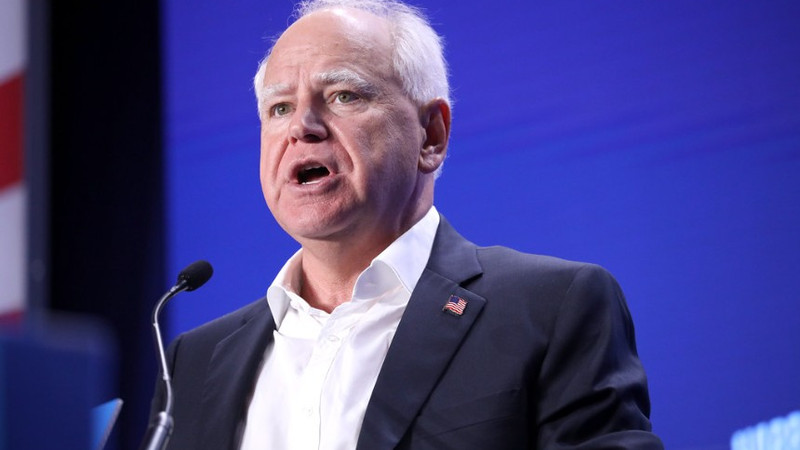
Following the recent tragic shooting in Minneapolis, Governor Tim Walz held a press conference addressing the incident. Like all Americans, we can acknowledge the profound loss involved. A life was lost, and a family is grieving. That alone demands empathy and seriousness.
At the same time, this incident is also life-altering for the officers involved, who will carry its weight, professionally and personally, for years to come. In today’s environment, they may also face harassment, threats, or doxing, risks that extend beyond the officers themselves to their families.
Moments like these call for leadership that works to lower the temperature and reinforce confidence in lawful processes. Unfortunately, some of the Governor’s remarks risk doing the opposite.
Governor Walz stated that the federal government “cannot be trusted to lead the shooting investigation,” described federal immigration enforcement in Minnesota as a “campaign organized on brutality,” and asserted that the state had done “everything it can to deescalate the situation.” Those statements deserve careful scrutiny.
In the days following the incident, Minnesota has seen unrest that includes violent protests, injuries to officers, damage to businesses, and attacks on property. Most notably, a hotel housing federal officers was targeted and heavily damaged. When businesses are attacked simply because law enforcement personnel are present, it signals a breakdown in civic order. These actions warrant clear and unequivocal condemnation from leaders at every level.
The Governor has also called on the President to remove federal law enforcement from Minnesota, claiming they are “creating chaos and violence.” That characterization raises serious concerns. Federal officers are carrying out duties assigned to them under the law, targeting serious criminal activity such as gang violence, trafficking, and other dangerous offenses. While reasonable people may debate policy, it is important to distinguish between lawful enforcement actions and the unlawful conduct of individuals who choose violence, intimidation, or destruction.
Particularly troubling were remarks suggesting that federal agents should no longer be referred to as law enforcement. Statements like these, even if driven by frustration or political disagreement, risk undermining public trust in lawful authority. They do not encourage calm or accountability; rather, they can be interpreted as delegitimizing institutions that are essential to public safety.
History has shown that rhetoric from leaders can influence behavior on the ground. This principle has been widely discussed in other contexts. Regardless of political affiliation, the standard should be consistent: when rhetoric has the potential to inflame, leaders should exercise restraint. Principles should guide us more than politics.
Elected officials have both a moral and civic responsibility to de-escalate tensions, reaffirm the rule of law, and make clear that violence, rioting, intimidation, and attacks on law enforcement or private businesses are unacceptable without exception. Policy disagreements can and should be debated, but they must be separated from language that risks encouraging confrontation.
Federal law enforcement officers are not an occupying force. They are public servants performing difficult and often dangerous work on behalf of the American people. Publicly questioning their legitimacy or portraying them as the source of unrest may have unintended and serious consequences.
In the end, leadership presents a choice: to steady the situation or to intensify it. At this moment, a more measured approach, one grounded in facts, restraint, and respect for the rule of law, would better serve the people of Minnesota and the nation.
When the damage is done, it will not be political leaders who bear the heaviest burden. It will be families whose livelihoods and businesses are destroyed, communities that feel less safe, and officers who are sent into volatile situations shaped, in part, by the words spoken from positions of power.

Comments