
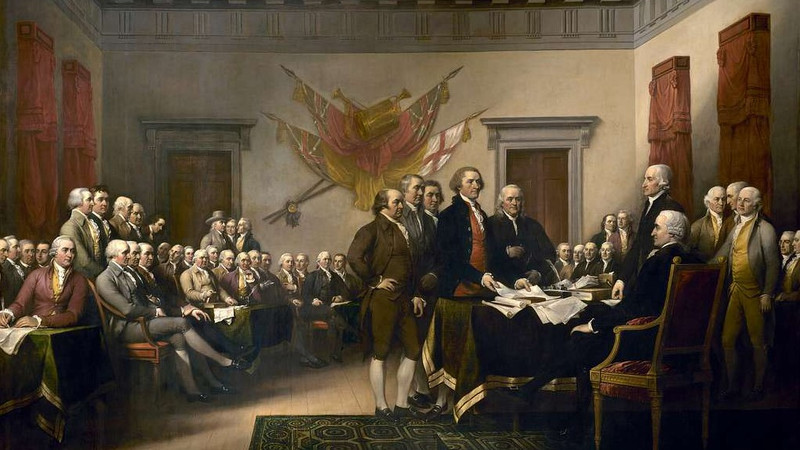
Displaying a commemorative copy of the Declaration of Independence in a home, office, or classroom is far more than decorative patriotism. It is a deliberate act of remembrance and responsibility. The Declaration of Independence is not a relic meant only for museums; it is a living moral statement about human dignity, freedom, and accountability. When placed in daily view, it becomes a quiet and powerful teacher, reminding us who we are and what we are called to preserve.
At its core, the Declaration of Independence is a claim about human worth. Its most famous assertion that all men are created equal and endowed by their Creator with certain unalienable rights is not a political convenience. It is a theological truth expressed in civic language. The Founders grounded liberty in a moral order that transcends government itself. Rights originate from our Creator.
This idea reflects a deeply biblical principle: imago Dei, the belief that every human being is made in the image of God. That doctrine is the foundation of equality. If each person bears God’s image, then dignity cannot be assigned, revoked, or ranked. The Declaration of Independence translates this spiritual truth into a civil framework, insisting that equality does not mean sameness of ability or circumstance.
Making the Declaration of Independence visible reinforces this truth. In a culture that increasingly measures value by productivity, status, or ideology, the document quietly pushes back. It affirms that human dignity precedes achievement. A framed print of the Declaration of Independence invites conversation between parents and children, colleagues, guests, and students about where our freedoms come from and why they matter.
The Declaration of Independence also reflects a biblical understanding of authority. Scripture consistently teaches that power is legitimate only when exercised justly. The prophets rebuked kings who abused authority and oppressed the vulnerable. In the same spirit, the Declaration states that governments derive their just powers from the consent of the governed. Authority is not self-justifying; it is accountable to law, to conscience, and ultimately to God.
This vision of freedom is not a rejection of authority, nor an excuse for selfishness. The Apostle Paul reminds us that freedom is meant for service, “to serve one another in love.” Likewise, the Declaration acknowledges the need for government while setting clear limits on its reach. As James Madison later observed, if men were angels, no government would be necessary. However, because they are not, the government exists to secure our rights, not to replace them.
A visible Declaration of Independence becomes a daily prompt. It asks whether our personal lives and civic culture reflect the dignity we claim to defend. It challenges us to measure progress by faithfulness and enduring principles, not by slogans or power.
In an age of rapid change and cultural amnesia, tangible reminders matter. A framed print of the Declaration of Independence is a bridge between generations, connecting us to the moral and spiritual currents that shaped our nation’s birth. It honors the courage of the signers, our first veterans, who knowingly risked their lives and families to affirm a truth greater than themselves.
Displaying the Declaration of Independence is ultimately an act of stewardship. It preserves a moral inheritance as well as a historic document. When we place its words in view, whether in the Oval Office or a living room, we affirm that America cannot be remade by abandoning its foundations. It can only endure by living up to them.

Comments