
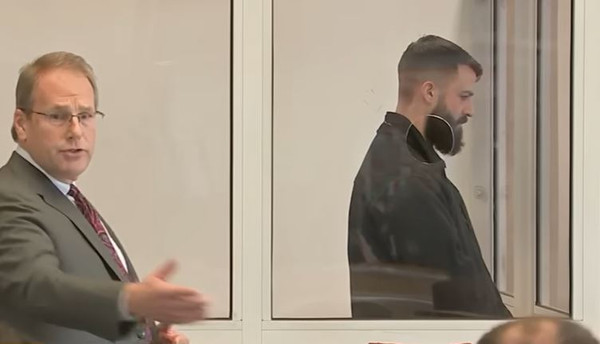
BOSTON, MA – Following a fatal officer-involved shooting that led to a Boston Police officer facing manslaughter charges this past March, city officials within Boston are exploring potential policies for releasing police bodycam footage in light of growing scrutiny over prosecutors choosing not to release the footage connected to the ongoing criminal case.
On March 11th, a suspected carjacker identified as 39-year-old Stephenson King had a confrontation with Boston Police that ultimately turned fatal. According to authorities, 33-year-old Officer Nicholas O’Malley had shot King three times during the confrontation, leading to the suspect’s death.
Just over a week after the critical incident, Officer O’Malley was arrested on March 19th on a voluntary manslaughter charge, with prosecutors alleging the officer employed a level of force that he “reasonably should have known” was a danger to the suspect’s life who was apparently unarmed nor had used his vehicle in a manner that threatened Officer O’Malley or his partner.
In criminal cases like this where either an officer’s or suspect’s actions are in question, the most critical evidence at play is typically the officer’s body worn camera footage, which the District Attorney’s Office is withholding from the public considering the ongoing criminal case.
The rationale for not releasing the footage publicly, according to District Attorney Kevin Hayden’s office, is to avoid potentially tainting a jury pool before the matter goes to trial, which he affirmed is the standard for handling critical evidence in criminal proceedings.
To date, there apparently isn’t a standardized policy on releasing bodycam footage of critical incidents stemming from the Boston Police Department, which the city council held a discussion on said topic on April 7th to explore whether a policy could be put into place, to include the footage of King’s fatal shooting.
City council members Miniard Culpepper and Brian Worrell are among those leading the charge to get some form of policy in place, whether they be limited releases shown directly to next of kin or broader releases for the public to digest if the circumstances are appropriate.
Council member Culpepper stated during the meeting, “If the family wants to see the video of the bodycam, the footage, they should be allowed to see it. At least the family.” Culpepper added there’s value even in limited releases of critical incident footage when shared with the family, elected officials and community leaders, saying, “You can then go to the community and assure the community what they are hearing or what they’ve seen is accurate.”
During the meeting, council member Ed Flynn voiced his support for some kind of policy regarding the release of bodycam footage but also added that whatever it adopted should be adhered to consistently. “I do think it has to be uniform policy. I just don’t necessarily like it when it is based on case by case,” Flynn stated, adding, “I think we need to be clear and consistent.”
On March 11th, a suspected carjacker identified as 39-year-old Stephenson King had a confrontation with Boston Police that ultimately turned fatal. According to authorities, 33-year-old Officer Nicholas O’Malley had shot King three times during the confrontation, leading to the suspect’s death.
Just over a week after the critical incident, Officer O’Malley was arrested on March 19th on a voluntary manslaughter charge, with prosecutors alleging the officer employed a level of force that he “reasonably should have known” was a danger to the suspect’s life who was apparently unarmed nor had used his vehicle in a manner that threatened Officer O’Malley or his partner.
In criminal cases like this where either an officer’s or suspect’s actions are in question, the most critical evidence at play is typically the officer’s body worn camera footage, which the District Attorney’s Office is withholding from the public considering the ongoing criminal case.
The rationale for not releasing the footage publicly, according to District Attorney Kevin Hayden’s office, is to avoid potentially tainting a jury pool before the matter goes to trial, which he affirmed is the standard for handling critical evidence in criminal proceedings.
To date, there apparently isn’t a standardized policy on releasing bodycam footage of critical incidents stemming from the Boston Police Department, which the city council held a discussion on said topic on April 7th to explore whether a policy could be put into place, to include the footage of King’s fatal shooting.
City council members Miniard Culpepper and Brian Worrell are among those leading the charge to get some form of policy in place, whether they be limited releases shown directly to next of kin or broader releases for the public to digest if the circumstances are appropriate.
Council member Culpepper stated during the meeting, “If the family wants to see the video of the bodycam, the footage, they should be allowed to see it. At least the family.” Culpepper added there’s value even in limited releases of critical incident footage when shared with the family, elected officials and community leaders, saying, “You can then go to the community and assure the community what they are hearing or what they’ve seen is accurate.”
During the meeting, council member Ed Flynn voiced his support for some kind of policy regarding the release of bodycam footage but also added that whatever it adopted should be adhered to consistently. “I do think it has to be uniform policy. I just don’t necessarily like it when it is based on case by case,” Flynn stated, adding, “I think we need to be clear and consistent.”
For corrections or revisions, click here.
The opinions reflected in this article are not necessarily the opinions of LET

Comments