
Mathew Silverman is the National President of the Federal Law Enforcement Officers Association and a board member for Law Enforcement Today.
At a time when American politics often feels dominated by spectacle, Pennsylvania Senator John Fetterman demonstrated something increasingly rare during President Donald Trump’s State of the Union address: restraint, courtesy, and a commitment to governing over grandstanding.
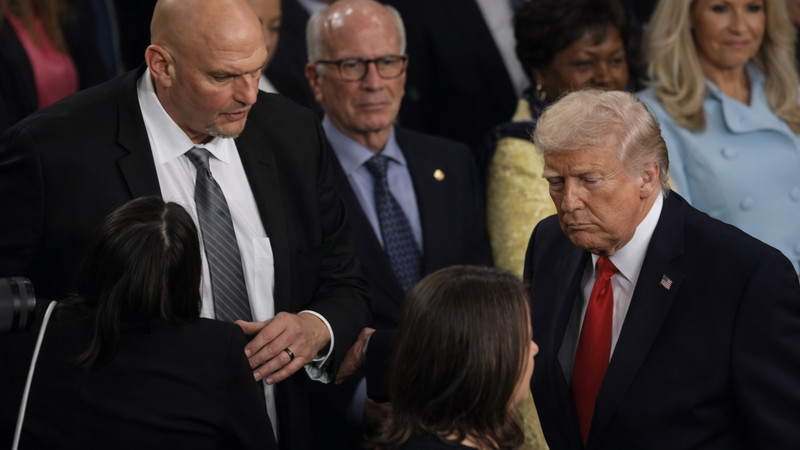
When President Trump entered the chamber, Sen. Fetterman stood and shook his hand. He later noted he may have been the only Democrat to do so.
“So it’s about saying he extended his hand and I did the same,” Fetterman explained. “It was just a very basic thing about respecting the office and basic courtesy.”
That moment was not about ideology. It was about institutional respect.
In a political climate where yelling, sign-waving, and performative outrage have become normalized, Fetterman took a different approach. He publicly criticized the “yelling and screaming” from members of his own party during the address.
“I don’t care if it’s a Republican or Democrat. It’s a president. Just don’t do that. Respect the office,” he said.
That message matters.
Respecting the office of the presidency does not require agreeing with the policies of the person holding it. It requires understanding that Americans expect their elected officials to behave like leaders, not activists auditioning for social media clips. Fetterman made clear that showing up, listening, and engaging are part of the responsibility of public service.
“I think, show up. You don’t have to clap for everything. You don’t have to agree with anything,” he said. “It’s disappointing … that half of my colleagues didn’t show up.”
That is not partisan rhetoric. That is a governing mindset.
For those of us who work closely with law enforcement professionals across this country, that mindset is critical. Federal, state, and local officers do not have the luxury of choosing which administrations they serve under. They uphold the Constitution. They work under presidents of both parties. They protect communities regardless of political affiliation.
When elected leaders model civility and bipartisan engagement, it strengthens the very institutions law enforcement depends upon.
Sen. Fetterman has also demonstrated that bipartisanship is not weakness. It is leadership. He has crossed the aisle on key issues, including being the lone Democrat to advance Department of Homeland Security funding when a shutdown loomed. He argued correctly that shutting down DHS would not stop immigration enforcement but would harm national security operations and the personnel tasked with carrying them out.
That vote reflected a serious understanding of governance. DHS funding impacts Border Patrol agents, ICE officers, TSA personnel, federal air marshals, and countless other professionals who protect the homeland every day. Supporting operational continuity is not partisan. It is responsible.
Despite occasional alignment with Republicans on specific issues, Fetterman has made clear he remains a committed Democrat. His voting record reflects that. What distinguishes him is not party abandonment. It is his refusal to treat political opponents as enemies.
“I don’t ever see the Republicans as the enemy or call them names,” he said.
That posture stands in stark contrast to the broader “coarsening” of public life he has openly criticized. Political discourse in America has degraded into personal attacks and performative hostility. Fetterman’s willingness to call that out, even when it originates within his own party, demonstrates political courage.
A recent Quinnipiac University poll shows broad cross-party approval of his performance, including strong support among Republicans and independents. That kind of coalition backing does not happen by accident. It happens when voters sense authenticity and a focus on results over rhetoric.
For the 13 million Pennsylvanians he represents, that approach translates into something tangible: a senator who understands that governance requires working with both sides of the aisle to deliver real outcomes. Lower costs. Secure communities. Functional government. Respectful discourse.
Law enforcement officers across the country understand this dynamic better than most. Public safety depends on cooperation between federal, state, and local agencies. It depends on collaboration between lawmakers of both parties who are willing to fund operations, clarify authorities, and ensure that officers have the resources necessary to protect the public.
When elected officials model civility and institutional respect, they reinforce the stability of the very system officers are sworn to defend.
Sen. Fetterman’s handshake was a small gesture. But leadership is often revealed in small gestures. Courtesy costs nothing. Class requires conviction. Bipartisanship requires backbone.
At a time when political theatrics dominate headlines, Pennsylvania’s senator chose something different: dignity.
And that is something worth recognizing.

Comments
2026-03-02T17:33-0500 | Comment by: Larry
John Fetterman is the only real American in the Dem. party. I'm thankful for his leadership.