
MESA COUNTY, CO – A Colorado sheriff’s deputy is currently facing a lawsuit after officials say the deputy shared critical information with federal immigration authorities that resulted in a woman with an expired visa being arrested by ICE agents shortly after the deputy pulled her over for a moving violation.
On June 5th, Mesa County Sheriff's Deputy Alexander Zwinck pulled over 19-year-old Caroline Dias-Goncalves along Interstate 70 after the woman was alleged to have been following too closely to a semi on the interstate.
According to local reports, Deputy Zwinck let Goncalves go with a warning, but the woman was reportedly arrested by ICE agents shortly after the initial traffic stop due to Goncalves’ visa having expired.
After news of Dias-Goncalves’ arrest by ICE spread within the community, an internal investigation was kicked off by the Mesa County Sheriff's Office to ascertain whether Deputy Zwinck played any role in tipping off immigration authorities to her unlawful presence.
On July 30th, the sheriff’s office released the results of their internal investigation into the incident, finding Deputy Zwinck and others within the department being culpable with respect to Dias-Goncalves’ subsequent arrest in June.
“[Dias-Goncalves’] detainment was facilitated as result of her information being shared by Mesa County Sheriff’s Deputy Alexander Zwinck to a group chat containing representatives from local, state, and federal law enforcement partners, including Homeland Security Investigations (HSI) and Immigration and Customs Enforcement,” a statement by Sheriff Todd Rowell noted, adding, “As Mesa County Sheriff, I take full responsibility for this incident. The Mesa County Sheriff’s Office (MCSO) has well-established practices limiting our involvement in immigration enforcement.”
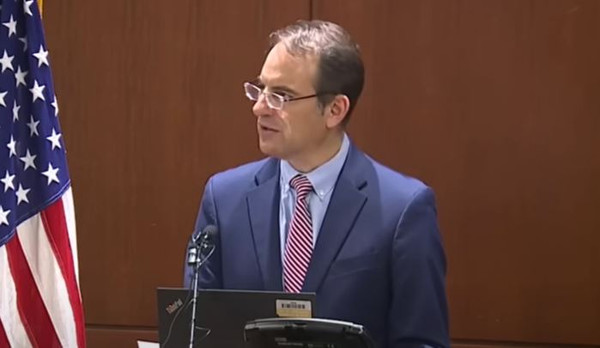
While Sheriff Rowell’s statement admits that Deputy Zwinck likely violated Colorado state law which prohibits law enforcement officers from sharing the personal information of individuals suspected of immigration violations with federal authorities, the sheriff also took issue with the fact that Colorado Attorney General Phil Weiser formally announced a lawsuit against Deputy Zwinck over the purported violation of state law.
“I ask that Attorney General Weiser apply the law equally to all law enforcement and government officials instead of making Deputy Zwinck an example,” Sherrif Rowell noted regarding AG Weiser’s perceived unequal application of state law, further adding, “This would include filing lawsuits and hosting press conferences for each state and local law enforcement officer in the group chat and other government officials who have violated SB 21-131 and SB 25-276.”
The results of the internal investigation conducted by the sheriff’s office saw Deputy Zwinck placed on unpaid administrative leave for three weeks, as well as seeing the deputy removed from Western Colorado Task Force and reassigned to standard patrol duties.
A second deputy who was simply in the same group chat as Deputy Zwinck was also placed on unpaid leave for two weeks and reassigned to patrol.
Furthermore, a sergeant who oversees the aforesaid deputies was also suspended without pay for two days ostensibly over the sheer happenstance of being the two deputies’ immediate supervisor.
But the internal disciplinary matters Deputy Zwinck is enduring pales in comparison to what he could be facing with the pending lawsuit, because if the deputy is found liable in civil court, then he could face a fine of $50,000 for the mere act of relaying actionable information to immigration authorities.
Kristi Burton Brown, the executive vice president of the organization Advance Colorado, which aims to reverse “radical policies” brought into existence via liberal leadership within Colorado, is one of many within the Centennial State who find the criminalization of local cops cooperating with federal authorities both unsound and unsafe for all residents.
“Basically, this new law gives a narrow exception for Colorado law enforcement to cooperate with the federal government if ICE or the Department of Homeland Security asks for assistance in a particular crime investigation,” Brown noted in a statement shared with Fox News, adding, “However, there is an absolute ban on local law enforcement proactively notifying DHS if they discover that a violent criminal or repeat felon is here illegally. If they report to ICE anyway, they will face a $50,000 fine.”
On June 5th, Mesa County Sheriff's Deputy Alexander Zwinck pulled over 19-year-old Caroline Dias-Goncalves along Interstate 70 after the woman was alleged to have been following too closely to a semi on the interstate.
According to local reports, Deputy Zwinck let Goncalves go with a warning, but the woman was reportedly arrested by ICE agents shortly after the initial traffic stop due to Goncalves’ visa having expired.
After news of Dias-Goncalves’ arrest by ICE spread within the community, an internal investigation was kicked off by the Mesa County Sheriff's Office to ascertain whether Deputy Zwinck played any role in tipping off immigration authorities to her unlawful presence.
On July 30th, the sheriff’s office released the results of their internal investigation into the incident, finding Deputy Zwinck and others within the department being culpable with respect to Dias-Goncalves’ subsequent arrest in June.
“[Dias-Goncalves’] detainment was facilitated as result of her information being shared by Mesa County Sheriff’s Deputy Alexander Zwinck to a group chat containing representatives from local, state, and federal law enforcement partners, including Homeland Security Investigations (HSI) and Immigration and Customs Enforcement,” a statement by Sheriff Todd Rowell noted, adding, “As Mesa County Sheriff, I take full responsibility for this incident. The Mesa County Sheriff’s Office (MCSO) has well-established practices limiting our involvement in immigration enforcement.”
While Sheriff Rowell’s statement admits that Deputy Zwinck likely violated Colorado state law which prohibits law enforcement officers from sharing the personal information of individuals suspected of immigration violations with federal authorities, the sheriff also took issue with the fact that Colorado Attorney General Phil Weiser formally announced a lawsuit against Deputy Zwinck over the purported violation of state law.
“I ask that Attorney General Weiser apply the law equally to all law enforcement and government officials instead of making Deputy Zwinck an example,” Sherrif Rowell noted regarding AG Weiser’s perceived unequal application of state law, further adding, “This would include filing lawsuits and hosting press conferences for each state and local law enforcement officer in the group chat and other government officials who have violated SB 21-131 and SB 25-276.”
The results of the internal investigation conducted by the sheriff’s office saw Deputy Zwinck placed on unpaid administrative leave for three weeks, as well as seeing the deputy removed from Western Colorado Task Force and reassigned to standard patrol duties.
A second deputy who was simply in the same group chat as Deputy Zwinck was also placed on unpaid leave for two weeks and reassigned to patrol.
Furthermore, a sergeant who oversees the aforesaid deputies was also suspended without pay for two days ostensibly over the sheer happenstance of being the two deputies’ immediate supervisor.
But the internal disciplinary matters Deputy Zwinck is enduring pales in comparison to what he could be facing with the pending lawsuit, because if the deputy is found liable in civil court, then he could face a fine of $50,000 for the mere act of relaying actionable information to immigration authorities.
Kristi Burton Brown, the executive vice president of the organization Advance Colorado, which aims to reverse “radical policies” brought into existence via liberal leadership within Colorado, is one of many within the Centennial State who find the criminalization of local cops cooperating with federal authorities both unsound and unsafe for all residents.
“Basically, this new law gives a narrow exception for Colorado law enforcement to cooperate with the federal government if ICE or the Department of Homeland Security asks for assistance in a particular crime investigation,” Brown noted in a statement shared with Fox News, adding, “However, there is an absolute ban on local law enforcement proactively notifying DHS if they discover that a violent criminal or repeat felon is here illegally. If they report to ICE anyway, they will face a $50,000 fine.”
For corrections or revisions, click here.
The opinions reflected in this article are not necessarily the opinions of LET

Comments
2025-08-05T16:42-0400 | Comment by: thomas
Get out of Colorado and join ICE Deputy
2025-08-05T17:22-0400 | Comment by: Dawn
The fact him doing this is even an issue proves how ridiculous and unlawful Colorado has become. He did his job RIGHT. Pure and simple.
2025-08-06T18:55-0400 | Comment by: Art
Actually this is good. The Unions and others need to rally on Deputy Alexander Zwinck's behalf and if he loses push this all the way to the US Supreme Court challenging the stupid law forbidding law enforcement to do their moral job in reporting ALL CRIMINALS INCLUDING THOSE WHO ARE HERE ILLEGALLY.