
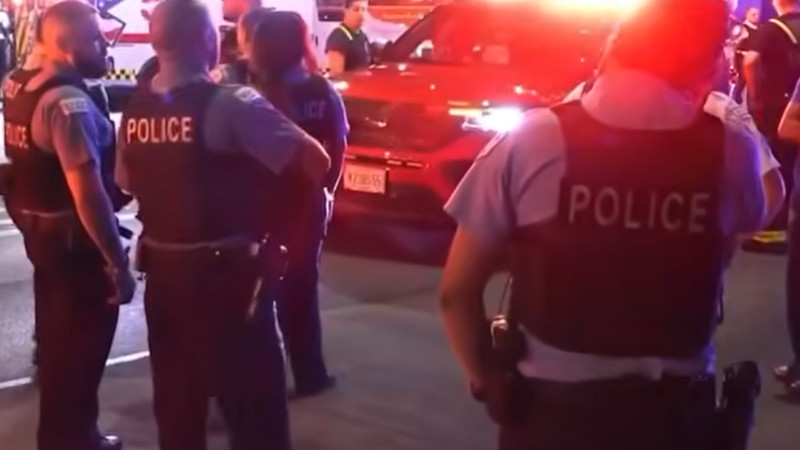
On Nov. 3 in Mt. Lebanon, Pennsylvania, a community just outside Pittsburgh, first responders were called to a parking garage behind the municipal building. Around 4:15 p.m., they found Patrick Lynch, 42, and his children, James, 8, and Caroline, 6, unresponsive. Lynch had thrown his children from the parking garage before jumping himself. Emergency crews administered CPR to all three. All were pronounced dead at the scene.
It was broad daylight in a busy part of town. People reported hearing screaming.
Patrick Lynch made them an audience.
They didn't buy a ticket. They didn't choose to be there. They didn't ask to hear the screams or encounter the aftermath of two children being thrown from a parking garage by their own father. But he made that choice for them.
They will never forget what they saw or unhear what they heard.
While community members and passersby instinctively want to run, police officers, firefighters, and paramedics do the opposite.
They race toward it.
Hearts pounding, sirens blaring, weaving through traffic with only fragments of information coming over the radio. They don't know what they're about to encounter. But someone needs help, and they're going.
They don't have the option of turning around when they realize how bad it is.
Those officers, medics, and firefighters eventually leave the scene. They go home or on to the next call. Most will never talk about what they saw. They'll turn it inward.
I don't blame them. I'm the same way.
First responders need somewhere to put the things they carry. The faces. The sounds. The knowledge that you did everything and it still wasn't enough. The smell that stays in your nose for days. The way a child's hand looks when it is no longer warm. Those memories follow you home. They interrupt your sleep. They show up at the dinner table with your family.
They need a private, trustworthy place to take those memories, staffed by people who can hear what the job produces without flinching, moralizing, or turning it into a political exercise. Too much of the counseling profession, as it is currently trained, fails to provide that.
Within hours, the children’s mother, Anna DeMase Lynch, took to social media and described her husband as a "wonderful dad." She said he had become depressed after losing his job and had agreed to seek counseling. His appointment was scheduled for Nov. 4.
"One day too late,” she wrote.
A wonderful dad?
A father's most fundamental responsibility is protecting his children. Patrick Lynch did the exact opposite. He murdered his 8-year-old son and 6-year-old daughter. And I take serious issue with the implication that a therapy appointment the following day would have prevented this.
I'm a mental health counselor. I support treatment. I also understand its limitations. Counseling is not a magic appointment where someone walks into an office and walks out incapable of committing violence. Depression does not erase the distinction between someone who is suffering and someone who decides to murder his children.
While the conversation turns toward the father's mental health, I keep thinking about the people who had no appointment, no warning, and no choice. The children. The people who heard the screams. The first responders who confronted what he left behind.
I spent nearly 15 years working in criminal justice, including inside the Allegheny County Jail, before earning a second master's degree in clinical mental health counseling from Duquesne University. What I witnessed in that program left me furious.
In my CACREP-accredited cohort, students were hyper-focused on LGBTQ advocacy, transgender rights for children, and access to puberty blockers for children as young as five. But when it came to trauma, grief, police officers, and military veterans, the enthusiasm disappeared. Students repeatedly said they didn't want to work with those populations. One student called veterans murderers.
Veterans. Murderers.
And this person was preparing to become a mental health counselor.
The faculty didn't put a stop to it. In my experience, more than half actively promoted the same political ideology. The school went along. Nobody wanted to risk being canceled.
There was no dedicated grief counseling class. When I asked why, I was told it was because everyone experiences grief. That was the explanation. A doctoral student taught our trauma class and canceled every assignment after classmates complained about the workload in other classes. Meanwhile, we had coursework on white privilege, racism in America, and two courses on substance use disorders.
Clinical competence with people who have witnessed violent death was not a priority. It was not even an option for discussion. That population was demonized. Political alignment was front and center.
And this is where my anger turns to fear for the men and women who need these counselors.
A police officer who has watched a child die doesn't get to decide he's finished for the day. They answer the next call. And the next. Some stop sleeping. Some start drinking. Some become withdrawn. Some lose their marriages. Some take their own lives. And far too many never tell anyone what's happening inside their heads.
Imagine an officer finally deciding to seek counseling after years of carrying those memories. Imagine how much it took to get him through that door. And then imagine discovering that the person sitting across from him spent graduate school announcing they didn't want to work with cops or considered veterans murderers.
That officer may have spent years convincing himself counseling wouldn't help. One bad experience could convince him he was right. And he may never go back.
We cannot keep telling first responders to ask for help while ignoring who is waiting on the other side of that office door. They don't need lectures about privilege or counselors who approach them with preconceived judgments about their uniforms. They need someone who can hear the details of a child's death without recoiling. Someone who understands that trust isn't automatic because a diploma hangs on the wall. And someone who understands that when a first responder finally starts talking, what comes out may be ugly, graphic, frightening, or difficult to hear.
That's the job.
If you have contempt for the people who bring those experiences into your office, or no interest in treating trauma and grief, don't pretend you're fit for the profession.
The men and women who responded to Mt. Lebanon didn't create that horror. They were sent to confront it. They tried to save two children whose own father took away their chance to grow up. Now they must live with whatever that afternoon left inside them.
We owe them more than a wellness brochure, an employee assistance number, or a counselor who doesn't want to hear what they have to say. We owe them competent care from people who respect what they do and understand what it costs them.
They need somewhere to put it. Until that changes, too many will keep turning it inward, or worse, check out completely.
I understand why.
Kelly Rae Robertson is a writer, commentator, former criminal justice investigator, and nationally certified mental health counselor. She advocates for victims’ rights, government accountability, and first responder mental health.

Comments