
TEXAS - At the beginning of his career, Minnesota State Trooper Derrick Row was eager to engage in police pursuits, but that all changed after one of his first chases ended with an innocent bystander who left the scene in an ambulance.
In the early morning hours, Row was chasing a driver on the freeway who fled to avoid a speeding ticket when the driver hit another car. the car that wasn't involved in the pursuit spun out and the driver, who was 25 weeks pregnant, left in an ambulance.
"That really made me think, there's real risks of doing this and actually hurting someone, so how worth it was it for that one speeder that just didn't want to get a speeding ticket?" Row said.
It's been several years since that crash, and Row still doesn't know what happened to the innocent bystander. He said that now, he is more cautious about engaging in vehicle pursuits.
Law enforcement agencies across the country have policies surrounding vehicle pursuits, with many agencies recognizing the dangers they pose.
An ongoing investigation by KERA News reportedly found that rules and accountability for high-speed police pursuits vary by state. Some states, like Texas, leave it up to individual departments, whereas Minnesota has more safeguards in place, including stateside pursuit policy guidelines.
Minnesota also requires continued training and data collection on police pursuits, which experts say make a difference.
The Minnesota Board of Peace Officer Standards and Training (POST), maintains a model pursuit policy. The policy is meant to be a guideline that law enforcement agencies can tailor to their own communities.
In 1999, Minnesota passed minimum standards for pursuit policies, which requires agencies to outline procedures and tactics for pursuits, as well as standards for initiating and terminating chases. The law also requires departments to balance the risks of pursuing with the consequences of not pursuing.
Every state and local law enforcement agency must also certify annually that it has a policy in place that meets these minimum standards or they may be sanctioned by the licensing board. The Minnesota law emphasizes safety. Minnesota State Patrol shares that mission, according to Captain Brian Cheney.
"Our goal is obviously to have the safest roads that we can for everybody that uses them," Cheney said. "So everything we do, including this pursuit policy, has that in mind."
The guidelines are a collaborative effort, and Minnesota State Patrol and other agencies in the state have a seat at the table, Cheney added.
The current model policy for law enforcement in Minnesota calls for officers to drive with due regard for public safety.
It also states that only vehicles with emergency lights and sirens can be used for pursuits and it calls for officers to slow down as necessary for safety when approaching a stop sign or red light.
Some agencies in Texas have similar rules in their pursuit policies. The Dallas Police Department's pursuit policy requires officers to come to a complete stop to ensure an intersection is clear before disregarding a red light or stop sign.
The Fort Worth Police Department's policy instructs officers to refrain from initiating a pursuit when it would create greater harm to innocent bystanders than warranted.
While Texas requires law enforcement agencies to have a pursuit policy, the state does not have specific guidelines or requirements for that policy.
It is left up to the individual agencies, and that leads to vastly different policies at neighboring departments that serve similar communities.
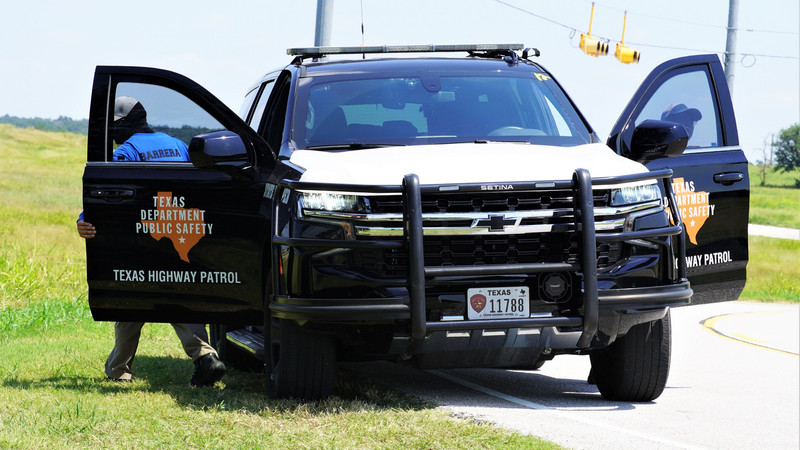
The major existing police pursuit laws that apply statewide are the broad guidelines that govern troopers with the Texas Department of Public Safety. They say troopers have a duty to drive safely, may be granted exceptions to traffic laws in emergency situations, and can park their vehicles on medians.
The Texas Police Chiefs Association, although not a state agency, has issued guidance on how police should engage in and report chases, including a general model policy.
Some state lawmakers who spoke to KERA said there has been very little discussion about addressing police pursuits. Others said statewide pursuit regulations are not necessary in Texas. "We're right where we need to be," state Rep. A.J. Louderback (R-Victoria) said earlier this year.
"Each chase is a separate entity. Each chase is handled on its own. Each chase the facts are different. There's so many factors here that go into a chase."
There is also the issue of size. Texas is the second largest U.S. state by area and has more than 2,700 agencies.
A true statewide pursuit policy would be difficult for most of the country, said Wendy Hicks, a former criminal justice professor who has done extensive research on police pursuits and use of force.
"Our states are the size of some nations," Hicks said. "So you can't have one singular policy that's going to be applicable to every location."
Hicks said other factors vary by community and can contribute to pursuits, including local customs and culture. That difference in geography and culture is one reason law enforcement agencies have pushed back against statewide pursuit regulations in Texas, state Rep. Ray Lopez (D- San Antonio) said earlier this year.
"A lot of jurisdictions' pushback is, 'one size doesn't fit all,'" Lopez said. "And I think that has to be part of the legislation that we craft."
In the early morning hours, Row was chasing a driver on the freeway who fled to avoid a speeding ticket when the driver hit another car. the car that wasn't involved in the pursuit spun out and the driver, who was 25 weeks pregnant, left in an ambulance.
"That really made me think, there's real risks of doing this and actually hurting someone, so how worth it was it for that one speeder that just didn't want to get a speeding ticket?" Row said.
It's been several years since that crash, and Row still doesn't know what happened to the innocent bystander. He said that now, he is more cautious about engaging in vehicle pursuits.
Law enforcement agencies across the country have policies surrounding vehicle pursuits, with many agencies recognizing the dangers they pose.
An ongoing investigation by KERA News reportedly found that rules and accountability for high-speed police pursuits vary by state. Some states, like Texas, leave it up to individual departments, whereas Minnesota has more safeguards in place, including stateside pursuit policy guidelines.
Minnesota also requires continued training and data collection on police pursuits, which experts say make a difference.
The Minnesota Board of Peace Officer Standards and Training (POST), maintains a model pursuit policy. The policy is meant to be a guideline that law enforcement agencies can tailor to their own communities.
In 1999, Minnesota passed minimum standards for pursuit policies, which requires agencies to outline procedures and tactics for pursuits, as well as standards for initiating and terminating chases. The law also requires departments to balance the risks of pursuing with the consequences of not pursuing.
Every state and local law enforcement agency must also certify annually that it has a policy in place that meets these minimum standards or they may be sanctioned by the licensing board. The Minnesota law emphasizes safety. Minnesota State Patrol shares that mission, according to Captain Brian Cheney.
"Our goal is obviously to have the safest roads that we can for everybody that uses them," Cheney said. "So everything we do, including this pursuit policy, has that in mind."
The guidelines are a collaborative effort, and Minnesota State Patrol and other agencies in the state have a seat at the table, Cheney added.
The current model policy for law enforcement in Minnesota calls for officers to drive with due regard for public safety.
It also states that only vehicles with emergency lights and sirens can be used for pursuits and it calls for officers to slow down as necessary for safety when approaching a stop sign or red light.
Some agencies in Texas have similar rules in their pursuit policies. The Dallas Police Department's pursuit policy requires officers to come to a complete stop to ensure an intersection is clear before disregarding a red light or stop sign.
The Fort Worth Police Department's policy instructs officers to refrain from initiating a pursuit when it would create greater harm to innocent bystanders than warranted.
While Texas requires law enforcement agencies to have a pursuit policy, the state does not have specific guidelines or requirements for that policy.
It is left up to the individual agencies, and that leads to vastly different policies at neighboring departments that serve similar communities.
The major existing police pursuit laws that apply statewide are the broad guidelines that govern troopers with the Texas Department of Public Safety. They say troopers have a duty to drive safely, may be granted exceptions to traffic laws in emergency situations, and can park their vehicles on medians.
The Texas Police Chiefs Association, although not a state agency, has issued guidance on how police should engage in and report chases, including a general model policy.
Some state lawmakers who spoke to KERA said there has been very little discussion about addressing police pursuits. Others said statewide pursuit regulations are not necessary in Texas. "We're right where we need to be," state Rep. A.J. Louderback (R-Victoria) said earlier this year.
"Each chase is a separate entity. Each chase is handled on its own. Each chase the facts are different. There's so many factors here that go into a chase."
There is also the issue of size. Texas is the second largest U.S. state by area and has more than 2,700 agencies.
A true statewide pursuit policy would be difficult for most of the country, said Wendy Hicks, a former criminal justice professor who has done extensive research on police pursuits and use of force.
"Our states are the size of some nations," Hicks said. "So you can't have one singular policy that's going to be applicable to every location."
Hicks said other factors vary by community and can contribute to pursuits, including local customs and culture. That difference in geography and culture is one reason law enforcement agencies have pushed back against statewide pursuit regulations in Texas, state Rep. Ray Lopez (D- San Antonio) said earlier this year.
"A lot of jurisdictions' pushback is, 'one size doesn't fit all,'" Lopez said. "And I think that has to be part of the legislation that we craft."
For corrections or revisions, click here.
The opinions reflected in this article are not necessarily the opinions of LET

Comments