
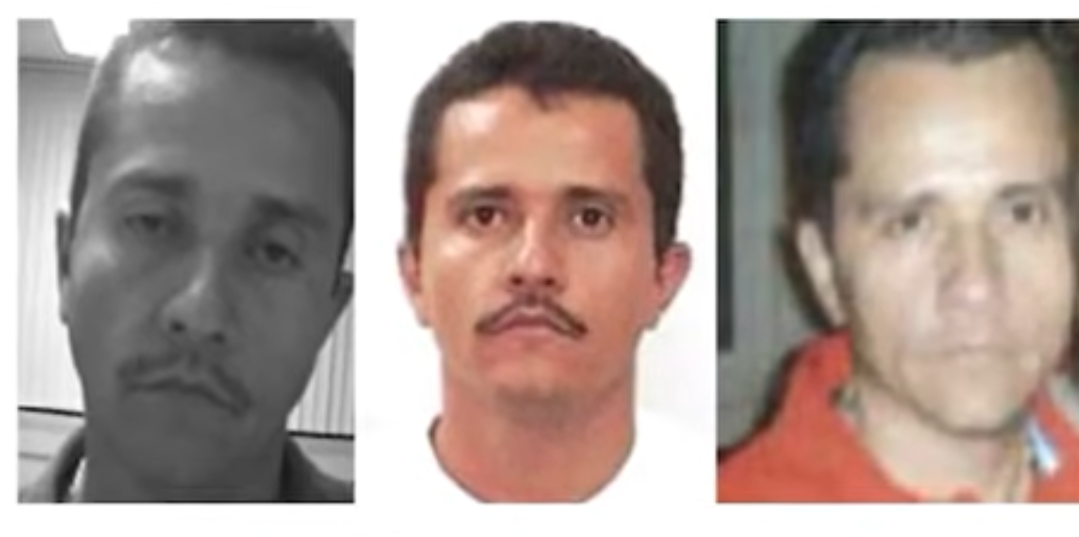
MEXICO CITY- With an assist from U.S. intelligence, the Mexican army killed the leader of the Jalisco New Generation Cartel on Sunday, taking out the head of Mexico’s most powerful drug cartel while at the same time putting parts of the nation into chaos.
According to the Associated Press, Nemesio Ruben Oseguera Cervantes, also known as “El Mencho,” was wounded in a military operation to capture him in Tapalpa, Jalisco, which is about two hours southwest of Guadalajara.
He died while being flown to Mexico City, authorities said. Jalisco is the base for the cartel, which is known for trafficking large quantities of fentanyl and other narcotics into the United States.
El Mencho’s killing has provided Mexican Presidengt Claudia Sheinbaum with significant leverage as she seeks to counter President Trump’s calls for U.S. forces to engage Mexican organized crime, said David Mora, senior analyst at the International Crisis Group, according to CBC.
Sheinbaum has consistently promoted a cooperative approach with the United States, emphasizing extensive intelligence-sharing between the two countries.
According to Mora, the Sheinbaum administration took a 'high risk bet' in targeting the head of the CJNG. As seen on Sunday, the cartel maintains a presence across most of the country.
In response to El Mencho’s death, cartel members blocked roads at over 250 points in 20 Mexican states. The AP reported Guadalajara, Jalisco’s capital, was “turned into a ghost town” on Sunday, and school was canceled in several Mexican states.
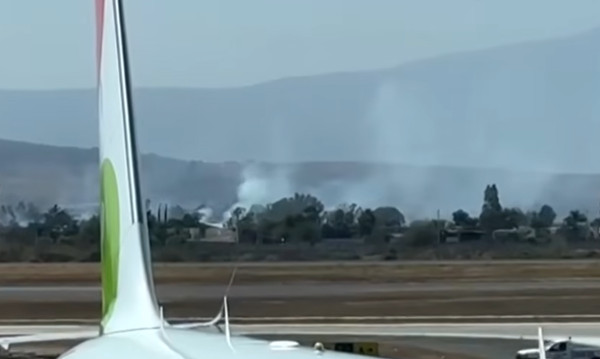
Tourists were trapped inside resorts in Puerto Vallarta as cartels blocked roads, with some reports saying gangs had also breached the airport there.
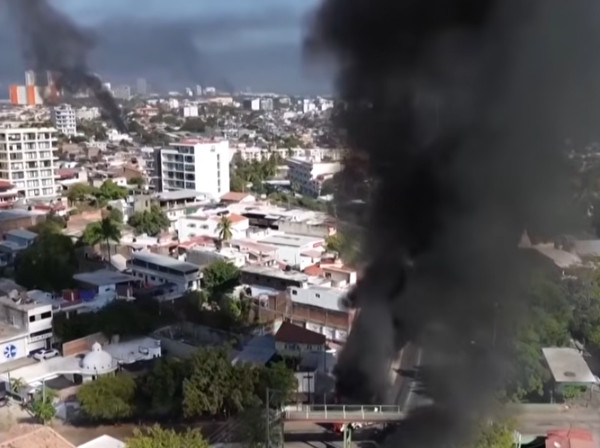
Videos posted to social media showed smoke billowing over Puerto Vallarta, and people running through the airport in apparent panic.
Air Canada suspended flights to the resort city “due to an ongoing security situation,” and advised customers to stay away from the airport. Several Mexican and international airlines also canceled flights.
The AP reported that troops came under fire during the operation to capture El Mencho and killed four people at that location. Three others, including El Mencho, were wounded and later succumbed to their wounds. Three members of Mexico’s armed forces were wounded and required medical treatment.
A Jalisco state official who asked to remain anonymous said that a member of the Mexican National Guard died in Tapalpa during the operation, six other National Guard members died in Zapopan, a jail guard was killed at a lockup in Puerto Vallarta when prisoners started a riot, and an agent from the Jalisco state prosecutor’s office was killed in Guadalajara.
No details were made available.
The New York Post reported that Mexican authorities received assistance from the US Joint Interagency Task Force-Counter Cartel (JITF-CC) group, formed last month to map out the networks used by the cartel along the border.
President Trump has prioritized cracking down on Mexican cartels since being inaugurated for his second term. The U.S. had placed a $15,000,000 reward for information leading to the arrest and/or conviction of El Mencho.
Last year, President Trump designated Mexican cartels as terrorist groups. That designation allowed the task force to use military assets to conduct surveillance on drug traffickers.
White House Press Secretary Karoline Leavitt posted on X, confirming the U.S. provided intelligence support for the operation.
“‘El Mencho’ was a top target for the Mexican and United States government as one of the top traffickers of fentanyl into our homeland,” she wrote, and also commended the Mexican military for their work.
The agency finally developed a detailed target package on El Mencho.
The Post noted that while not much is known about the specific intel the JITF-CC provided to the Mexican military, the agency’s website has a stated goal to “identify, disrupt, and dismantle cartel operations posing a threat to the United States along the U.S.-Mexico border.”
Mexico’s Security Ministry confirmed that the United States provided “supplementary information” for the raid to capture El Mencho, although the operation was planned and led by Mexico’s central military-intelligence unit.
Officials were able to track down the narco-terrorist by tracking down a man linked to one of El Mencho’s lovers, who led officials to the mountainside compound where he was found.
While the girlfriend eventually left the resort compound, El Mencho and his men remained there.
When Mexican special forces arrived at the compound on Sunday, they were met with a hail of gunfire from El Mencho’s fighters. Mexican troops returned fire and killed four cartel members during the gun battle.
The Mexican soldiers had assistance from Air Force aircraft and the National Guard's rapid-reaction units and quickly overpowered the resistance.
The director of JITF-CC, Brigadier Gen. Maurizio Calabrese, said the task force used its military experience fighting terrorist groups such as al Qaeda and the Islamic State to study and map out the cartel’s network.
“The cartels operate differently than al Qaeda or ISIS, different motivations, which makes it even more important for us to identify entire networks so that we can disrupt and dismantle [them],” Calabrese told Reuters.
David Mora, analyst for the International Crisis Group in Mexico, credited Mexican President Claudia Sheinbaum for pushing back on Mexican cartels.
“Ever since President [Claudia] Sheinbaum has been in power, the army has been way more confrontational, combative against criminal groups in Mexico,” Mora said.
“This is signalling to the U.S. that if we keep cooperating, sharing intelligence, Mexico can do it; we don’t need U.S. troops on Mexican soil.”
It is unknown what the violence will do to impact this summer’s World Cup, with Guadalajara scheduled to host matches.
The DEA considers the Jalisco cartel to be as powerful as the Sinaloa cartel, which has a presence in all 50 U.S. states.

Comments
2026-02-26T08:26-0500 | Comment by: Dave
Lead dog eliminated. No lawyer fees, no prison fees. No transportation and protection fees. No one hurt protecting a guilty drug lord killing thousands of people.