
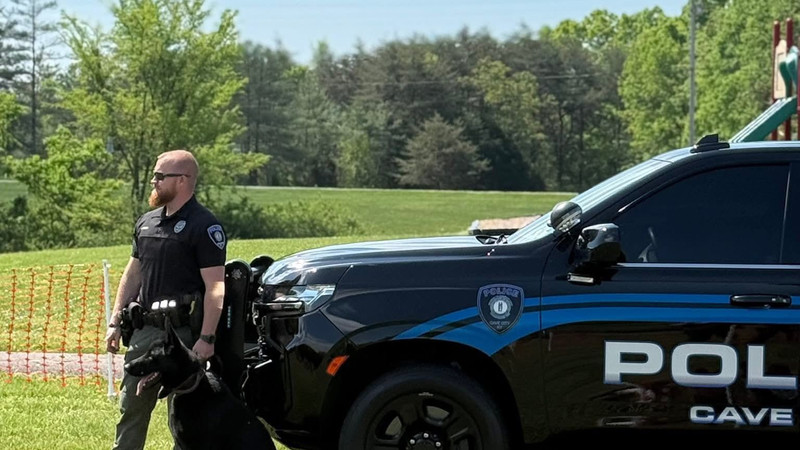
CAVE CITY, KY - Earlier this week, the Cave City Council convened for a special meeting where they introduced a body camera policy for the police department.
The policy review and vote were initially set for the council's regular September meeting, but was delayed after a reported dispute between Police Chief Paul Reynolds and Councilwoman Leticia Cline forced that meeting to adjourn early, according to WCLU.
Cline was unable to attend the meeting on Monday due to being in a car accident in Nashville the week before.
The body camera policy was the sole agenda item. City Attorney Bobby Richardson explained the city council's role in the process and said that the policy would automatically take effect unless the council voted against it.
"That's not to say you couldn't convince the mayor to introduce amended ones," Richardson added, "but unless you disapprove them, they do into effect."
A majority vote would be required to reject the policy. Mayor Dwayne Hatcher noted that the proposed policy was based on guidelines from the Kentucky League of Cities with some adjustments.
Newly appointed Councilman Andrew Bagshaw raised a question regarding the use of the word "should" instead of "shall" when describing when cameras must be used. He cited Glasgow's policy, which also used the word "should."
Richardson then clarified the legal implications, saying "shall" would require officers to have their cameras running at all times, while "should" allows for exceptions.
"You should do it at all times unless there is some pervasive reason you shouldn't," he said. "'Should' is more of a direction than 'may,' but it's not quite as strong as 'shall.'"
Reynold's weighed in, pointing to a battery issue with the cameras.
"For whatever reason they are eating the battery," he said, warning that a strict "shall" requirement could leave officers vulnerable to disciplinary or legal consequences for technical or human errors.
Bagshaw proceeded to ask about training, and Reynolds said that Motorola would provide formal instruction in October.
He added that all of his officers have prior experience with body cameras, making him the only one still new to the equipment. The department is outfitted with both wall chargers and vehicle chargers.
Reynolds did mention, however, that a shipment of gear worth about $23,000 had recently been lost in transit.
Officer Billy Courtway explained that the cameras are designed to activate automatically when an officer switches a patrol car into "position two," or activates emergency lights, reducing the risk of user error.
"The first inherent trait we have as humans is that we are fallible," he said. "The 'shall' does not care about a mistake, and when it comes to the law, words matter."
Councilman Ronald Coffey asked Reyolds if he believed the policy was a "good policy." Reynolds said, "Yes, we wanted cameras just as much as you all do."
After there was no motion made to disapprove, the policy was adopted.
The policy review and vote were initially set for the council's regular September meeting, but was delayed after a reported dispute between Police Chief Paul Reynolds and Councilwoman Leticia Cline forced that meeting to adjourn early, according to WCLU.
Cline was unable to attend the meeting on Monday due to being in a car accident in Nashville the week before.
The body camera policy was the sole agenda item. City Attorney Bobby Richardson explained the city council's role in the process and said that the policy would automatically take effect unless the council voted against it.
"That's not to say you couldn't convince the mayor to introduce amended ones," Richardson added, "but unless you disapprove them, they do into effect."
A majority vote would be required to reject the policy. Mayor Dwayne Hatcher noted that the proposed policy was based on guidelines from the Kentucky League of Cities with some adjustments.
Newly appointed Councilman Andrew Bagshaw raised a question regarding the use of the word "should" instead of "shall" when describing when cameras must be used. He cited Glasgow's policy, which also used the word "should."
Richardson then clarified the legal implications, saying "shall" would require officers to have their cameras running at all times, while "should" allows for exceptions.
"You should do it at all times unless there is some pervasive reason you shouldn't," he said. "'Should' is more of a direction than 'may,' but it's not quite as strong as 'shall.'"
Reynold's weighed in, pointing to a battery issue with the cameras.
"For whatever reason they are eating the battery," he said, warning that a strict "shall" requirement could leave officers vulnerable to disciplinary or legal consequences for technical or human errors.
Bagshaw proceeded to ask about training, and Reynolds said that Motorola would provide formal instruction in October.
He added that all of his officers have prior experience with body cameras, making him the only one still new to the equipment. The department is outfitted with both wall chargers and vehicle chargers.
Reynolds did mention, however, that a shipment of gear worth about $23,000 had recently been lost in transit.
Officer Billy Courtway explained that the cameras are designed to activate automatically when an officer switches a patrol car into "position two," or activates emergency lights, reducing the risk of user error.
"The first inherent trait we have as humans is that we are fallible," he said. "The 'shall' does not care about a mistake, and when it comes to the law, words matter."
Councilman Ronald Coffey asked Reyolds if he believed the policy was a "good policy." Reynolds said, "Yes, we wanted cameras just as much as you all do."
After there was no motion made to disapprove, the policy was adopted.
For corrections or revisions, click here.
The opinions reflected in this article are not necessarily the opinions of LET

Comments
2025-09-20T18:28-0400 | Comment by: Dawn
If these people really want to nitpick, shall and should mean the same thing. If they want it set in stone without wiggle room, they'd use WILL or MUST instead. "Should" is a suggestion, just as much as "shall" is. When you say someone "should" do something, it doesn't mean they HAVE to do so. Use WILL or MUST, and the meaning totally changes. The word games politicians play are always amusing, especially when they make it clear they're fighting at cross purposes over word choices that don't actually change the meaning.
2025-09-21T16:07-0400 | Comment by: James
What a bunch of BS! She (Cline) did not want the cameras to protect her "people"! You know, the criminals!