
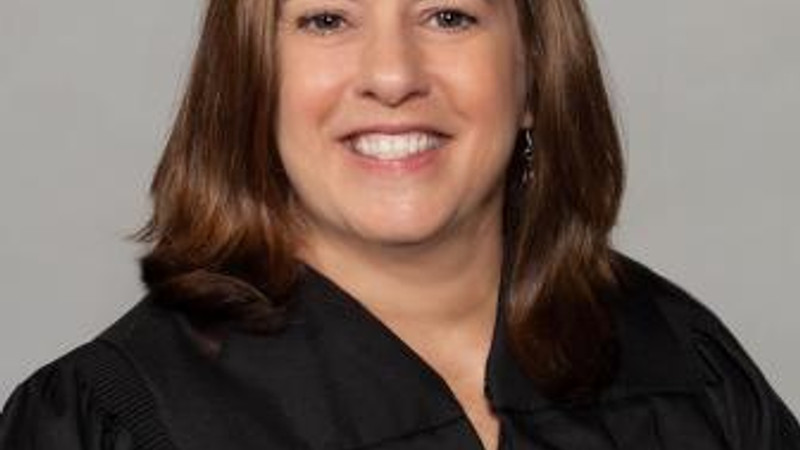
RHODE ISLAND - On Tuesday, September 30, a federal judge out of Rhode Island temporarily blocked the Trump administration from diverting $233 million in homeland security funds away from California and several other states across the country.
U.S. District Judge Mary McElroy, a Trump appointee, issued the temporary restraining order, according to KPBS. California Attorney General Rob Bonta said the state faced a one-third cut, from about $165 million to $110 million. "Arbitrary cuts put lives at risk, no other way to say it," Bonta said.
"They undermine law enforcement, our emergency responders, and public safety planning. And California won't stand by while critical resources are redirected for political reasons."
The lawsuit, joined by D.C. and eleven states including Washington, Massachusetts, and New York, argues that the cuts violate federal law by basing funding on immigration politics, particularly sanctuary policies, rather than the risk-based criteria Congress established. All of them have been designated a "sanctuary jurisdiction" by the U.S. Department of Justice in the past.
However, Delaware, which is part of the lawsuit, was removed from that list earlier this year. States with sanctuary policies limit cooperation between local police and federal immigration authorities.
Bonta said California relies on the federal funds to prepare for terrorism, natural disasters, and other emergencies. "These cuts violate the Administrative Procedure Act and the U.S. Constitution by unfairly treating states like California differently based on policies Congress never intended to be a factor," he added.
Shiu-Ming Cheer, deputy director of immigrant and racial justice for the California Immigrant Policy Center, said the cuts were clearly political. "It clearly shows that the Trump administration is more concerned about trying to enact its mass deportation agenda than actually assisting states like California in recovering from disasters and major catastrophes, which should be something that's actually in our national interest," she said.
Cheer called the move part of a broader pattern of federal overreach, saying, "We've seen other threats, like deploying federal troops or the National Guard to different locations." She said this is just "another bullying tactic to pressure states to comply."
She added that withholding funds contradicts the administration's own rhetoric that these states are crime-ridden, implying a need for more funds. "The federal government claims that it's trying to support states in a particular way, but actually taking steps that make it more challenging for states to address the issues of their constituents and communities," she added.
Rose Cuison Villazor, a law professor at Rutgers Law School and director of the Center for Immigrant Justice, said that the courts have repeatedly rejected the Trump administration's attempts to use the "power of the purse" to punish sanctuary states. She added that withholding funds this way would also violate the Constitution's spending clause.
"Under the spending clause, they cannot use the support that's given by the federal government to states as a way to essentially conscript them," she said. "If the conditions are coercive with the goal of essentially forcing states to comply with these enforcement mechanisms by the federal government, then under the law, those would be considered in violation of the spending clause."
U.S. District Judge Mary McElroy, a Trump appointee, issued the temporary restraining order, according to KPBS. California Attorney General Rob Bonta said the state faced a one-third cut, from about $165 million to $110 million. "Arbitrary cuts put lives at risk, no other way to say it," Bonta said.
"They undermine law enforcement, our emergency responders, and public safety planning. And California won't stand by while critical resources are redirected for political reasons."
The lawsuit, joined by D.C. and eleven states including Washington, Massachusetts, and New York, argues that the cuts violate federal law by basing funding on immigration politics, particularly sanctuary policies, rather than the risk-based criteria Congress established. All of them have been designated a "sanctuary jurisdiction" by the U.S. Department of Justice in the past.
However, Delaware, which is part of the lawsuit, was removed from that list earlier this year. States with sanctuary policies limit cooperation between local police and federal immigration authorities.
Bonta said California relies on the federal funds to prepare for terrorism, natural disasters, and other emergencies. "These cuts violate the Administrative Procedure Act and the U.S. Constitution by unfairly treating states like California differently based on policies Congress never intended to be a factor," he added.
Shiu-Ming Cheer, deputy director of immigrant and racial justice for the California Immigrant Policy Center, said the cuts were clearly political. "It clearly shows that the Trump administration is more concerned about trying to enact its mass deportation agenda than actually assisting states like California in recovering from disasters and major catastrophes, which should be something that's actually in our national interest," she said.
Cheer called the move part of a broader pattern of federal overreach, saying, "We've seen other threats, like deploying federal troops or the National Guard to different locations." She said this is just "another bullying tactic to pressure states to comply."
She added that withholding funds contradicts the administration's own rhetoric that these states are crime-ridden, implying a need for more funds. "The federal government claims that it's trying to support states in a particular way, but actually taking steps that make it more challenging for states to address the issues of their constituents and communities," she added.
Rose Cuison Villazor, a law professor at Rutgers Law School and director of the Center for Immigrant Justice, said that the courts have repeatedly rejected the Trump administration's attempts to use the "power of the purse" to punish sanctuary states. She added that withholding funds this way would also violate the Constitution's spending clause.
"Under the spending clause, they cannot use the support that's given by the federal government to states as a way to essentially conscript them," she said. "If the conditions are coercive with the goal of essentially forcing states to comply with these enforcement mechanisms by the federal government, then under the law, those would be considered in violation of the spending clause."
For corrections or revisions, click here.
The opinions reflected in this article are not necessarily the opinions of LET

Comments
2025-10-06T18:28-0400 | Comment by: Larry
I thought the SCOTUS said that Fed. Judges cannot override the President, what kind of Mickey Mouse court systems do we have?
2025-10-06T19:14-0400 | Comment by: James
Another RINO and Obama plant! Trump has been lied to by those that are suppose to be his trusted advisors! There are SNAKES everywhere!
2025-10-07T16:04-0400 | Comment by: Robert
This PUTZ, wouldn't make a pimple on a real Judge's ASS.
2025-10-07T19:15-0400 | Comment by: James
I hope her career goes to the toilet!
2025-10-07T19:33-0400 | Comment by: Robert
Were's my comment ?
2025-10-07T19:35-0400 | Comment by: Robert
JAIL the sanctuary governors & mayors, Cutting funds only hurts th poor, while the rich politicians, unaffected, sit and laugh.
2025-10-08T13:08-0400 | Comment by: Dave
She’s not over the President of the United States. These people need to get off their ego trip. And quit listening to the traitor O’bummer or Soros. These Traitors, judges, are getting paid BIG money to try this crap. They need to be held accountable immediately and imprisoned.
2025-10-08T16:07-0400 | Comment by: Rick
Another Libtard judge that is going to be embarrassed when she is overturned. Cutting the funds will not hurt the citizens as they are already being ignored by their government and law enforcement.