
I was taught a long time ago that timing is everything. I was also taught the importance of knowing when to speak up—and when not to.
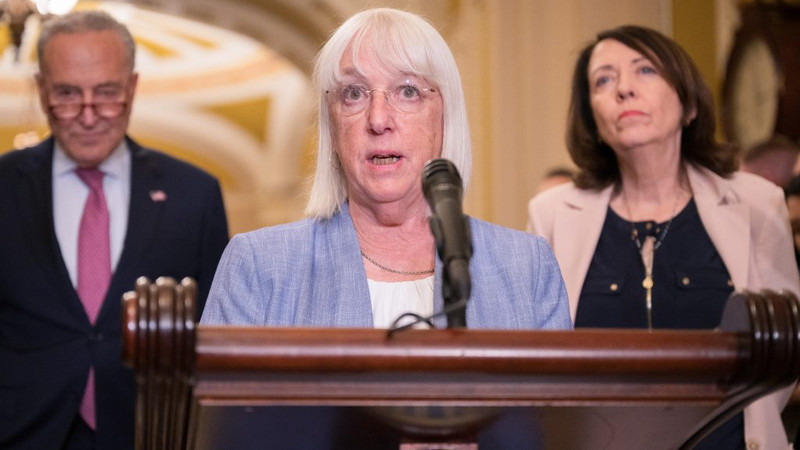
Yesterday, the Democratic Women’s Caucus held an Equal Pay Day press conference. According to Rep. Nancy Pelosi, the effort to achieve equal pay dates back to the Kennedy administration in 1963 and remains unresolved. This demonstrates how long complex policy issues can persist, but it also underscores the need for Congress to act more efficiently on immediate priorities. Right now, there are thousands of federal law enforcement officers who are either barred by law from receiving equal pay or who aren’t getting paid at all thanks to the ongoing shutdown of the Department of Homeland Security.
I recall sitting down with then-Speaker Pelosi to discuss the very real impact of the federal pay cap on workers across this country. I explained how federal law enforcement officers and agents routinely work extensive overtime hours, yet receive no additional compensation once they reach the cap. I also outlined the compounding issue of pay compression—where lower-grade employees reach the cap, discouraging advancement and undermining leadership pipelines. I made it clear that something needed to change. Nothing did. No legislative fix. No meaningful adjustment. Not even a serious effort to address the problem.
So when we talk about equal pay, let’s make sure we are having an honest and comprehensive conversation. I would challenge anyone to identify another profession where employees are required to work hours they do not choose, yet receive no compensation for those hours. If companies like Amazon, UPS, Coca-Cola, or Walmart imposed those conditions, the federal government would intervene immediately. Yet when it happens to federal law enforcement officers—men and women who put their lives on the line every day—it is largely ignored.
Meanwhile, the Department of Homeland Security remains unfunded at this writing. TSA officers and other federal employees have now gone more than 40 days without pay. Let that sink in. These are the same individuals responsible for securing our transportation systems and protecting the public, many of whom are women. And while they continue to show up and do their jobs, many are being forced to leave federal service simply to provide for their families.
I will be direct: I would take lower pay over no pay. Congress must address the crisis in front of us before turning to broader policy debates. Federal officers are leaving by the hundreds because they cannot afford to stay. That should alarm every American. And while we applaud the Senate for finally advancing a DHS funding bill, it is only half a loaf. Thousands of federal officers’ pay will remain in limbo until all of DHS is funded.
During the Equal Pay Day press conference, it was suggested that outside of Congress and the military, there are few professions where men and women are paid equally. That assertion does not reflect reality. Throughout my law enforcement career, I have worked alongside men and women who were compensated equally based on position, rank, and years of service. The same holds true across law enforcement agencies, fire departments, and the broader federal workforce.
The more pressing issue is not gender—it is performance. High performers and underperformers are often compensated the same. If we are serious about fairness, then compensation should reflect performance, accountability, and results.
If we want real progress, we need to focus on the issues impacting the entire workforce: fair pay, compensation for hours actually worked, accountability, and a government that fulfills its most basic responsibility—ensuring that the people who protect this country are paid for their service.
---
Mathew Silverman is the National President of the Federal Law Enforcement Officers Association and a board member for Law Enforcement Today.
For corrections or revisions, click here.
The opinions reflected in this article are not necessarily the opinions of LET

Comments
2026-04-06T11:13-0400 | Comment by: Sher
Long term of useless, self serving - Murray needs to join the rest of her ilk and answer for the damage done over the years to the state of Washington.