
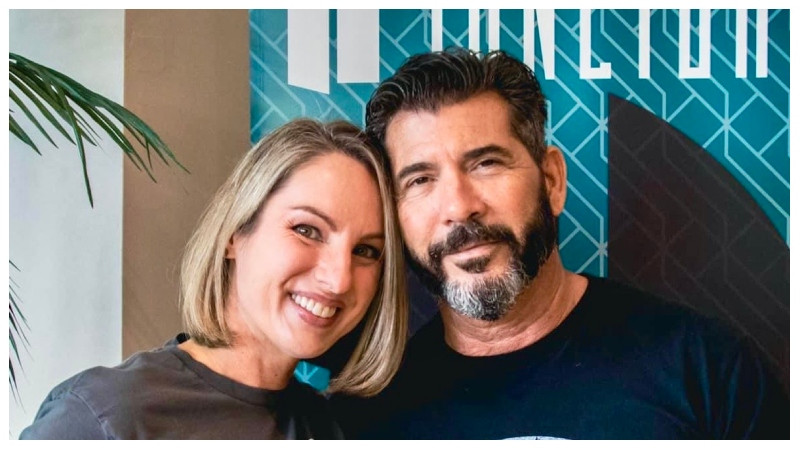
Guest writer Sarah Alderman is a dedicated advocate for justice and a longtime member of her church community in Jupiter, Florida. She writes to share her husband’s story and raise awareness about issues affecting families navigating the legal system.
Let me walk you through three criminal cases—each one a piercing glimpse into the broken machinery of our justice system. All were prosecuted by the West Palm Beach State Attorney’s Office. Two occurred in 2019, side by side in time but worlds apart in their treatment and outcomes. The third case unfolded this year, casting an even harsher light on the injustices that began in 2019.
These cases lay bare a justice system that has strayed from its core principles—not guided by truth, not grounded in fairness, but warped by political theater and selective prosecution. When the legal system is weaponized, and punishment is directed at those acting out of duty while others go unpunished, we are not witnessing justice—we are witnessing its collapse. This isn’t a failure of process. It’s a betrayal of everything the law is supposed to stand for.
Incident #1 – Off Duty Deputy Smith
On February 16, 2025, at approximately 4:24 a.m., the Palm Beach County Sheriff’s Office (PBSO) received a 911 call about an armed disturbance at Monroe’s of Palm Beach, an adult entertainment club in unincorporated West Palm Beach. Deputies responded and determined that an altercation in the parking lot escalated into a fight between several patrons. During the confrontation, one of the individuals, a white male, later identified as an off-duty PBSO deputy, retrieved a firearm from his black Chevrolet pickup truck and pointed it at others while claiming to be a deputy.
Four men stated they were near a Mercedes parked beside the deputy’s truck when he exited the club already appearing angry. They reported the deputy, (let’s call him Smith) pushed at least two of them. Smith was pushed back, fell, and then retrieved a handgun from his truck. Several witnesses described Smith pointing the firearm at two of the men, prompting them to take cover or flee. They also reported Smith’s girlfriend struck one of the men with a shoe during the altercation.
Security personnel corroborated these accounts. An armed guard saw Smith retrieve and raise a handgun, describing Smith as intoxicated and belligerent, shouting phrases such as “I’m Palm Beach Sheriff’s motherfuckers.” The Monroe’s manager and the doorman also observed Smith with a firearm in a low-ready position and heard him loudly declare his law enforcement status.
Smith, after being read his Miranda rights, admitted to investigators that he had consumed several alcoholic drinks and beers while inside the club. He said he confronted men leaning on his truck, was struck multiple times, and fell to the ground. He claimed he retrieved his firearm in fear for himself and his girlfriend, insisting he did not directly point the weapon at anyone but instead held it at a “low ready” angle while issuing commands and identifying himself as a deputy. Smith acknowledged he was “really angry” and shouted from his truck window as he left the scene. He later returned to the scene after PBSO deputies arrived.
A black Glock 43X handgun was seized from Smith’s vehicle, matching witness descriptions. Surveillance footage confirmed Smith approached the group, physical contact occurred, he fell and then went to his truck as others scattered. While the footage was partially obstructed, it supported witness accounts of Smith’s behavior. Smith displayed minor injuries consistent with being struck and falling during the fight.
The investigation determined that Smith was the primary aggressor, initiating physical contact with patrons and escalated the conflict by brandishing a firearm in a threatening manner. Witness statements, corroborating video, and physical evidence all supported this conclusion. None of the other individuals involved were armed, and the on-scene security guard attempted only to de escalate.
Although the victims declined to pursue battery or aggravated assault charges, detectives concluded there was probable cause to charge Smith with Improper Exhibition of a Firearm under Florida Statute 790.10.
Despite these findings, Smith was offered pre-trial intervention, paid $50 in court costs, and the case was dismissed (nolle prosse).
Incident #2 – Off Duty Deputy Alderman
On October 12, 2019, while off duty and dressed in plain clothes, Jerry Alderman, a white male deputy with the Palm Beach County Sheriff’s Office, was approached by an eyewitness reporting active felony car burglaries in the parking lot behind Roxy’s in downtown West Palm Beach. The witness had clearly identified the suspects. Acting promptly, Jerry instructed the witness to contact local police that were standing across the street. Jerry attempted to flag down the same officers as the suspects drove by in a white Chevy Caprice.
Jerry then walked toward the parking lot to check on his own vehicle. Just as he approached it, the suspects—driving the same white Chevy Caprice—entered the parking lot. The eyewitness pointed them out a second time. Having a duty to act, since the suspects returned to the scene of the burglaries, Jerry approached the vehicle with his badge in hand, identified himself as a PBSO deputy, and informed the occupants they had been identified as burglary suspects.
With no backup arriving as anticipated and no means to call for assistance, Jerry issued a lawful order for the suspects to leave the premises. The driver refused. Jerry observed furtive movements and overheard comments from inside the vehicle that suggested a reasonable likelihood of resistance. Jerry found himself alone, facing three younger males with no backup in sight as tensions rapidly escalated. Relying on his years of experience, he recognized the warning signs of a potentially dangerous encounter—an instinct later confirmed when it was discovered that the driver had been carrying a concealed firearm and admitted to concealing an object in his hand during the incident, which he claimed was a cell phone.
Instead of complying, the occupants escalated the situation by challenging him. During this heightened exchange, Jerry pulled his gun out, holding it in a low ready position with the barrel pointing down towards the ground.
Jerry made a calculated decision to de-escalate through a tactical retreat. Drawing on his training and experience, he employed alpha commands and verbal judo to assert control and redirect the suspects’ attention. At one point, he tapped his pistol on the driver’s side door—not as a threat, but as a strategic move to disrupt their focus and reorient them toward his instructions.
This maneuver allowed Jerry to safely withdraw to the nearest building for cover. The entire interaction with the occupants of the Caprice lasted less than a minute. There was no physical contact, no injuries, and everyone walked away unharmed.
Some witnesses alleged Jerry was intoxicated, yet no field sobriety tests were ever administered. The vehicle’s occupants claimed Jerry had pointed a gun at their heads and threatened to kill them. The surveillance footage disproved these claims. A portion of the incident was recorded on a cell phone. The video did not show Jerry pointing a weapon or making threats to kill them. The videos reinforced that Jerry told them to leave multiple times. If they were in fear for their lives, why didn’t they just leave?
The investigation, led by the West Palm Beach Police Department, was deeply flawed. The lead detective filed charges without reviewing the surveillance footage and failed to interview key witnesses, including Jerry.
Crucially, the footage confirmed that car burglaries had indeed occurred—exculpatory evidence that WPBPD never pursued. They did not investigate the crimes or interview the victims. Jerry was never read his Miranda rights nor contacted for a statement, reinforcing his belief that the matter was being handled as an internal affairs investigation.
Despite these investigative failures, Jerry was charged with three counts of aggravated assault with a deadly weapon and one count of possession of a firearm while under the influence, charges based on unsubstantiated statements.
Jerry endured two jury trials back-to-back, one ending and the next beginning within a week. The first trial was difficult enough, with the judge barred his expert witness, prohibited any mention of the car burglaries that had prompted his response, and severely restricted his ability to testify. These limitations crippled his defense, leaving him without the tools to fully explain his actions or challenge the narrative presented by the prosecution.
Despite the legal obstacles stacked against him, the first jury—made up of a diverse group of men and women—could not reach a unanimous verdict on the lesser included misdemeanors. According to the court’s own instructions, jurors were required to first rule out the highest charge, the felonies, before even considering the lesser offenses. They did just that. The jury was polled, and their findings were documented on the official verdict form, clearly indicating they unanimously did not convict Jerry of the felony charges. Yet that form was never entered into the court record, as confirmed by the court itself. Even more troubling, the audio and video recordings of the verdict’s reading have vanished from the official record.
The State had already lost. Yet just six days later, Jerry was forced into a second trial—a move that blatantly disregarded his protection against double jeopardy. What followed was a hollow imitation of justice. The judge imposed even stricter limitations on Jerry’s ability to testify, further crippling his defense. To make matters worse, Jerry’s attorney from the first trial was forced to remain on the case without compensation, causing an untenable situation to devolve into utter chaos.
This wasn’t a fair proceeding—it was a calculated push to secure a conviction. The outcome felt predetermined, the process manipulated. The second jury, composed entirely of white females, convicted Jerry on all original charges. There’s no question: the second trial wasn’t about truth or justice. It was obtaining a conviction at all costs.
The judge handed down a staggering sentence: nine years in prison—three years for each count, to be served consecutively. This punishment was imposed despite Jerry’s spotless record and over twenty years of honorable service. It was not just severe, it was unprecedented. A sentence so extreme, so disproportionate, it crossed the line into cruel and unusual punishment.
The Double Standard
These two cases—both involving off-duty PBSO deputies—share surface similarities but expose glaring disparities in investigative thoroughness, prosecutorial discrimination, and judicial outcomes.
While Jerry responded to an active crime, de-escalated an intense encounter and walked away with no one harmed, Smith instigated a fight, brandished his weapon, used his position to intimidate others and fled the scene. Both incidents received coverage in the local media.
Smith’s case was fully investigated and quietly dismissed. Jerry’s case was mishandled from the start, with critical evidence ignored or suppressed, and he was prosecuted to the fullest extent of the law—and beyond.
This contrast is not just unjust—it is unconscionable. When evidence is ignored, investigations are incomplete, and due process is violated, public trust erodes. Justice must be applied evenly, regardless of politics, pressure, or perception.
Now, let’s turn to an incident that took place more than a month prior to Jerry being charged. This night, Jerry was on duty and responded as backup. What unfolded was far more troubling— and the outcome starkly contrasts with how Jerry’s case was handled. The following account is drawn directly from the probable cause affidavit authored by Deputy Sheriff L. Moral.
Incident #3 - Angela Goode
“On 8-22-19, at approximately 2346 hours, I was patrolling the area of Bryant Park (north) which is located in the 100 block of South Golfview Rd. While checking the park, I came into contact with a black female, later identified as Angela Goode (defendant). The defendant was sitting on a picnic table bench in the northwest corner of the park. Per City Ordinance 7-1, it shall be unlawful for any person to enter and go upon any park grounds in the city during times when said grounds
are not opened for the public use. The designated time for when the park is closed is from sunset to sunrise. The defendant was in clear violation of the posted times. Note that the park is clearly posted with the times in which the park is closed to the public (sunset to sunrise).
I entered the park with my light bar in "Scene” mode (bright white LED lighting), so that I could better see persons in the park. Upon contact with the defendant, I advised her that she was in violation of park hours and could not be in the park after dark, and she needed to leave. The defendant looked at me and stated, 'I’ll kill you”. I immediately exited my marked patrol vehicle as the defendant began reaching into a black backpack on the picnic table. In fear of a possible firearm or other weapon, I began drawing my firearm. I asked the defendant what she said, she again stated, "I'll kill you.” The defendant at this point was drawing a "machete" (approximately 2 1/2 feet in length) from her backpack.
The defendant stood up and began to walk towards me while holding the machete out in front of her. I told the defendant to drop the weapon and get on the ground several times, but she failed to comply. I began backing up to create distance between me and the defendant, but the defendant continued to walk in my direction with the machete in hand.
At one point, the defendant stated, "Put your gun down." As another unit was arriving the defendant stopped her advance, put the machete inside her pants’ waistline, walked back over to the picnic table, put on her backpack, and then began walking south further into the park. After about 30 feet or so, the defendant removed the machete from her waistline and continued to walk away. After a short distance, Sgt. T. Ostuni (ID #5250) and Sgt. C. Jimenez (ID #7575) arrived on scene and the defendant turned around again with the machete raised in front of her.
After numerous lawful commands for the defendant to drop the machete and get on the ground, Sgt. Jimenez deployed two 40mm rounds, which were not effective. D/S R. Hentze (ID #26709) then deployed his department issued Dart Firing Stun Device (TASER). The effect was very minor and the defendant turned around and began cutting the wires with the machete.
After the 40mm and Taser were not effective, the defendant again began walking south through the park towards the boat ramp area. Commands were continued for the defendant to drop the weapon, but she still refused to comply with all lawful orders.
As the defendant began to reach the seawall next to the boat ramp area, she again turned around with the machete raised in front [of] her. Note that several times the defendant stated, "Go ahead, shoot me."
Commands were given again, with no compliance. At this time, D/S J. Alderman (ID #8388) deployed two more of the 40mm. One round appeared to have struck her right arm and the second round appeared to have struck her front right hip area. The defendant said, "Ouch", but remained standing with the machete in hand. D/S A. Miranda (ID #26971) then deployed a second TASER, which appeared to be effective as the defendant postured and fell to the ground. D/S G. Concepcion (ID #27814) and D/S Alderman then moved in while the TASER was in use. They then got control of the defendant as D/S Alderman disarmed the defendant, and D/S Concepcion placed the defendant in handcuffs. D/S D. Smith (ID #17626) also assisted with controlling the defendant.
Based upon the above information, the defendant is charged with eight counts of Aggravated Assault on Law Enforcement Per FSS 784.07(2)(c), Resist Officer With Violence Per FSS 843.0, and Violation of Park Hours Per City Ordinance 7-1. The defendant was arrested and transported to JFK Hospital for minor injuries from the deployment of the 40mm rounds and TASER use.”
End of Report.
Justice Inverted
Goode is lucky to be alive. The incident could have easily ended in lethal force—every less lethal option had been exhausted. Deputy Alderman risked his life to save Goode’s by tackling and disarming her with the help of fellow deputies. The actions of Jerry and the other deputies earned them commendations.
Goode was booked into the Palm Beach County jail and somehow received a $2,000 bond even though the arrest report listed her address as ‘at large’ and she was charged with 9 felony counts involving 8 victims. Goode was issued a no weapons order. It should be noted according to court records, in March of 2019, Goode had been Baker Acted, and the Jerome Golden Center CSU Glade obtained a Marchman order against her.
Despite the severity of the incident, and the danger posed to multiple deputies and the public, the state prosecutor declined to pursue the aggravated assault and resisting charges without even consulting with the victims. Goode received a plea deal for Improper Exhibition of a Dangerous Weapon, a first-degree misdemeanor, and served just 77 days in the county jail.
Another interesting note is when Jerry was arrested, he received a $40,000 bond (negotiated down from $100K), with conditions barring weapon possession and contact with the alleged victims. In contrast, Smith received a $1,000 bond.
The Red Flag Law
On October 18, 2019, the City of West Palm Beach Police Department filed a risk protection order against Deputy Alderman, citing the incident from October 12th, as the prima facie evidence for the order. Since criminal charges were pending, Jerry could not testify during the hearing. Despite already being under court orders prohibiting firearm possession and contact with the alleged victims, Jerry was “red flagged” under the RPO statute.
The push for this redundant and unjustified order reeked of calculated malice. It wasn’t about public safety—it was about public shaming. First, they sought to tarnish Jerry’s name, painting him in the media as a threat to the very community he spent decades protecting. Then, under the guise of legal procedure, they moved to inventory every firearm he lawfully owned, turning his constitutional rights into a target.
This wasn’t oversight. It was a deliberate abuse of power. The statute wasn’t enforced—it was weaponized. Not to protect, but to punish. Not to serve justice, but to send a message: that even honorable service can be twisted into a liability when politics take precedence over truth.
Why wasn’t Angela Goode red-flagged? She didn’t just pose a theoretical risk—she attempted to attack eight deputies with a massive machete. She had a documented history of substance abuse and mental health crises. And yet, no one stopped to ask the most urgent question: did she have access to a firearm?
Identity Politics and Political Prosecution
The stark contrast between Jerry Alderman’s prosecution and the handling of the Goode case during the same period raises urgent concerns about prosecutorial discretion and equal treatment under the law. In one incident, a black woman wielding a machete, threatening to kill officers and actively resisted arrest, was offered a misdemeanor plea deal. Meanwhile, Jerry—a white male law enforcement officer - who responded to an eyewitness report of an active felony burglary with a duty to act, was prosecuted to the fullest extent of the law. The disparity is not just troubling; it’s indefensible.
Jerry was punished for attempting to protect his community. Angela Goode, by contrast, was spared despite posing a direct threat to it. The optics are hard to ignore. Given the political climate in 2019—marked by heightened scrutiny of law enforcement and national unrest following the George Floyd debacle—Jerry’s treatment was less about justice and more about optics. Officers like Jerry became convenient scapegoats in a moment when public hostility toward police was at a boiling point.
Despite the cell phone video involving Jerry being released on the news and social media, there was no public outcry—no viral outrage, no trending hashtags. Yet it seemed the liberal-leaning City of West Palm Beach was attempting to manufacture one. Their efforts failed to gain traction, but they pursued Jerry relentlessly, nonetheless.
The Bottom Line
Smith, not acting in a law enforcement capacity and instigating a more severe incident, received a $50 fine and the charges were dropped.
Goode was charged with 9 felony counts, punishable by up to 5 years in prison for each. However, the prosecutor dismissed the felony charges and instead charged Goode with a 1st degree misdemeanor, punishable by up to one year in jail. Goode, clearly a danger to the public, served 77 days in the county jail and released back into the community without conditions.
My husband, acting in his law enforcement capacity and being immune from prosecution, was charged with 3 felonies counts and 1 misdemeanor and was adjudicated guilty on all. Jerry received 3,285 days in prison and over a $1 million dollar fine due to lost wages, including his pension, and the extensive legal fees that are still accumulating to this day. He also lost all his rights, his LEO certification and his character has been irreparably destroyed.
There is no doubt in my mind that my husband was targeted by the liberal that run the City of West Palm Beach, who, in conjunction with the prosecutor and other bad actors, went to extreme measures to ensure Jerry was convicted, even after they didn’t get the public outcry they so desperately wanted.
At a time when property crimes dominate headlines and communities are calling for stronger responses to theft and burglary, Jerry was doing exactly what the public expects of law enforcement—responding to a reported felony in progress. His prosecution not only punished integrity, it sent a chilling message to every officer who still believes in doing the right thing.
After nearly six relentless years of fighting this injustice—and with Jerry now having spent over three years behind bars—we’ve exhausted every direct legal avenue. Our only remaining hope of rebuilding a life together rests in the hands of the Florida Executive Clemency Board. Without their intervention, the door to justice stays shut.
Without clemency, our only option is to wait until 2030—when Jerry will walk out of prison at the age of 65, after enduring eight long years of confinement for a crime he didn’t commit. This isn’t justice. It’s a slow, grinding punishment that has stolen far more than time. It’s taken a toll on his health, shattered our plans, and stripped away the life we were building together. What we’ve lost can’t be measured in years alone—it’s lost time with our family and dogs, as they grow up and grow old, it’s the milestones missed, and the future we’ve been forced to watch slip away.
God willing, this tragedy will end, revealing a great purpose for our lives.

Comments
2025-11-04T19:30-0500 | Comment by: Teri
I’m so sorry this has happened to your husband. I hope you can get him the clemency he deserves. Our just system is so very flawed now. It seems the criminals are innocent & the innocent are guilty. I know not everyone agrees with me but we need these men and women who are brave enough to go out and protect all of us. Without the police this world would be a very horrible place to live. I’d like to see these liberals who are trying to vilify our police go without any protection. Also who is the first person they call for help? Police of coarse, I don’t see them calling the criminals they let off the hook for help. Shame on our justice system for letting down this brave police officer.