
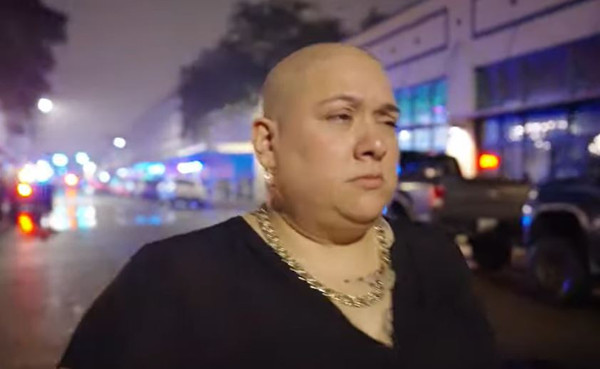
WASHINGTON, D.C. - Earlier in March, the Supreme Court rejected the appeal brought by an online journalist who sought to challenge the qualified immunity applied in response to her arrest in 2017 over allegedly violating a Texas law regarding soliciting information from public employees.
On March 24, the Supreme Court rejected the appeal presented by Priscilla Villarreal regarding the contested qualified immunity afforded to the officials involved in her nearly decade-old arrest in Laredo, Texas.
Back in early December 2017, local reports say Villarreal self-surrendered to Laredo Police on criminal allegations of misusing official information. Villarreal at the time had a noteworthy presence on Facebook with approximately 86,000 followers on her page. She operated under the screen name “Lagordiloca,” where she used the platform to share local news.
During her time as a citizen journalist, Villarreal had reportedly tapped a source within the Laredo Police Department (LPD) who shared with her the identity of a U.S. Customs and Border Protection (CBP) supervisory program manager who’d taken his own life in April of 2017, prior to LPD officials publicly disclosing the identity of the decedent.
A second incident involving Villarreal and her source within the LPD involved the disclosure of a car accident victim whose identity was also not yet publicly released by the department. In turn, Villarreal used her presence on Facebook to reveal the decedent's identity, leading to her being charged with two counts of solicitation of information from a public employee in order to obtain a benefit.
Per reporting on the original criminal complaint, authorities claimed the “benefit” Villarreal gained from her source within the LPD was social media “popularity,” which the National Review described as “hilariously stupid” in their January 2018 coverage of the legal affair.
“Villarreal’s access to this information and releasing it on ‘Lagordiloca News Laredo Tx,’ before the official release by the Laredo Police Department Public Information Officer placed her ‘Facebook’ page ahead of the local official news media, which in turn gained her popularity in Facebook,” the original criminal complaint read in part.
Villarreal’s criminal case was resolved roughly three months following her arrest in March of 2018, with District Judge Monica Z. Notzon ruling that the law used to charge Villarreal was unconstitutional.
In the years following Villarreal’s criminal case being dropped, she pursued civil damages against LPD officials and the respective district attorney’s office involved in her arrest, citing the original arrest and charges as violating her First Amendment rights. While District Judge Notzon’s March 2018 ruling found that the application of the law regarding Villarreal’s conduct didn’t hold up to constitutional scrutiny, lower courts that heard her civil case cited qualified immunity protections.
The Supreme Court’s March 24 decision not to review the case allowed the 5th U.S. Circuit Court of Appeals’ decision granting qualified immunity to stand, with Justice Sonia Sotomayor being among those who dissented in the decision, writing, “It should be obvious that this arrest violated the First Amendment.”
On March 24, the Supreme Court rejected the appeal presented by Priscilla Villarreal regarding the contested qualified immunity afforded to the officials involved in her nearly decade-old arrest in Laredo, Texas.
Back in early December 2017, local reports say Villarreal self-surrendered to Laredo Police on criminal allegations of misusing official information. Villarreal at the time had a noteworthy presence on Facebook with approximately 86,000 followers on her page. She operated under the screen name “Lagordiloca,” where she used the platform to share local news.
During her time as a citizen journalist, Villarreal had reportedly tapped a source within the Laredo Police Department (LPD) who shared with her the identity of a U.S. Customs and Border Protection (CBP) supervisory program manager who’d taken his own life in April of 2017, prior to LPD officials publicly disclosing the identity of the decedent.
A second incident involving Villarreal and her source within the LPD involved the disclosure of a car accident victim whose identity was also not yet publicly released by the department. In turn, Villarreal used her presence on Facebook to reveal the decedent's identity, leading to her being charged with two counts of solicitation of information from a public employee in order to obtain a benefit.
Per reporting on the original criminal complaint, authorities claimed the “benefit” Villarreal gained from her source within the LPD was social media “popularity,” which the National Review described as “hilariously stupid” in their January 2018 coverage of the legal affair.
“Villarreal’s access to this information and releasing it on ‘Lagordiloca News Laredo Tx,’ before the official release by the Laredo Police Department Public Information Officer placed her ‘Facebook’ page ahead of the local official news media, which in turn gained her popularity in Facebook,” the original criminal complaint read in part.
Villarreal’s criminal case was resolved roughly three months following her arrest in March of 2018, with District Judge Monica Z. Notzon ruling that the law used to charge Villarreal was unconstitutional.
In the years following Villarreal’s criminal case being dropped, she pursued civil damages against LPD officials and the respective district attorney’s office involved in her arrest, citing the original arrest and charges as violating her First Amendment rights. While District Judge Notzon’s March 2018 ruling found that the application of the law regarding Villarreal’s conduct didn’t hold up to constitutional scrutiny, lower courts that heard her civil case cited qualified immunity protections.
The Supreme Court’s March 24 decision not to review the case allowed the 5th U.S. Circuit Court of Appeals’ decision granting qualified immunity to stand, with Justice Sonia Sotomayor being among those who dissented in the decision, writing, “It should be obvious that this arrest violated the First Amendment.”
For corrections or revisions, click here.
The opinions reflected in this article are not necessarily the opinions of LET

Comments
2026-03-26T09:57-0400 | Comment by: James
Someone needs to clean this toilet ring out of our lives! How about another journalist do after her private life?! I am sure there is lots to write about!!!