
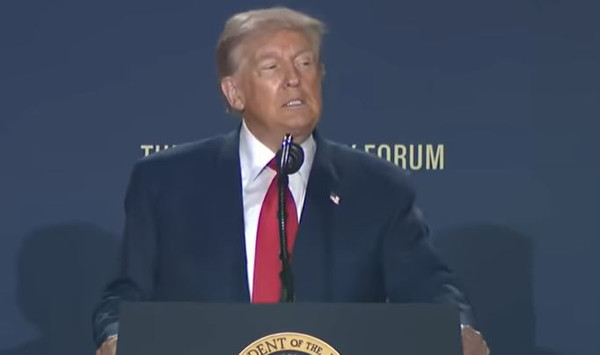
SAN FRANCISCO, CA – President Donald Trump suffered another loss in his effort to upend birthright citizenship, with a federal appeals court concurring with a lower court’s opinion that President Trump’s executive order meant to bar citizenship to children of illegal immigrants born stateside is unconstitutional.
On July 23rd, the 9th U.S. Circuit Court of Appeals in a 2-1 vote upheld a previous judge’s ruling that President Trump’s executive order prohibiting children of illegal aliens from obtaining birthright citizenship runs afoul of the U.S. Constitution.
In the opinion drafted by the San Francisco appeals court, the majority wrote, “The district court correctly concluded that the Executive Order’s proposed interpretation, denying citizenship to many persons born in the United States, is unconstitutional. We fully agree.”
The lone dissenter of the appeals court, Judge Patrick Bumatay, didn’t weigh in on the constitutionality of President Trump’s executive order in his dissent, but rather pointed to the notion that individual states do not have the right to sue the Trump administration over executive orders of this nature.
Back in February, Seattle-based U.S. District Judge John Coughenour, a Reagan appointee, issued a temporary hold on President Trump’s executive order, asserting that President Trump views the law of the land as “something to navigate around or simply ignore.”
“It has become ever more apparent that to our president, the rule of law is but an impediment to his policy goals,” Judge Coughenour noted back in February, adding, “The rule of law is, according to him, something to navigate around or simply ignore, whether that be for political or personal gain.
Nevertheless, in this courtroom and under my watch, the rule of law is a bright beacon which I intend to follow.”
The Trump administration is currently facing nine lawsuits stemming from the executive order regarding birthright citizenship, with the Justice Department arguing that mere birth location doesn’t automatically guarantee citizenship despite the president’s critics pointing to the 14th Amendment as a rebuttal to the argument.
Proponents of President Trump’s effort to end birthright citizenship often times point to the impetus of the 14th Amendment, which was ratified back in 1868 as a means to address the legal status of Black slaves who’d been freed three years earlier.
But regardless of what inspired the 14th Amendment, the Trump administration has had a seemingly insurmountable legal battle when faced with the plain language contained within Section 1 of the amendment, which reads, “All persons born or naturalized in the United States, and subject to the jurisdiction thereof, are citizens of the United States and of the State wherein they reside.”
The 9th U.S. Circuit Court of Appeals’ ruling has brought the Trump administration’s birthright citizenship dispute one step closer to the doors of the Supreme Court, where the fate of the debated executive order will ultimately be determined.
On July 23rd, the 9th U.S. Circuit Court of Appeals in a 2-1 vote upheld a previous judge’s ruling that President Trump’s executive order prohibiting children of illegal aliens from obtaining birthright citizenship runs afoul of the U.S. Constitution.
In the opinion drafted by the San Francisco appeals court, the majority wrote, “The district court correctly concluded that the Executive Order’s proposed interpretation, denying citizenship to many persons born in the United States, is unconstitutional. We fully agree.”
The lone dissenter of the appeals court, Judge Patrick Bumatay, didn’t weigh in on the constitutionality of President Trump’s executive order in his dissent, but rather pointed to the notion that individual states do not have the right to sue the Trump administration over executive orders of this nature.
Back in February, Seattle-based U.S. District Judge John Coughenour, a Reagan appointee, issued a temporary hold on President Trump’s executive order, asserting that President Trump views the law of the land as “something to navigate around or simply ignore.”
“It has become ever more apparent that to our president, the rule of law is but an impediment to his policy goals,” Judge Coughenour noted back in February, adding, “The rule of law is, according to him, something to navigate around or simply ignore, whether that be for political or personal gain.
Nevertheless, in this courtroom and under my watch, the rule of law is a bright beacon which I intend to follow.”
The Trump administration is currently facing nine lawsuits stemming from the executive order regarding birthright citizenship, with the Justice Department arguing that mere birth location doesn’t automatically guarantee citizenship despite the president’s critics pointing to the 14th Amendment as a rebuttal to the argument.
Proponents of President Trump’s effort to end birthright citizenship often times point to the impetus of the 14th Amendment, which was ratified back in 1868 as a means to address the legal status of Black slaves who’d been freed three years earlier.
But regardless of what inspired the 14th Amendment, the Trump administration has had a seemingly insurmountable legal battle when faced with the plain language contained within Section 1 of the amendment, which reads, “All persons born or naturalized in the United States, and subject to the jurisdiction thereof, are citizens of the United States and of the State wherein they reside.”
The 9th U.S. Circuit Court of Appeals’ ruling has brought the Trump administration’s birthright citizenship dispute one step closer to the doors of the Supreme Court, where the fate of the debated executive order will ultimately be determined.
For corrections or revisions, click here.
The opinions reflected in this article are not necessarily the opinions of LET

Comments
2025-07-28T15:07-0400 | Comment by: Rick
The 9th is the laughing-stock of all the courts and it has the glorious distinction of being the most overturned court in the country. Most in that circuit believe they are legislators instead of judges, which may give them new career paths as they S#CK as jurists!