
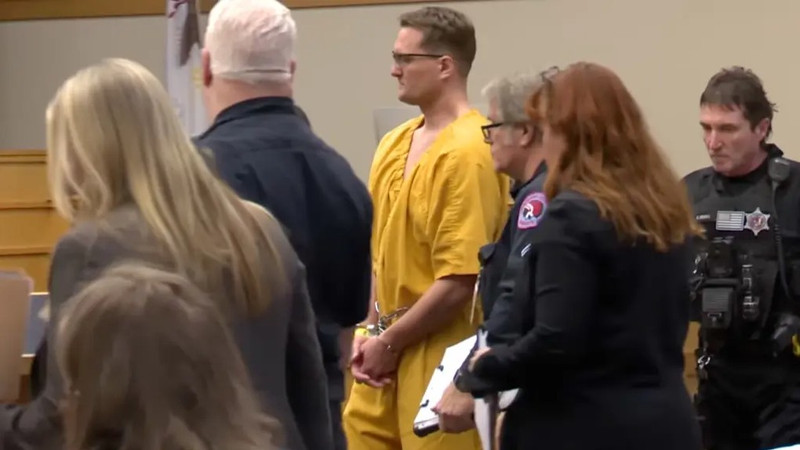
COLUMBUS, OH - In an update to our ongoing coverage of the recent Columbus, Ohio double-murder case, investigators are now saying that there is an "avalanche of evidence” pointing to lead suspect Michael McKee.
As previously reported by Law Enforcement Today, McKee was arrested in connection with the December 30 shooting deaths of his ex-wife, Monique Tepe, 39, and her husband, Spencer Tepe, 37. The couple was found shot to death inside their Columbus home after police were called to conduct a welfare check on Spencer after he failed to show up for work. Two young children were found unharmed inside the residence.
Investigators said McKee became a suspect after surveillance footage showed a vehicle arriving near the home shortly before the murders and leaving soon afterward. That vehicle was later located in Rockford, Illinois, where authorities say they found evidence linking it to McKee, who was married to Monique from 2015 to 2017.
After connecting the vehicle to McKee, Rockford police took McKee into custody. He awaits extradition to Ohio, where he has been formally charged with two counts of murder.
In a new report by the New York Post, former prosecutor Matt Murphy said investigators are now combing through what he described as “an avalanche of evidence” tied to Michael McKee, noting that the 11-day gap between the killings and McKee’s arrest may have given the suspect time to attempt to cover his tracks.
Before digging into the evidence against him, Murphy outlined some of the factors that could lead McKee to believe he could get away with the murder he is alleged to have committed.
Murphy pointed out that McKee’s professional background as a vascular surgeon suggests he would have been well aware of forensic techniques such as DNA analysis. “This guy was a vascular surgeon, right? So he’s heard of DNA before.”
Murphy also noted that McKee was not arrested until 11 days after the Dec. 30 killings, giving him what Murphy described as ample time to attempt to conceal or destroy evidence. “He’s got 11 days to clean things,” Murphy said during an appearance on NewsNation’s Banfield.
Nevertheless, Murphy emphasized that investigators will be looking closely for mistakes and noted that killers make errors even in the most carefully-planned homicides. In his own words, no matter how well you plan, it is still “the killer’s first rodeo.”
According to Murphy, a key focus for investigators will likely be physical evidence recovered from outside the home, including footprints and the shoes McKee allegedly wore at the time of the killings. Likewise, forensic testing will center on trace evidence such as gunshot residue, which could help place McKee at the scene at around 3:30 a.m. when investigators believe the shootings occurred.
These factors, along with the vehicle now tied to McKee, are central in building the case against McKee.
Police have not publicly identified a motive for the killings, though relatives of the Tepes have said they “all expected” McKee’s arrest. Family members previously stated they remained silent during the investigation to avoid compromising the case.
McKee is charged with two counts of murder and is expected to be extradited to Ohio, where he will appear in court as the case proceeds.

Comments