
Mathew Silverman is the National President of the Federal Law Enforcement Officers Association
--
At a time when the security of our borders, the integrity of our immigration system, and the lawful flow of trade and travel are under unprecedented strain, leadership at U.S. Customs and Border Protection (CBP) matters more than ever.
The men and women of CBP need a commissioner who understands the mission not from a conference room, but from the field. They need a leader who has stood post, worn the uniform, made hard operational decisions, and carried the responsibility of command when the stakes were highest.
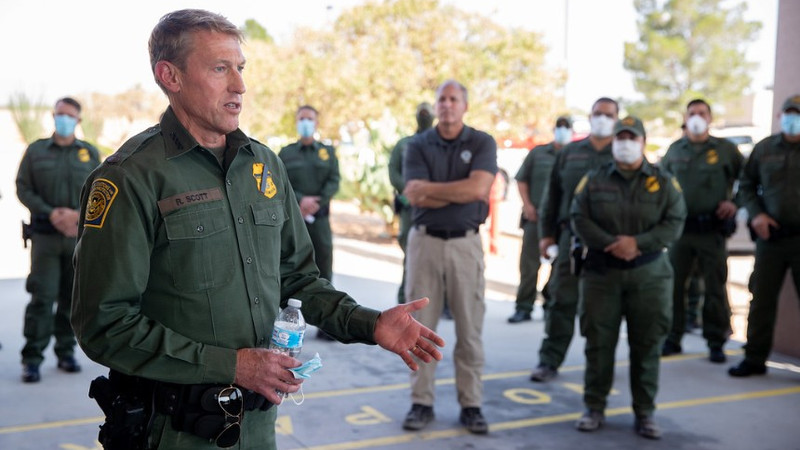
Rodney S. Scott is exactly that leader.
President Donald J. Trump deserves strong commendation for selecting Rodney S. Scott to serve as Commissioner of U.S. Customs and Border Protection. This appointment reflects a serious commitment to border security, operational excellence, and leadership grounded in real-world experience. \
At a moment when the challenges at our border demand competence rather than theory and resolve rather than rhetoric, the President’s decision to place a career professional and proven commander at the helm of CBP is both wise and consequential.
Why our endorsement now, you might wonder? It's simple - as Americans watch law enforcement once again come under attack (much like we saw in 2020), his leadership is helping keep the lives of men and women in uniform safe.
FLEOA is proud to be partnered with The 1776 Project, which owns the largest police news outlet in the world (including Law Enforcement Today and Blue Lives Matter). Their platforms have nearly five million followers and reach over 75 million impressions per month... and they've been absolutely FLOODED with emails and messages of support for Commissioner Scott.
"Americans firmly stand behind law enforcement - especially on the federal side right now," said Kyle Reyes, owner of The 1776 Project. "Commissioner Scott is overwhelmingly respected and appreciated by the countless leaders in the police world that pray for him daily and make sure to tell us about it."
Commissioner Scott’s career represents the very best of American public service. He did not arrive at the helm of the nation’s largest law enforcement agency by political convenience or theoretical expertise. He rose from the line. Beginning his career as a young Border Patrol agent in 1992 at the Imperial Beach Station in the San Diego Sector, he spent nearly three decades doing the work, leading the work, and ultimately shaping the work of border security from the ground up.
Over the course of his career, he served in virtually every operational and leadership role the Border Patrol has to offer, including Supervisory Border Patrol Agent, Field Operations Supervisor, Assistant Chief Patrol Agent, Patrol Agent in Charge, Chief Patrol Agent, Deputy Chief, and ultimately Chief of the United States Border Patrol.
When he took command as the 24th Chief in 2020, he was responsible for more than 20,000 agents and staff safeguarding over 7,000 miles of land borders, coastal regions, and U.S. territories. There are few leaders in federal service who can credibly say they have commanded at that scale, and fewer still who have done so after spending a lifetime in the field.
What sets Commissioner Scott apart is not only the breadth of his experience, but the depth of his credibility.
He is the first Border Patrol agent in history to become Commissioner of CBP. That matters. It sends a powerful message to the workforce that this agency values operational excellence, earned leadership, and real-world experience. It tells the rank and file that the person making strategic decisions understands what those decisions mean on the ground at two o’clock in the morning in a remote sector, at a congested port of entry, or during a crisis surge.
Commissioner Scott is also not merely a field commander. Midway through his career, he was entrusted with some of CBP’s most sensitive headquarters assignments, including senior leadership roles in the Office of Antiterrorism and later as Director of Incident Management and Operations Coordination.
In those roles, he served as a principal advisor to CBP leadership on terrorism threats, national security incidents, and complex operational coordination across the federal government. This combination of deep operational command and senior strategic leadership is rare, and it is exactly what CBP requires.
Throughout his career, Commissioner Scott has demonstrated a clear, consistent leadership philosophy, mission first, people always, and integrity without compromise.
He understands that CBP’s mission is not political. It is constitutional, statutory, and essential to the safety and sovereignty of the United States. He also understands that you cannot secure the border without taking care of the men and women who stand the line. Morale, training, resources, accountability, and professionalism are not abstract concepts to him. They are leadership responsibilities he has carried for decades.
At a time when CBP oversees more than 67,000 employees and manages a mission that touches trade, travel, counterterrorism, narcotics interdiction, human trafficking, and national security, Commissioner Scott brings exactly the kind of steady, credible, and battle-tested leadership the agency needs. His experience is not theoretical. It is earned.
Just as importantly, he brings trust, trust from the workforce, trust from partner agencies, and trust from those of us in the broader law enforcement community who understand what real leadership looks like in high-risk, high-consequence environments.
Before joining the Border Patrol, Commissioner Scott served as a commercial pilot, and that background is fitting. He understands that leadership, like aviation, is about preparation, discipline, sound judgment, and responsibility for everyone on board. His education and executive training, from Cochise College to the CBP Leadership Institute to the Naval Postgraduate School, only reinforce a career defined by continuous learning and professional growth.
America’s border security challenges are complex. They demand experience, resolve, credibility, and calm under pressure. Rodney S. Scott has spent his entire adult life preparing for this responsibility.
There is no question that he is not only qualified to serve as Commissioner of U.S. Customs and Border Protection. He is precisely the kind of leader this moment in history requires.
Our nation, our officers, and our security are better because he is at the helm.
--
At a time when the security of our borders, the integrity of our immigration system, and the lawful flow of trade and travel are under unprecedented strain, leadership at U.S. Customs and Border Protection (CBP) matters more than ever.
The men and women of CBP need a commissioner who understands the mission not from a conference room, but from the field. They need a leader who has stood post, worn the uniform, made hard operational decisions, and carried the responsibility of command when the stakes were highest.
Rodney S. Scott is exactly that leader.
President Donald J. Trump deserves strong commendation for selecting Rodney S. Scott to serve as Commissioner of U.S. Customs and Border Protection. This appointment reflects a serious commitment to border security, operational excellence, and leadership grounded in real-world experience. \
At a moment when the challenges at our border demand competence rather than theory and resolve rather than rhetoric, the President’s decision to place a career professional and proven commander at the helm of CBP is both wise and consequential.
Why our endorsement now, you might wonder? It's simple - as Americans watch law enforcement once again come under attack (much like we saw in 2020), his leadership is helping keep the lives of men and women in uniform safe.
FLEOA is proud to be partnered with The 1776 Project, which owns the largest police news outlet in the world (including Law Enforcement Today and Blue Lives Matter). Their platforms have nearly five million followers and reach over 75 million impressions per month... and they've been absolutely FLOODED with emails and messages of support for Commissioner Scott.
"Americans firmly stand behind law enforcement - especially on the federal side right now," said Kyle Reyes, owner of The 1776 Project. "Commissioner Scott is overwhelmingly respected and appreciated by the countless leaders in the police world that pray for him daily and make sure to tell us about it."
Commissioner Scott’s career represents the very best of American public service. He did not arrive at the helm of the nation’s largest law enforcement agency by political convenience or theoretical expertise. He rose from the line. Beginning his career as a young Border Patrol agent in 1992 at the Imperial Beach Station in the San Diego Sector, he spent nearly three decades doing the work, leading the work, and ultimately shaping the work of border security from the ground up.
Over the course of his career, he served in virtually every operational and leadership role the Border Patrol has to offer, including Supervisory Border Patrol Agent, Field Operations Supervisor, Assistant Chief Patrol Agent, Patrol Agent in Charge, Chief Patrol Agent, Deputy Chief, and ultimately Chief of the United States Border Patrol.
When he took command as the 24th Chief in 2020, he was responsible for more than 20,000 agents and staff safeguarding over 7,000 miles of land borders, coastal regions, and U.S. territories. There are few leaders in federal service who can credibly say they have commanded at that scale, and fewer still who have done so after spending a lifetime in the field.
What sets Commissioner Scott apart is not only the breadth of his experience, but the depth of his credibility.
He is the first Border Patrol agent in history to become Commissioner of CBP. That matters. It sends a powerful message to the workforce that this agency values operational excellence, earned leadership, and real-world experience. It tells the rank and file that the person making strategic decisions understands what those decisions mean on the ground at two o’clock in the morning in a remote sector, at a congested port of entry, or during a crisis surge.
Commissioner Scott is also not merely a field commander. Midway through his career, he was entrusted with some of CBP’s most sensitive headquarters assignments, including senior leadership roles in the Office of Antiterrorism and later as Director of Incident Management and Operations Coordination.
In those roles, he served as a principal advisor to CBP leadership on terrorism threats, national security incidents, and complex operational coordination across the federal government. This combination of deep operational command and senior strategic leadership is rare, and it is exactly what CBP requires.
Throughout his career, Commissioner Scott has demonstrated a clear, consistent leadership philosophy, mission first, people always, and integrity without compromise.
He understands that CBP’s mission is not political. It is constitutional, statutory, and essential to the safety and sovereignty of the United States. He also understands that you cannot secure the border without taking care of the men and women who stand the line. Morale, training, resources, accountability, and professionalism are not abstract concepts to him. They are leadership responsibilities he has carried for decades.
At a time when CBP oversees more than 67,000 employees and manages a mission that touches trade, travel, counterterrorism, narcotics interdiction, human trafficking, and national security, Commissioner Scott brings exactly the kind of steady, credible, and battle-tested leadership the agency needs. His experience is not theoretical. It is earned.
Just as importantly, he brings trust, trust from the workforce, trust from partner agencies, and trust from those of us in the broader law enforcement community who understand what real leadership looks like in high-risk, high-consequence environments.
Before joining the Border Patrol, Commissioner Scott served as a commercial pilot, and that background is fitting. He understands that leadership, like aviation, is about preparation, discipline, sound judgment, and responsibility for everyone on board. His education and executive training, from Cochise College to the CBP Leadership Institute to the Naval Postgraduate School, only reinforce a career defined by continuous learning and professional growth.
America’s border security challenges are complex. They demand experience, resolve, credibility, and calm under pressure. Rodney S. Scott has spent his entire adult life preparing for this responsibility.
There is no question that he is not only qualified to serve as Commissioner of U.S. Customs and Border Protection. He is precisely the kind of leader this moment in history requires.
Our nation, our officers, and our security are better because he is at the helm.
For corrections or revisions, click here.
The opinions reflected in this article are not necessarily the opinions of LET

Comments